

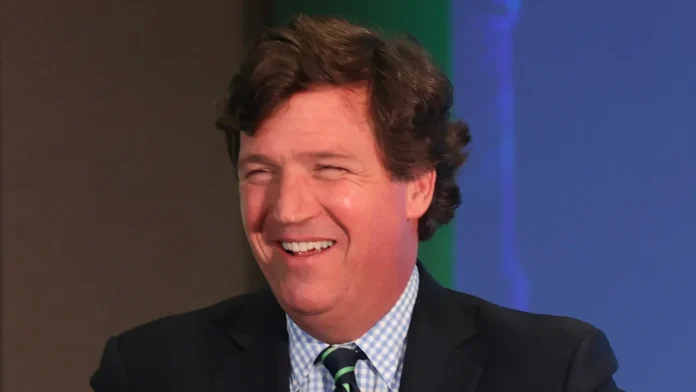
Story Highlights
- Tucker Carlson’s split with President Trump has deepened over the Iran war and the meaning of “America First.”
- Carlson has accused Trump of betraying the non-interventionist message that helped power his political rise.
- The dispute is exposing a broader divide inside the conservative movement ahead of the midterms.
What Happened
Tucker Carlson’s break with President Donald Trump has grown into a larger fight over the future of the America First movement, with Iran becoming the central dividing line.
Carlson, once one of Trump’s most influential media allies, has sharply criticized the president’s military actions against Iran. He has argued that the war contradicts Trump’s long-running promise to avoid foreign entanglements and reject the old Washington foreign policy consensus.
- Carlson opposed U.S. military involvement in Iran.
- He has framed the war as a betrayal of America First principles.
- Trump allies have pushed back against Carlson’s criticism.
The dispute escalated after U.S. and Israeli strikes on Iran earlier this year. ABC News reported that Carlson called the attack “absolutely disgusting and evil” and warned it would reshape Trump’s political movement. :contentReference[oaicite:0]{index=0}
In April, Carlson went further by expressing regret for supporting Trump’s return to power. The Guardian reported that Carlson said he felt personally responsible for misleading people who trusted his judgment, while repeating his criticism of the Iran war. :contentReference[oaicite:1]{index=1}
Why It Matters
The Carlson-Trump feud matters because Carlson is not a marginal conservative critic. He has one of the largest independent audiences on the right and speaks directly to voters who are deeply skeptical of foreign wars, military escalation, and establishment influence in Washington.
His criticism lands at a sensitive time for Trump. The Iran conflict has already created political pressure in Congress, where lawmakers from both parties are questioning the administration’s war strategy and legal authority.
- Carlson’s audience overlaps heavily with Trump’s populist base.
- The Iran war has become a test of what America First means in practice.
- Conservative voters are being asked to choose between loyalty to Trump and opposition to foreign intervention.
Time reported that Carlson accused Trump of abandoning the America First premise he ran on, while the feud has expanded beyond one policy dispute into a broader argument about Trump’s leadership and the direction of the conservative movement. :contentReference[oaicite:2]{index=2}
The fight could create an enthusiasm problem for Republicans if anti-war conservatives become less motivated to support candidates aligned with Trump’s foreign policy. Democrats are likely to highlight the split as evidence that the GOP coalition is under strain.
Political and Public Context
The divide reflects a long-running tension inside the Republican Party. One side of the conservative movement favors a more aggressive posture toward Iran and strong support for Israel. Another side, represented by Carlson and other non-interventionist voices, argues that America First should mean avoiding new Middle East wars.
That debate is becoming more visible as the Iran war continues. The House passed a war powers resolution aimed at halting Trump’s military action against Iran, with four Republicans joining Democrats. The New York Post reported the vote passed 215-208, underscoring that skepticism of the war is not limited to Democrats. :contentReference[oaicite:3]{index=3}
- Trump’s allies argue the Iran campaign is necessary for national security.
- Carlson’s camp argues the war repeats the mistakes of past foreign interventions.
- Republican candidates may face pressure from both sides of the debate.
The Guardian reported that Trump’s Iran war messaging is facing growing skepticism from the public and Congress, especially as voters connect the conflict to higher fuel costs and unclear strategic goals. :contentReference[oaicite:4]{index=4}
That environment gives Carlson’s criticism more weight. He is not simply attacking Trump personally; he is challenging whether Trump’s second-term foreign policy still matches the movement brand that helped him win.
What Happens Next
The feud is likely to continue as long as the Iran conflict remains unresolved. If Trump reaches a deal that reduces tensions, he may be able to argue that pressure worked and pull anti-war conservatives back toward him.
If the war drags on, Carlson’s critique could become more influential among voters who already distrust foreign policy elites and oppose open-ended military commitments.
- A successful Iran deal could weaken Carlson’s argument.
- A prolonged conflict could deepen the split inside the Republican base.
- Midterm candidates may have to define where they stand on war powers and America First foreign policy.
For now, the Trump-Carlson break is more than a media feud. It is a fight over the meaning of the movement both men helped build — and whether America First still means restraint abroad, or loyalty to Trump’s decisions once he is back in power.
Sources
- The Breakdown of Trump and Tucker Carlson’s Alliance
- Tucker Carlson says he regrets backing Donald Trump and helping him win
- Trump’s Iran decision sparks backlash from Tucker Carlson and MAGA allies
- House defies Trump and passes war powers resolution to halt military action against Iran
- Trump’s Iran war messaging is not winning over Americans — or their representatives
