

Story Highlights
- President Trump said he pushed Israeli Prime Minister Benjamin Netanyahu to avoid escalation in Beirut.
- Netanyahu’s office said Israeli operations in southern Lebanon would continue despite U.S. ceasefire efforts.
- The disagreement comes as Washington tries to preserve fragile Iran ceasefire and nuclear talks.
What Happened
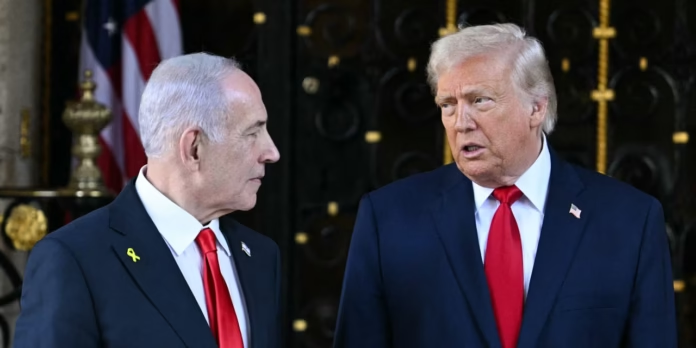
President Donald Trump and Israeli Prime Minister Benjamin Netanyahu are showing signs of public tension over Israel’s military operations in Lebanon, even as the United States works to keep Iran ceasefire talks alive.
Trump said he was “perturbed” by Israel’s threatened action around Beirut and indicated that he personally urged Netanyahu to avoid further escalation in the Lebanese capital. The statement was notable because Washington and Jerusalem have generally tried to project unity since the Iran conflict began.
- Trump said he asked Netanyahu to pull back from Beirut.
- Israel said operations in southern Lebanon would continue.
- The public disagreement exposed different priorities between the two allies.
The White House has been trying to preserve a ceasefire framework involving Iran, Israel, and regional intermediaries. But Netanyahu’s government has continued to argue that Israel must retain freedom of action against Hezbollah and other Iran-backed threats.
According to the draft account, the immediate dispute centered on whether Israel would move forward with strikes near Beirut while U.S. officials were attempting to keep broader negotiations from collapsing. Trump presented the call as productive, but Netanyahu’s follow-up statement suggested Israel would not fully pause its military plans.
Why It Matters
The disagreement matters because U.S.-Israel coordination is central to the broader Iran war strategy. If the two governments are no longer aligned on the timing and scope of military operations, ceasefire diplomacy becomes far more difficult.
Trump is trying to show that his administration can use pressure and negotiation to move the conflict toward a settlement. Netanyahu, meanwhile, faces domestic pressure to maintain military strength and avoid appearing to accept limits imposed by Washington.
- A wider Lebanon conflict could derail Iran ceasefire talks.
- Netanyahu faces pressure from hardline partners inside Israel.
- Trump faces political pressure to show he can end the conflict, not expand it.
The Lebanon front adds another layer of risk. Hezbollah remains a major military force, and any renewed escalation could pull Israel and Iran-backed groups into a wider confrontation. That would complicate U.S. efforts to keep the Iran talks on track.
The disagreement also places Republican lawmakers in a difficult position. Many strongly support Israel, but they also back Trump’s broader foreign policy strategy. If the two leaders continue to diverge publicly, the party may face new questions over how to balance alliance loyalty with support for Trump’s ceasefire push.
Political and Public Context
Trump has built his foreign policy message around strength, dealmaking, and ending wars. The Iran conflict now tests all three claims. He must keep pressure on Tehran, reassure Israel, and show American voters that diplomacy is still moving forward.
Netanyahu’s political situation is different. His coalition includes hardline figures who are likely to resist any arrangement that appears to limit Israeli operations against Hezbollah or Iran-backed forces. That makes compromise with Washington politically sensitive inside Israel.
- Trump wants a ceasefire framework that can hold.
- Netanyahu wants to preserve Israel’s operational freedom.
- Iran and Hezbollah remain key variables in whether talks survive.
The public nature of the disagreement is also important. U.S.-Israeli disputes are usually handled quietly through diplomatic channels. When those differences spill into public view, it signals either frustration, pressure tactics, or a breakdown in message coordination.
For voters, the conflict is increasingly tied to practical concerns, including fuel prices, regional stability, and whether U.S. forces could be drawn deeper into another Middle East war.
What Happens Next
The next phase depends on whether Trump can keep Netanyahu aligned long enough to preserve the Iran ceasefire track. If Israel continues operations in southern Lebanon while avoiding a major Beirut escalation, the diplomatic process may survive.
But if the fighting widens, Iran could use Israeli action as a reason to suspend talks or escalate through proxy groups. That would weaken Trump’s claim that a broader deal is within reach.
- The White House will likely continue pressing Israel for restraint.
- Netanyahu will try to reassure domestic allies that Israel is not backing down.
- Iran ceasefire talks could depend on whether the Lebanon front stays contained.
For now, the U.S.-Israel relationship remains intact, but the disagreement over Lebanon has exposed a serious strategic tension. Trump wants space for diplomacy. Netanyahu wants room for military action. The balance between those goals may determine whether the Iran ceasefire holds or collapses.
Sources
Live updates: Iran war news; Kuwait’s airport attacked as fresh Iran-US strikes strain ceasefire
