

Story Highlights
- The DOJ under acting AG Todd Blanche created a $1.776 billion “Anti-Weaponization Fund” as part of a settlement of a lawsuit between Trump and the IRS
- Republican senators objected to the fund, calling it legally questionable and fiscally irresponsible
- Blanche told Congress the department is “not moving forward” with the fund, in a significant reversal ahead of his confirmation vote
What Happened
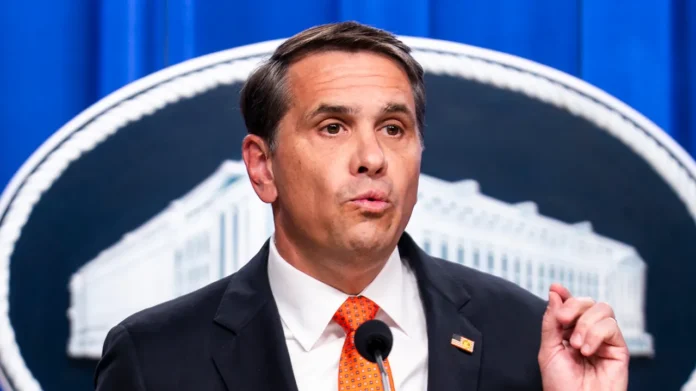
The controversy began when Acting Attorney General Todd Blanche announced that the Justice Department had settled a lawsuit involving President Donald Trump and the Internal Revenue Service through the creation of a $1.776 billion fund. The fund was structured to compensate people who claim they were subjected to unlawful government persecution, a category that the administration described broadly enough to potentially encompass a wide range of Trump allies and supporters who have had legal disputes with the federal government.
The announcement was made as Blanche was accelerating the Justice Department’s profile and cementing his credentials as a loyal executor of the president’s agenda. Coming alongside the indictment of former FBI Director James Comey, the fund was seen as one of the most overtly political actions taken by the department under his leadership. Critics, including prominent civil liberties organizations, argued that the fund amounted to using taxpayer money to benefit a class of individuals defined primarily by their political alignment with the president.
The backlash from Capitol Hill was swift and came from both sides of the aisle. Democratic senators called the fund unconstitutional and demanded that Blanche testify before relevant committees. More significantly for Blanche’s political future, Republican senators whose votes he would need for confirmation expressed serious reservations. The criticism centered on the legal authority for the fund, the due process mechanisms for distributing it, and the fiscal implications of committing nearly $1.8 billion without explicit congressional authorization.
Facing this pressure directly, Blanche appeared before the House Appropriations Committee on Tuesday and told lawmakers that the department is “not moving forward” with the fund. The reversal was widely interpreted as a calculated move to preserve his chances of Senate confirmation rather than a substantive reconsideration of the policy. Democrats noted the timing and argued the retreat demonstrated that Blanche had been acting in his personal interest rather than out of sound legal judgment.
Why It Matters
The Anti-Weaponization Fund episode cuts to the heart of the debate over whether the Justice Department under this administration is functioning as a neutral law enforcement agency or as a political instrument. The creation of such a fund, with billions of dollars designated to compensate individuals defined in part by their grievances against the federal government, represents a novel and legally untested exercise of executive power.
For the American legal system, the concern is about precedent. If the executive branch can unilaterally create compensation funds of this scale as part of legal settlements, it potentially opens the door for future administrations to direct federal resources toward politically favored groups without explicit legislative authorization. The constitutional separation of powers, under which Congress controls appropriations, would be eroded if settlements of this type become standard practice.
The fund also raises questions about its beneficiaries. The category of “victims of political persecution” is inherently subjective, and the criteria by which claims would be evaluated and approved were never clearly established before the reversal. Legal scholars noted that without clear statutory authority and an independent adjudication process, the fund would have been vulnerable to immediate legal challenges regardless of its stated purpose.
From a political standpoint, the episode illustrates the bind Blanche finds himself in. His aggressive tactics earned him the attorney general nomination but also generated enough resistance to put that confirmation at risk. The retreat on the fund may help him win confirmation but leaves him open to accusations that his boldest moves were primarily performative.
Economic and Global Context
The creation and subsequent cancellation of a nearly $1.8 billion fund has real fiscal implications even if the money was never ultimately distributed. The announcement created uncertainty for federal budget planning and added to concerns among fiscal hawks in the Republican caucus about the administration’s approach to government spending. The fund’s dollar figure was not coincidental — $1.776 billion is a reference to the year of American independence, a piece of political symbolism that added to critics’ arguments that the effort was theater rather than policy.
More broadly, the episode contributes to a pattern of volatility in federal legal and regulatory policy that carries economic costs. Businesses, financial institutions, and foreign investors all factor political and legal stability into their assessments of the U.S. investment climate. Repeated announcements of major policy initiatives followed by rapid reversals introduce a kind of governance noise that, over time, can reduce confidence in the reliability of federal institutions.
Internationally, the perception that the U.S. Justice Department is being directed toward political ends weakens American standing in multilateral discussions about the rule of law and anti-corruption norms. Many of the frameworks the U.S. has promoted globally — including anticorruption treaties and judicial independence standards — rest on the credibility of American legal institutions.
Implications
The reversal on the fund creates a complicated environment for Blanche’s Senate confirmation hearings. He will need to defend a record that includes both the creation and the abandonment of one of the most controversial DOJ initiatives in recent memory. Republican senators who objected to the fund may demand assurances about the independence of the department going forward, while Democrats are unlikely to give him any benefit of the doubt.
For the broader question of DOJ independence, the episode leaves lasting uncertainty. Even if Blanche is confirmed and avoids further controversy, the institutional damage from this period is difficult to undo. Career prosecutors and investigators who have watched the department take dramatic reversals under political pressure may question their own ability to operate with professional integrity.
The question of what becomes of the underlying legal settlement with the IRS also remains unresolved. If the fund is off the table, the terms of that settlement may need to be renegotiated or litigated further. Watchdog organizations have already signaled their intention to seek full disclosure of the settlement’s terms, and the legal proceedings around it are unlikely to conclude quickly. The American public deserves a clear accounting of how the nation’s top law enforcement office reached this point.
Sources
“Trump expected to nominate Todd Blanche as permanent attorney general”
