

Story Highlights
- A federal judge temporarily blocked the fund, and the DOJ said it would comply while strongly disagreeing with the ruling
- Senate Republicans including Mitch McConnell, Chuck Grassley, and John Curtis demanded the fund be permanently eliminated before voting on immigration funding
- Democrats are moving to permanently ban the fund via legislation and force vulnerable Republicans on the record before midterms
What Happened
The Trump administration signaled it is backing off on creating a $1.8 billion “anti-weaponization” fund announced by the Justice Department that could send money to allies of President Donald Trump. The fund was presented by the DOJ as a mechanism to compensate individuals the administration believed had been unfairly targeted by federal law enforcement during the Biden years.
The GOP’s $70 billion immigration enforcement funding agenda stalled over concerns about the anti-weaponization fund. Senate Republicans’ anger over the fund eroded their bond with the White House. Democrats plan to force vulnerable Republicans on the record over the fund ahead of November elections.
Trump had demanded the immigration package land on his desk by June 1. Senate Majority Leader John Thune said he wasn’t given a heads-up on the fund and that it “would have been nice” if he had. The missed deadline is a visible embarrassment for an administration that had treated the immigration funding push as an urgent priority.
Sen. Chuck Grassley, Republican of Iowa, the chair of the Judiciary Committee that oversees the DOJ, said, “The only thing that’s going to solve this problem, to get immigration funded and law enforced, is for the president to do away with the weaponization fund.” Former Senate Majority Leader Mitch McConnell called the fund “utterly stupid, morally wrong.”
Senate Minority Leader Chuck Schumer said Democrats will move to permanently stop the fund and “ensure no president can ever do this again.” The DOJ said it “disagrees strongly” with the federal judge’s decision to temporarily block the fund, but that it “will abide by the Court’s ruling.”
Why It Matters
The anti-weaponization fund saga matters because it reveals the outer edges of Republican deference to Trump. Throughout his second term, Senate Republicans have largely voted in alignment with White House priorities, even on contentious measures. The open, multisenator revolt over this fund — which extended to Judiciary Committee chairman Grassley, a Trump loyalist by most measures — signals that even reliable allies have breaking points when they believe the administration has overstepped on legal or ethical grounds.
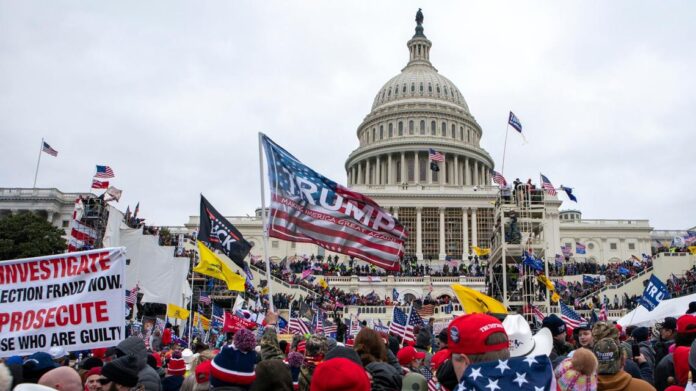
The fund’s stated purpose was to provide restitution to people wronged by the Biden Justice Department. But critics pointed out that eligibility extended to individuals who had participated in the January 6, 2021, Capitol riot, a provision that became politically untenable for senators facing competitive races. The optics of paying out funds to those who assaulted police officers proved impossible for many Republicans to defend publicly.
The consequences for immigration funding are concrete and immediate. ICE and Border Patrol were left without their customary funding in the DHS appropriations bill, meaning the administration must pass a standalone reconciliation package to cover those agencies through the end of Trump’s term. Every week that package is delayed is a week those agencies operate under resource constraints that the administration itself has repeatedly described as inadequate for its enforcement mission.
Democrats are fully aware of the opportunity this presents. By forcing Republicans to vote on the immigration bill while the anti-weaponization fund controversy remains unresolved, they can press members in swing districts to defend a package now entangled in a funding controversy that polls poorly with independent voters.
Economic and Global Context
While the anti-weaponization fund is primarily a domestic political story, its downstream effects on immigration enforcement carry economic dimensions that businesses, agricultural employers, and the construction sector monitor closely. Delays in ICE and Border Patrol funding create operational uncertainty in industries that employ significant numbers of workers whose legal status is subject to enforcement action.
The fund was created to settle an unprecedented lawsuit Trump brought against the Internal Revenue Service over the unauthorized disclosure of his tax returns years ago — ostensibly meant to compensate people who believe they were wronged by the Justice Department in President Joe Biden‘s term, but critics said it amounts to a slush fund to pay out Trump’s allies.
The broader legislative stall also affects the administration’s ability to project fiscal discipline. A delayed immigration funding bill pushes expenditures outside the current budget window and complicates the accounting frameworks Republicans use to justify their overall fiscal posture.
Congressional observers note that the episode may weaken the administration’s hand in future reconciliation negotiations. If the White House is seen as unable to hold its conference on a high-priority enforcement bill, other legislative priorities may face similar coalition challenges.
Implications
The most immediate question is whether the administration will formally and permanently abandon the fund or attempt to revive it after the June 12 court hearing. Many senators told CNN they cannot move ahead with funding ICE and Border Patrol until they know the fund is dead, rather than simply kicked down the road. A court order pausing the fund is not the same as executive withdrawal.
If Trump formally kills the fund, the immigration reconciliation bill could advance quickly. The policy substance of the bill — tens of billions for ICE, Border Patrol staffing and technology — commands majority Republican support and was never the source of the impasse.
Democrats will continue pressing for a legislative amendment to permanently prohibit such a fund regardless of the executive outcome. That effort serves both a policy purpose and an electoral one, keeping the controversy alive as a campaign issue for November. Schumer’s vow to attach an amendment in any reconciliation debate ensures the issue does not simply disappear.
For voters who prioritize immigration enforcement, the episode is a frustrating detour. For voters concerned about executive overreach, it demonstrates that institutional checks — including within the Republican Party — remain functional.
Sources
