

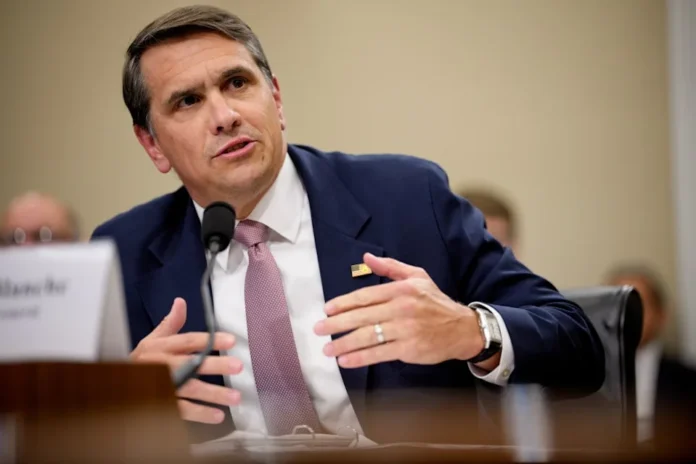
Story Highlights
- President Donald Trump said he will nominate acting Attorney General Todd Blanche to permanently lead the Justice Department.
- Blanche has served as acting attorney general since Pam Bondi’s firing in April and has pursued several controversial DOJ actions.
- The nomination is expected to trigger a Senate fight over DOJ independence, political loyalty, and the administration’s legal agenda.
What Happened
President Donald Trump said he will formally nominate Todd Blanche to serve as attorney general, moving to make his acting Justice Department chief permanent after months of speculation over who would lead the department.
Trump made the announcement during a White House Rose Garden dinner, where he said Blanche would become the permanent attorney general. Formal nomination paperwork was expected to follow, setting up a potentially contentious Senate confirmation process.
- Blanche previously served as Trump’s personal criminal defense attorney.
- He became acting attorney general after Pam Bondi was removed in April.
- His permanent nomination would place a close Trump legal ally in charge of federal law enforcement.
Blanche has led the Justice Department in an acting capacity since Bondi’s departure. During that period, he moved quickly to align the department with Trump’s second-term priorities, including cases involving the president’s critics and broader claims that federal law enforcement had been weaponized against conservatives.
His tenure has already drawn sharp debate. Supporters see him as a loyal attorney willing to challenge what they describe as politically biased institutions. Critics argue that he has blurred the line between serving as the nation’s top law enforcement officer and advancing the president’s personal and political interests.
Why It Matters
The attorney general is one of the most powerful officials in the federal government. The position oversees federal prosecutors, the FBI, national security investigations, civil rights enforcement, and major politically sensitive cases.
That makes Blanche’s nomination more than a personnel decision. It is a test of whether the Senate is willing to confirm a former Trump defense lawyer to lead the Justice Department at a time when questions about DOJ independence are central to the national political debate.
- The confirmation fight will focus heavily on DOJ independence.
- Democrats are likely to question whether Blanche can separate his role from loyalty to Trump.
- Republicans will face pressure to support the president’s preferred nominee.
Blanche’s record as acting attorney general will likely become the center of the confirmation hearing. Senators are expected to press him on prosecutions involving Trump critics, the department’s internal priorities, and whether he would resist improper pressure from the White House.
The controversy surrounding the proposed $1.776 billion Anti-Weaponization Fund could also become a major issue. The fund, intended to compensate individuals who claim they were politically targeted by the government, faced resistance from both Democrats and some Republicans. Blanche later told lawmakers the department was not moving forward with it, a reversal that may still draw scrutiny.
Political and Public Context
The nomination comes as Trump continues to argue that the Justice Department was used unfairly against him and his allies. That message remains central to his political identity and to the administration’s broader legal strategy.
Democrats are expected to frame Blanche’s nomination as part of a larger effort to place loyalists in powerful institutional roles. They will likely argue that the Justice Department should operate independently of the president’s personal grievances and political interests.
- Trump allies view Blanche as a fighter against what they call political lawfare.
- Democrats see the nomination as a warning sign for the rule of law.
- The confirmation battle could become a major midterm-year political fight.
For Senate Republicans, the vote may be more complicated than a normal Cabinet confirmation. Many are likely to support Blanche, but some may face pressure over his role in controversial DOJ actions and the abandoned Anti-Weaponization Fund.
The fight also comes at a sensitive time for the department. DOJ is managing politically charged cases, immigration enforcement issues, and legal disputes tied to Trump’s broader second-term agenda. A confirmed attorney general would have stronger authority than an acting official to direct those priorities.
What Happens Next
Blanche’s nomination will move to the Senate, where the Judiciary Committee is expected to hold hearings. Those hearings will give Democrats a public platform to challenge his record and press him on whether he would maintain DOJ independence.
Republicans will likely defend Blanche as qualified and experienced, while arguing that he understands the abuses Trump and his allies say they faced. The White House is expected to pressure GOP senators to keep the confirmation process moving.
- The Senate Judiciary Committee will likely hold high-profile hearings.
- Blanche will face questions about conflicts of interest and political prosecutions.
- The final vote could test Republican unity before the midterms.
If confirmed, Blanche would become the permanent head of the Justice Department and would gain full authority to guide its agenda through the rest of Trump’s term. That would give the president a trusted legal ally at the center of federal law enforcement.
The nomination now sets up a defining fight over the future of the Justice Department. For Trump, Blanche represents loyalty and legal toughness. For critics, he represents the risk of a department shaped too closely around the president’s political priorities.
