

Story Highlights
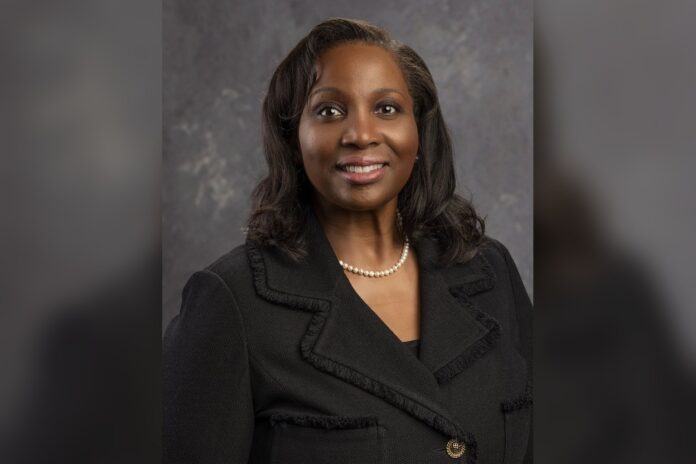
- Following a Supreme Court ruling that blocked her unilateral removal, the White House has formed a committee to examine claims that Federal Reserve Governor Lisa Cook misstated information on mortgage documents
- Cook is to offer written evidence, arguments and witness statements at a White House hearing on November 5, 2026
- National Economic Council Director Kevin Hassett will chair the committee, which will decide whether adequate cause exists to remove Cook
- The procedure meets the Supreme Court’s requirement that Cook be given adequate time to answer the accusations
What Happened
The Trump administration has set up a formal process for handling the allegations against Federal Reserve Governor Lisa Cook, creating a three-member committee of inquiry to look into claims that she made false statements on mortgage documents. The move is a notable step in a long-running legal fight that started in August 2025, when the administration tried to remove Cook from her post. In June 2026, the Supreme Court stepped in, stopping the unilateral dismissal and directing that Cook be given adequate opportunity to respond to the accusations against her.
The new committee works under rules meant to ensure fairness while preserving confidentiality. At least three days ahead of her hearing, Cook will send the committee a written statement, giving her a chance to lay out her defense in full. At the November 5 proceeding at the White House, she will present arguments, written evidence and witness statements that respond to the allegations. Department of Justice attorneys will question her during the hearing, and after her testimony Cook will file a second written statement. The committee will then advise the president on whether sufficient cause exists to remove her from her Federal Reserve position.
- The committee hearing is set for November 5, 2026, at the White House and will last no more than four hours
- The three-member panel consists of Kevin Hassett, Assistant to the President for Economic Policy, along with representatives of the Equal Employment Opportunity Commission and the Office of Government Ethics
- The public will not be admitted to the hearing, but it will be transcribed, and Cook must file a written statement three days before she testifies
- The Supreme Court’s June 2026 ruling blocked unilateral removal and required due process procedures
Why It Matters
The committee process reaffirms the principle of due process in American governance by making sure that federal officials accused of serious wrongdoing get a fair chance to defend themselves before being removed. The Supreme Court’s 5-4 decision held that, even where presidential authority over executive officials is substantial, constitutional and statutory protections call for adequate procedural safeguards. By building this formal committee structure, the White House shows it is working within judicial guidelines while still seeking accountability for alleged misconduct.
The claims against Cook concern misstatements on mortgage documents, which are serious matters touching on financial integrity in official roles. Cook’s opportunity to present extensive written evidence and testimony allows the facts to be examined thoroughly while protecting her rights. This balanced approach safeguards institutional legitimacy and public confidence in both the Federal Reserve and the executive branch’s oversight mechanisms, and it honors the Supreme Court’s position that officials at independent agencies hold distinct protections.
- The result will determine whether the Federal Reserve Board undergoes leadership changes that affect monetary policy decisions
- The process sets a precedent for how future administrations deal with alleged misconduct by independent agency officials
- Transcription of the hearing provides transparency even though the proceedings are closed
- The results could shape federal employment standards across independent agencies
Political and Public Context
The fight over Cook’s tenure reflects wider constitutional questions about executive power and agency independence that have marked recent Supreme Court case law. In a related ruling, the Court upheld presidential authority to dismiss Federal Trade Commission commissioners, showing that removal standards differ between agencies depending on their statutory frameworks. The Cook case specifically established that Federal Reserve governors, whose positions carry explicit statutory protections and independence, merit greater procedural protections than other federal officials.
Kevin Hassett’s role as committee chair is particularly notable because he was earlier considered as a possible successor to Jerome Powell as Federal Reserve Chair, before the president ultimately chose Kevin Warsh for the job. The broader political backdrop includes continuing discussions about Federal Reserve governance, the direction of monetary policy, and the proper relationship between executive branch oversight and central bank independence. These questions have driven policy debates across multiple administrations.
- The Supreme Court decisions in Trump v. Slaughter and Trump v. Cook set separate standards for removing officials from independent agencies and from traditional executive positions
- Federal Reserve independence and governance have been the subject of considerable policy debate under recent administrations
- Kevin Warsh’s appointment as Federal Reserve Chair is a significant personnel decision affecting monetary policy
- The allegations about mortgage documentation tie into broader concerns about financial integrity
What Happens Next
Over the coming weeks Cook will put together her defense materials and submit her first written statement by late October, in line with the requirement to file three days before the November 5 hearing. The White House will assemble the evidence and allegations to be presented at the proceeding, and Department of Justice attorneys will prepare how they will question her. After the hearing, Cook will file her post-hearing written response covering any further matters raised during her testimony.
The timeline suggests a final determination could come by late November or early December 2026, depending on how fast the committee finishes its analysis and drafts its recommendation. Once the committee reports, the president would have to decide whether to act on its recommendation, which could set off further legal proceedings if Cook or relevant authorities challenge a removal decision.
- Cook has to submit her first written defense statement by late October 2026
- The November 5 hearing will include testimony, presentation of evidence and questioning by DOJ attorneys
- Cook owes a post-hearing written statement after the in-person proceeding
- A committee recommendation and presidential decision are expected by December 2026, with the possibility of later legal challenges