

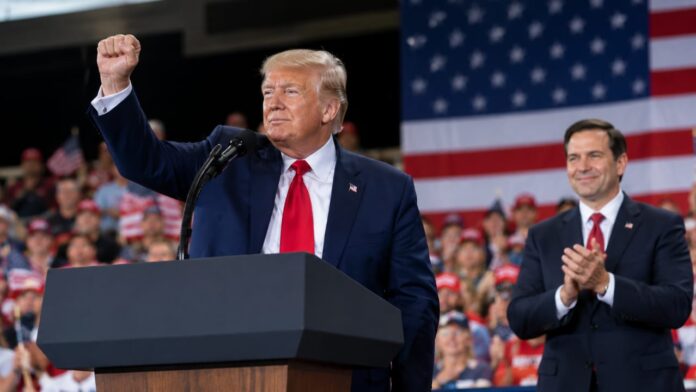
Story Highlights
- President Trump held a rally in South Carolina to support a GOP candidate backed by his personal endorsement, energizing Republican voters ahead of critical midterm elections
- The administration intensified its midterm campaign presence with rallies scheduled throughout the week as Republicans work to maintain control of both congressional chambers
- Democratic challenger Annie Andrews, a pediatrician, has mounted a surprisingly competitive campaign despite Republican favorability in the district
- The Trump campaign strategy focuses on mobilizing the Republican base during a crucial final stretch before Election Day
What Happened
President Trump traveled to South Carolina on Wednesday evening to hold a rally supporting a Republican candidate he had personally backed. The event represented part of an aggressive final campaign push by the administration to energize Republican voters and consolidate party support during the closing weeks of the midterm election cycle. The rally format allowed the president to directly address supporters and reinforce backing for the candidate facing competitive opposition.
The South Carolina event formed part of a broader campaign strategy, with rallies scheduled across multiple days during the final week before the election. This sustained engagement reflected the administration’s recognition of the importance of energizing the Republican base during the critical stretch run of the campaign season.
- Rally held in South Carolina on Wednesday evening at 7 p.m. EDT
- President Trump personally backed the Republican candidate the event aimed to support
- Multiple rallies scheduled throughout the week as part of intensive midterm campaign efforts
- GOP navigating concerns about potential loss of congressional chamber control
Why It Matters
The rally underscored the critical importance of voter turnout and base mobilization during the final stages of midterm elections. Political analysts and Republican strategists have recognized that energizing core supporters remains essential when facing a competitive political environment. The administration’s decision to deploy the president’s time and platform for these events reflected an assessment that direct presidential engagement could drive meaningful turnout among Republican voters who might otherwise sit out the election.
The competitive nature of races previously considered safely Republican highlights the shifting political landscape heading into election day. Demographic changes, shifting voter priorities, and evolving electoral dynamics have created conditions where candidates and campaigns must actively compete even in traditionally favorable districts. The presence of the president at these events served to remind Republican voters of the stakes involved and the importance of their participation in the electoral process.
- Base mobilization crucial as GOP faces potential loss of congressional control
- Competitive races in traditionally Republican areas require active candidate and party engagement
- Direct presidential presence at rallies aimed at maximizing Republican voter turnout
- Final week of campaign season represents critical window for persuasion and motivation efforts
Political and Public Context
The political environment heading into the midterm elections reflected a complex landscape where traditional advantages and disadvantages shifted across different regions and demographics. Cook Political Report had adjusted its assessment of competitive races, with some previously considered safe for Republicans now rated as more competitive. This shift indicated that national political currents and local factors were combining to create uncertainty in races that might historically have followed more predictable patterns.
The Republican Party’s midterm strategy centered on voter turnout, messaging discipline, and direct engagement with core supporters. Presidential rallies served multiple purposes within this broader framework, allowing the administration to communicate directly with voters, generate media coverage, and create visible demonstrations of political momentum and enthusiasm. The decision to schedule multiple rallies in successive days reflected a deliberate campaign strategy designed to maintain visibility and engagement during the critical final week before voting.
- Cook Political Report shifted race assessments from safe Republican to more competitive categories
- National political dynamics combined with local factors to create shifting electoral landscape
- Republican strategy emphasized base mobilization and voter turnout enhancement
- Presidential campaign events served multiple strategic purposes including media engagement and momentum demonstration
President Trump visited South Carolina to rally for Sen. Darline Graham who is fighting to win over skeptical Republicans after a bitter primary. https://t.co/k6aQTC3OGo
— The Washington Post (@washingtonpost) October 22, 2026
What Happens Next
The administration will continue its intensive campaign schedule through Election Day, with the president maintaining an active presence at rallies and campaign events designed to maximize Republican voter engagement. These events will provide ongoing opportunities for the administration to communicate directly with voters about the stakes of the midterm elections and reasons for supporting Republican candidates. The final days before voting represent the last opportunity for campaigns to reach persuadable voters and motivate supporters to turn out.
Election outcomes will ultimately determine whether the intensive campaign efforts succeeded in maintaining Republican control of Congress or whether Democratic gains materialize in competitive races. Voter turnout levels, demographic shifts in support patterns, and local factors unique to individual races will all contribute to final results. Post-election analysis will likely examine the effectiveness of various campaign strategies, including the impact of presidential rallies on voter behavior and electoral outcomes across different regions and constituencies.
- President Trump scheduled for additional rallies throughout the final campaign week
- Election Day results will test effectiveness of Republican base mobilization strategy
- Competitive races will depend on turnout levels and candidate performance in closing arguments
- Post-election analysis will assess impact of campaign events and strategies on final outcomes
