

Story Highlights
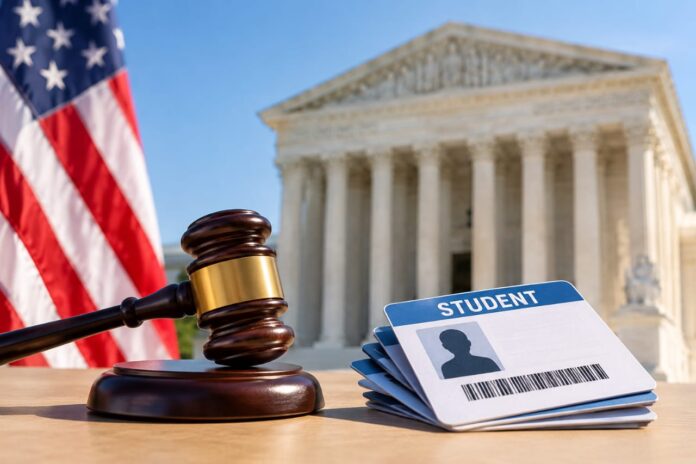
- The Supreme Court granted an emergency request from New Hampshire to prohibit the use of student identification cards in the November midterm elections
- The decision reversed a federal judge’s order that would have allowed student IDs as backup identification when voters establish their identities
- The ruling applies to a state law enacted in April that removed student IDs from accepted forms of identification for ballot requests
- Justice Ketanji Brown Jackson dissented, arguing the Court should not have disturbed the lower court’s ruling
What Happened
The Supreme Court issued an unsigned order on Thursday blocking the use of student identification cards in New Hampshire’s November midterm elections. The justices granted an emergency request filed by New Hampshire, which had support from the Republican National Committee. The decision overturned a federal judge’s previous ruling that would have permitted student IDs to serve as supplementary identification when voters seek to establish their eligibility to cast ballots.
The case centered on a state law enacted in April that removed student IDs from the list of accepted identification forms for ballot requests. A nonprofit voting rights organization called Coalition for Open Democracy had challenged the measure, arguing it violated voting rights and discriminated against young voters. U.S. District Judge Joseph Laplante initially declined to block the law but later ruled that New Hampshire Secretary of State David Scanlan’s guidance extending the restriction to all uses of student IDs went beyond what the law itself required. Laplante determined that student IDs could still be considered as supplementary evidence when officials determined voter eligibility under a state provision allowing the use of any documentation that reasonably establishes a person’s identity.
- New Hampshire law enacted in April removed student IDs as primary identification for voting
- U.S. District Judge Joseph Laplante ruled on October 2 that Secretary of State Scanlan’s guidance barring all uses of student IDs exceeded the statute’s scope
- The First U.S. Circuit Court of Appeals declined to halt Laplante’s ruling, prompting state officials to seek Supreme Court intervention
- The Supreme Court’s order cited existing precedent against changing voting rules close to Election Day
Why It Matters
The Supreme Court’s decision significantly restricts identification options for voters in New Hampshire, particularly affecting younger populations who commonly carry student identification. By blocking the use of student IDs even as supplementary documentation, the ruling narrows the pathway for young voters to establish their eligibility. The timing proves critical as New Hampshire holds a closely competitive Senate race featuring Republican John Sununu against Democratic Representative Chris Pappas for the seat being vacated by retiring Democratic Senator Jeanne Shaheen. Control of the Senate may depend on outcomes in such competitive races, making voting access policies particularly consequential in the state.
The Court’s reasoning focused on judicial restraint regarding voting rule changes near Election Day rather than addressing the merits of student ID usage or voting access generally. The decision reflects differing judicial philosophies, with Justice Ketanji Brown Jackson’s dissent indicating concern that the majority inappropriately disturbed a lower court order designed to ensure voters received accurate information about election procedures. The ruling demonstrates how emergency Supreme Court interventions on voting matters can reshape electoral participation opportunities with minimal public deliberation or full briefing.
- Young voters in New Hampshire lose a potential means of establishing identity at polling places
- The ruling affects a competitive Senate race that could influence chamber control
- Students without alternative identification documents face increased barriers to voting participation
- The decision emphasizes judicial caution about altering voting procedures near Election Day over broader voting access considerations
Political and Public Context
New Hampshire has emerged as a focal point for voting access debates in recent election cycles, with disputes over identification requirements and voter eligibility becoming increasingly partisan. The state’s Senate race represents one of the most competitive contests in the 2022 midterms, attracting national attention and resources from both major parties. Voting rights organizations have consistently challenged voter identification restrictions they view as creating unnecessary obstacles, particularly for demographic groups like students who may lack driver’s licenses or other government-issued photo identification.
The Supreme Court’s intervention in emergency voting matters has accelerated in recent years, with the Court granting requests from state officials to block lower court orders on voting procedures. These emergency orders often arrive with minimal explanation and without full briefing, leading to criticism from voting rights advocates who argue the practice circumvents normal judicial process. The ideological composition of the current Court has resulted in decisions that voting rights groups characterize as favoring restrictions over access, though proponents argue such measures prevent fraud and maintain election integrity.
- New Hampshire’s Senate race between Sununu and Pappas ranks among the most competitive midterm contests nationally
- Student identification restrictions have become increasingly common in Republican-led states during recent election cycles
- The Supreme Court has expanded its use of emergency orders to intervene in voting disputes near Election Day
- Voting rights organizations have filed multiple challenges to state identification requirements across the country
Supreme Court rules NH can block voters from using student IDs https://t.co/SV0nUoLQbD
— The Hill (@thehill) October 23, 2026
What Happens Next
Election officials in New Hampshire will implement the Supreme Court’s order before the November midterm elections, requiring voters to present forms of identification other than student IDs. The decision may prompt additional litigation after the election, with voting rights groups potentially filing appeals or new cases challenging the identification requirement on constitutional grounds. The outcome could establish precedent affecting voting access policies in other states considering similar student ID restrictions.
The case may resurface in future Supreme Court terms if broader constitutional questions about voting access and identification requirements reach the docket. Additionally, the ruling could influence legislative efforts in New Hampshire and elsewhere regarding acceptable forms of voter identification. Voting rights advocates will likely monitor whether this decision affects turnout among student voters and whether other states adopt similar restrictions based on the Court’s endorsement of the approach.
- New Hampshire election officials will enforce the student ID ban beginning immediately through the November elections
- Voting rights groups may file additional legal challenges after the election or pursue constitutional claims
- Other states may use the Supreme Court’s ruling to justify their own student ID restrictions
- Post-election analysis will examine whether the ruling affected turnout among younger voters in the competitive Senate race