

Story Highlights
- SpaceX investor Ross Gerber, CEO of Gerber Kawasaki, expressed strong concerns about Starlink’s reliability and its implications for national security following a service slowdown in Ukraine
- The incident involved Starlink services being reduced in Ukraine, impacting military capabilities during an active conflict
- Elon Musk claimed that only President Trump possessed the authority to order such a slowdown, while The Wall Street Journal reported that Musk himself ordered the reduction
- The controversy has prompted calls for investigation and raised questions about the role of private companies in defense infrastructure
What Happened
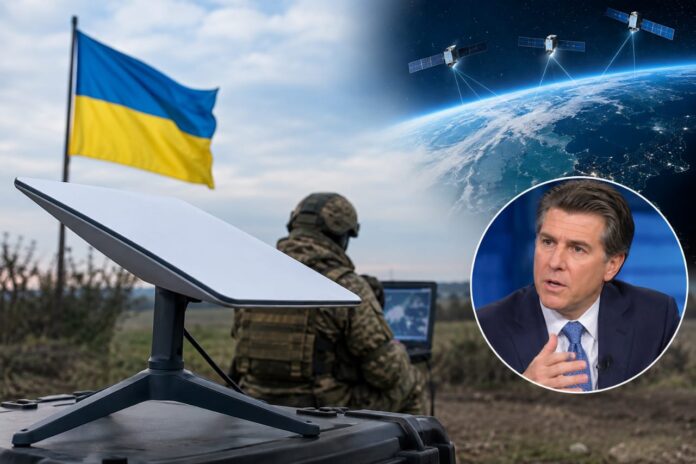
A significant controversy erupted surrounding Starlink’s operations in Ukraine, with SpaceX investor Ross Gerber voicing serious objections during a Wednesday appearance on CNN. Gerber, who holds shares in SpaceX, expressed deep frustration over recent events related to a slowdown of Starlink services affecting Ukraine’s military capabilities. The investor characterized the decisions surrounding the incident as strategically problematic and troubling from a humanitarian standpoint, emphasizing that such actions undermined confidence in the platform’s suitability for critical defense applications.
The controversy intensified as conflicting accounts emerged regarding responsibility for the service slowdown. Elon Musk asserted that only President Trump possessed the authority to order such actions, while simultaneously noting that Starlink operates under SpaceX while Starshield remains government-owned and operated. However, The Wall Street Journal subsequently reported, citing U.S. officials and individuals with knowledge of the matter, that Musk himself had directed the slowdown. This discrepancy prompted Democratic lawmakers to call for a formal investigation into the circumstances surrounding the incident.
- Starlink service slowdown significantly impacted Ukrainian military operations
- Gerber expressed concerns about Starlink’s reliability for national security purposes
- The Wall Street Journal reported that Musk ordered the slowdown, contradicting earlier statements
- Multiple government officials and lawmakers called for investigation into the incident
Why It Matters
The incident highlights fundamental tensions inherent in relying on private sector infrastructure for national defense and security purposes. When critical military communications depend on services operated by private companies, questions inevitably arise about control, accountability, and the alignment of commercial interests with national security requirements. Gerber’s concerns reflect broader apprehensions about whether private entities can be trusted stewards of defense-critical systems, particularly during active conflicts where service reliability directly affects military effectiveness and lives.
The controversy also underscores the complexity of the public-private partnership model in defense technology. While private innovation has driven significant advances in satellite communications and other defense technologies, the episode raises important questions about oversight, transparency, and the appropriate distribution of authority between government agencies and commercial operators. These concerns resonate with policymakers and defense strategists who recognize both the benefits and risks of outsourcing critical infrastructure to the private sector.
- Private company control over defense-critical infrastructure creates vulnerability and accountability questions
- The incident affects military operations in an active conflict, with direct implications for Ukrainian defense
- Broader policy implications for how the U.S. structures defense partnerships with commercial technology providers
- Risk of politicization of critical infrastructure when control rests with individual corporate leaders
Political and Public Context
The Starlink controversy emerges against a backdrop of broader tensions between the Trump administration and various stakeholders regarding Ukraine policy and Russia relations. Ukrainian President Volodymyr Zelensky characterized the service slowdown as a significant error, particularly following discussions about sanctions relief and commercial arrangements involving Russia. The timing of the incident, coinciding with shifts in U.S. policy toward Russia and Ukraine, has amplified concerns about the intersection of geopolitical considerations and technology operations.
Defense Secretary Pete Hegseth and Secretary of State Marco Rubio both addressed the controversy, with Hegseth noting that Starlink operates under specific terms of service that companies must comply with, suggesting the slowdown reflected commercial rather than governmental decisions. Zelensky subsequently engaged with Rubio regarding the Starshield situation, characterizing their discussion as productive. These interactions demonstrate how the incident has rippled through diplomatic and defense circles, affecting relationships between the U.S. government, Ukraine, and commercial technology providers. The administration’s response reflects the administration’s efforts to navigate complex questions about private sector autonomy and government oversight in critical areas.
- Zelensky and other Ukrainian officials have criticized the Starlink slowdown as detrimental to defense efforts
- Defense and State Department officials have emphasized commercial responsibility and service terms compliance
- The incident intersects with broader policy discussions about Ukraine, Russia relations, and sanctions
- Diplomatic channels remain engaged to address national security implications and technology reliability concerns
Elon Musk’s potential mega-merger of Tesla and SpaceX would likely face a China-shaped hurdle from regulators on both sides of the Pacific over concerns about national security and the sharing of data and technology https://t.co/obt6Fjdg9B
— Reuters (@Reuters) October 22, 2026
What Happens Next
The pathway forward involves multiple concurrent developments that will shape how the U.S. approaches public-private partnerships in defense technology. Congressional investigations initiated by Democratic lawmakers will likely examine communications, decision-making processes, and the authorities exercised by both government officials and company executives regarding the Starlink slowdown. These investigations will generate documentation and testimony that could inform future policy regarding commercial operator obligations during national security emergencies.
The incident will probably accelerate discussions within the defense establishment about redundancy, backup systems, and greater government autonomy in critical defense communications. Policymakers may pursue legislative measures that clarify the authorities and obligations of private companies operating defense-critical infrastructure, potentially including contractual requirements for service continuity during emergencies. Additionally, the administration will likely work to stabilize relationships with allied governments like Ukraine while addressing legitimate concerns about the reliability of commercial systems for military purposes. These developments will shape how future administrations structure defense technology partnerships and allocate resources between private innovation and government-operated alternatives.
- Congressional investigation into the Starlink slowdown and decision-making authority expected to proceed
- Potential legislation to clarify private company obligations regarding defense-critical infrastructure reliability
- Administration efforts to restore confidence in defense technology partnerships with commercial providers
- Possible expansion of government-operated alternatives to reduce dependence on single private operators for critical systems
