

Story Highlights
- North Carolina voters expressed willingness to accept higher gas prices to prevent Iran from acquiring nuclear weapons
- Supporters view the administration’s Iran policy as a worthwhile investment in long-term security for future generations
- Attendees at a presidential rally emphasized that addressing nuclear threats justifies short-term economic costs
- Voters credited the president’s business approach and decisive action on foreign policy challenges
What Happened
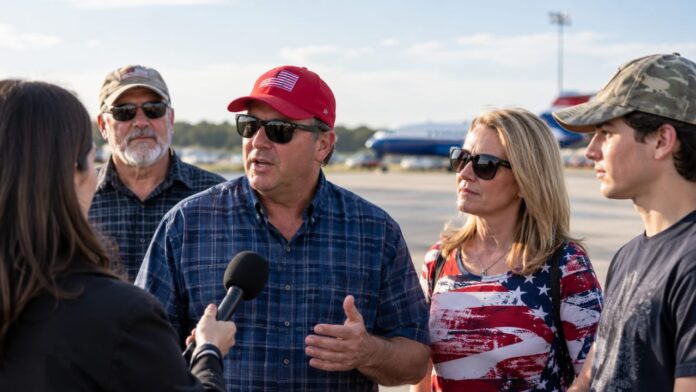
North Carolina voters gathered at Pitt-Greenville Airport following a presidential rally and spoke with media about their perspectives on rising fuel costs amid heightened tensions with Iran. Despite acknowledging the financial strain at the pump, multiple attendees indicated they support the administration’s approach to confronting Tehran’s nuclear ambitions. The conversations revealed a clear prioritization among supporters: preventing a hostile regime from obtaining nuclear weapons takes precedence over immediate consumer costs.
One voter emphasized that true patriotism requires thinking beyond personal expenses and considering the future security landscape for children and grandchildren. Another attendee characterized preventing Iran’s nuclear development as a straightforward strategic imperative, stating that accepting an additional dollar per gallon represented a reasonable tradeoff for addressing such a significant national security threat. These sentiments reflected a broader pattern among rally participants who framed higher energy prices as an acceptable cost of responsible foreign policy.
- North Carolina voters spoke following a presidential rally at Pitt-Greenville Airport on Tuesday
- Multiple attendees expressed support for administration policies addressing Iran’s nuclear capabilities despite rising gas prices
- Supporters characterized preventing nuclear proliferation as worth the financial burden on American drivers
- Conversations centered on balancing immediate economic concerns with long-term national security objectives
Why It Matters
The willingness expressed by these voters to absorb higher energy costs in service of national security objectives demonstrates a significant shift in how portions of the electorate weigh competing priorities. Rather than defaulting to traditional consumer-focused economic messaging, supporters articulated a framework in which geopolitical stability and preventing adversarial nuclear development carry substantial weight. This perspective has implications for how the administration’s foreign policy decisions will be received during periods of economic pressure.
The conversation also reflects confidence in the president’s business-oriented approach to governance. One attendee noted the distinction between the administration’s leadership style and traditional political establishment approaches, suggesting that supporters view unconventional methods as potentially more effective than conventional diplomacy. This trust appears sufficiently strong to cushion the administration against typical economic complaints that might otherwise create political vulnerability. Furthermore, the emphasis on generational security indicates supporters are thinking beyond immediate electoral cycles and framing policy choices in terms of decades-long consequences.
- Demonstrates voter willingness to prioritize foreign policy security over consumer-level economic complaints
- Reflects confidence in the administration’s unconventional approach to governance and international relations
- Shows strong political support capable of weathering short-term economic headwinds from foreign policy decisions
- Indicates supporters view decisions through a multi-generational security lens rather than immediate cost calculations
Political and Public Context
Rising gas prices have historically represented significant political liabilities for sitting administrations, often becoming central to electoral calculations and public perception of economic management. However, the framing employed by these voters suggests a departure from purely domestic economic concerns in favor of integrated strategic thinking. This approach parallels historical moments when the electorate has accepted economic costs in exchange for perceived security gains, though the specific application to Iran policy in this context appears particularly pronounced.
The distinction voters drew between the president’s role and Congress’s responsibilities also reflects broader constitutional understanding among supporters. One attendee specifically noted that executive authority has limits and that Congress bears responsibility for certain policy outcomes. This nuanced view suggests supporters are calibrating their expectations realistically while maintaining confidence in the administration’s handling of its specific portfolio. The reference to comparing current conditions with the previous administration also indicates supporters view the current economic environment in relative rather than absolute terms, evaluating performance against alternative scenarios.
- Historical precedent shows American voters have sometimes accepted economic costs for perceived security benefits
- Supporters demonstrated understanding of constitutional separation of powers and executive versus legislative authority
- Comparisons to previous administration suggest relative rather than absolute economic assessments
- The emphasis on Iran’s nuclear threat reflects widespread recognition of that challenge across the electorate
Trump rally attendees in North Carolina say rising gas prices are worth it if the Iran war stops a nuclear weapon from threatening future generations. https://t.co/F4MepIAtMP pic.twitter.com/39R3Zy4Hxo
— Drew Grimaldi (@Grimillionaire) October 21, 2026
What Happens Next
The trajectory of gas prices will likely remain a focal point in political discourse, particularly as they fluctuate in response to international developments. If energy prices decline, supporters will likely view this as validation of the administration’s strategy and effective management of global affairs. Conversely, if prices remain elevated or increase further, the strength of support expressed in these conversations will face genuine testing. The long-term impact on electoral performance will depend substantially on whether the administration’s Iran policy achieves stated objectives and whether the public perceives tangible security benefits.
Future interactions between economic messaging and foreign policy will benefit from the framework these voters articulated. The administration may find opportunities to expand this security-centered rationale to other policy areas where short-term costs accompany longer-term strategic objectives. Understanding how supporters weigh these tradeoffs provides valuable insight into the political coalition’s priorities and tolerance for economic friction in service of foreign policy goals. Monitoring voter sentiment at future campaign events will reveal whether this perspective hardens into sustained conviction or softens if economic conditions worsen.
- Gas price movements will serve as key indicator of whether supporters’ confidence remains justified
- Achievement of stated Iran policy objectives will validate or challenge the support demonstrated in these conversations
- Future campaign messaging may leverage the security-priority framework articulated by these voters
- Sustained monitoring of voter sentiment will indicate whether economic tolerance for foreign policy decisions endures
