

Story Highlights
- President Trump urged Americans to remain calm regarding recent outages affecting major corporations and federal agencies, characterizing them as isolated incidents rather than systemic failures
- The president emphasized that recent disruptions occurred during infrastructure upgrades and are unrelated to cyberattacks or artificial intelligence malfunctions
- Trump criticized the previous administration’s handling of similar situations, asserting that current leadership would address infrastructure needs more effectively
- The White House outlined plans for comprehensive FAA digital infrastructure funding to build a more robust national air traffic control system
What Happened
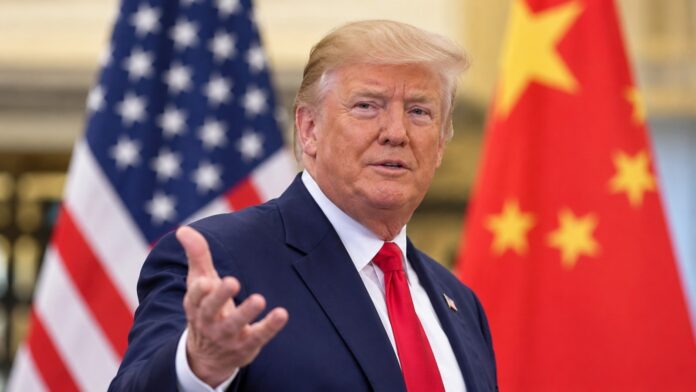
President Trump addressed growing public concern over a series of major outages affecting American businesses and government agencies during an interview conducted in Shenzhen, China. The president sought to calm anxious Americans who have begun stockpiling food and water supplies in response to the disruptions. He stated that individuals engaged in such purchases should relax, as the situation remains under control and poses no immediate threat to national stability.
The recent outages have impacted numerous high-profile companies and financial institutions. Microsoft, Apple, and United Airlines experienced significant service disruptions, while customers faced difficulties accessing accounts at major banks including J.P. Morgan Chase, Bank of America, and Wells Fargo. The Federal Aviation Administration implemented a nationwide ground stop of all flights, marking only the third such occurrence in the past twenty-five years. The National Security Agency also experienced system downtime. Transportation Secretary Sean Duffy attributed the FAA disruption to a router upgrade from copper-wiring to fiber optics at a radio facility in Arkansas.
- Major outages affected Microsoft, Apple, United Airlines, and several major financial institutions including JPMorgan Chase and Bank of America
- The FAA implemented a nationwide ground stop, the third such event in twenty-five years, due to infrastructure upgrades in Arkansas
- President Trump characterized all disruptions as individual events connected to equipment upgrades rather than systemic failures
- The administration dismissed cyberattack and rogue artificial intelligence theories as causes of the outages
Why It Matters
The president’s reassurances address significant public anxiety that has emerged following the cascading series of outages. Americans increasingly concerned about infrastructure vulnerability have begun taking precautions typically associated with disaster preparation. Trump’s intervention signals that his administration takes the situation seriously while maintaining that panic is unwarranted. By characterizing these events as isolated and connected to necessary system improvements, he framed the disruptions as growing pains inherent to modernization rather than indicators of deeper structural problems.
The president’s criticism of the previous administration carries particular weight in this context. He suggested that similar incidents occurring during the Biden years would have received minimal media attention or public concern. This comparative assessment underscores his administration’s commitment to transparency and competent crisis management. Trump emphasized his personal experience in construction and large-scale project management as evidence that his leadership understands how to execute comprehensive infrastructure overhauls properly. His assertion that funding should not proceed piecemeal, but rather as a coordinated whole-system approach, reflects a long-term vision for national infrastructure resilience.
- Public anxiety about infrastructure stability has prompted Americans to engage in emergency stockpiling of food and water supplies
- The administration’s handling of the outages affects public confidence in government oversight of critical national systems
- Proper infrastructure investment now prevents cascading failures and reduces future disruption to financial markets, transportation, and communications
- FAA system reliability directly impacts the aviation industry, affecting commerce, tourism, and national mobility
Political and Public Context
Recent outages have occurred amid broader discussions about American infrastructure resilience and technological vulnerability. The convergence of disruptions at multiple major corporations and federal agencies simultaneously triggered comparisons to potential coordinated attacks, though administration officials have explicitly rejected such theories. Homeland Security Secretary Markwayne Mullin noted that while super intelligence, the administration’s preferred terminology for artificial intelligence capabilities, could theoretically contribute to such disruptions, current evidence does not support this conclusion. Vice President JD Vance addressed similar concerns raised by Fox News commentator Laura Ingraham, advising Americans against panic while acknowledging the importance of preparedness.
The timing of these outages during system upgrades reflects the complex challenge facing modern infrastructure management. Moving from legacy copper-wiring systems to modern fiber optics and implementing new equipment necessarily creates transition periods where vulnerabilities may emerge. Trump’s comparison to previous administrations reflects the broader political narrative in which his leadership demonstrates superior competence in managing national crises. The president’s emphasis on comprehensive rather than piecemeal infrastructure investment aligns with his administration’s philosophy of large-scale, coordinated governmental action rather than incremental improvements. His background in commercial construction lending credibility to claims about understanding project management at scale.
- Vice President Vance advised Americans against panic while emphasizing the importance of general preparedness
- Homeland Security Secretary Mullin addressed theories about artificial intelligence involvement but found no supporting evidence
- Previous administration responses to similar infrastructure events provide political contrast for current leadership assessment
- The FAA ground stop represents a rare disruption comparable to only two previous incidents in the past quarter-century
Trump tells Americans to 'relax' as tech outages disrupt flights, banks https://t.co/4b0VdryS6R pic.twitter.com/p0Y2cM90CV
— NBC 15 News (@mynbc15) November 19, 2026
What Happens Next
The administration has signaled its intention to pursue comprehensive FAA digital infrastructure funding as a priority. Trump emphasized that such funding must address the entire air traffic control system rather than proceeding through fragmented, incremental improvements. This approach suggests legislation or executive action will follow to secure the necessary appropriations for modernizing federal aviation systems. The president’s confidence that the nation will develop the world’s best air traffic control system reflects an ambitious timeline for these improvements.
Going forward, the administration will likely monitor whether additional outages occur and how they correlate with ongoing infrastructure upgrades. Public confidence in both private sector and federal system reliability remains contingent on transparent communication about the nature and resolution of disruptions. The White House has committed to informing the public if genuine problems emerge, establishing a benchmark for future crisis communication. Transportation Secretary Sean Duffy’s ongoing oversight of FAA operations will determine the pace and effectiveness of infrastructure improvements moving forward. The successful completion of the current equipment transition period without major additional disruptions would validate the administration’s reassurances and demonstrate competent infrastructure management.
- Comprehensive FAA digital infrastructure funding will be pursued as a complete system overhaul rather than piecemeal improvements
- Administration will monitor correlation between system upgrades and any future outages to assess infrastructure transition success
- Public confidence will depend on transparent communication about infrastructure status and resolution timelines from federal officials
- Transportation Secretary Duffy will oversee implementation of modernization efforts to establish world-class air traffic control capabilities