

Story Highlights
- President Trump is undertaking a significant diplomatic tour across the Indo-Pacific region, beginning with meetings at the Association of Southeast Asian Nations (ASEAN) before traveling to China.
- An unprecedented trilateral summit with Xi Jinping and Vladimir Putin is scheduled, marking a pivotal moment in his foreign policy strategy.
- The president has demonstrated a consistent pattern of exercising executive authority on international matters with minimal congressional involvement.
- Foreign leaders continue to view him as a decisive force capable of pursuing independent foreign policy objectives regardless of domestic political headwinds.
What Happened
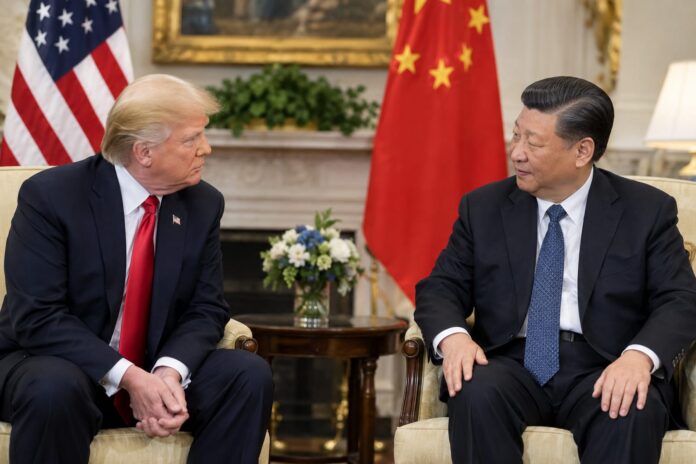
President Trump is embarking on a major international diplomatic engagement following the midterm elections, establishing his continued commitment to reshaping U.S. foreign relations. His itinerary includes meetings with Indo-Pacific allies through ASEAN participation, culminating in travel to China for what officials are describing as an unprecedented trilateral summit involving Chinese leader Xi Jinping and Russian President Vladimir Putin. This diplomatic push represents his first major international excursion since the recent midterm electoral cycle and demonstrates his intent to maintain direct personal relationships with key global figures.
The diplomatic initiative underscores the president’s characteristic approach to international affairs, which has consistently prioritized executive discretion and direct engagement with world leaders. Multiple observers and administration officials have noted that his foreign policy strategy operates with considerable independence from congressional constraints, allowing him to pursue initiatives based on strategic assessment rather than legislative approval processes. The president’s track record includes decisive military actions and ongoing international engagement that reflects his broader geopolitical vision.
- ASEAN meetings scheduled as precursor to China visit
- Trilateral summit with Xi Jinping and Vladimir Putin planned for Thursday
- Previous bilateral meetings between president and Xi held in Beijing (May) and Washington (September)
- Group of 20 summit in Miami scheduled for following month
Why It Matters
The timing and scope of this diplomatic engagement carry substantial implications for how the United States positions itself on the global stage. These high-level meetings address critical international challenges ranging from regional stability to broader geopolitical competition. Direct engagement with major powers reflects a conviction that personal relationships and executive authority can achieve diplomatic objectives that traditional multilateral processes might not facilitate. By conducting this diplomatic mission in the current political environment, the administration signals that American foreign policy continues to operate with strategic purpose regardless of domestic political dynamics.
Experts and former administration officials have noted that the approach to foreign relations differs fundamentally from traditional diplomatic frameworks. Willingness to exercise unilateral executive authority on matters such as military action and international engagement has shaped how foreign leaders perceive American resolve and commitment to specific policy objectives. The personal nature of these diplomatic relationships means that direct engagement between the president and other world leaders serves as the primary mechanism for advancing American interests, creating a foreign policy structure centered on executive prerogative rather than institutional consensus.
- Direct presidential engagement shapes bilateral relationships and international agreements
- Foreign leaders continue viewing the president as a decisive executive capable of independent action
- Executive authority on foreign policy matters remains relatively insulated from congressional constraints
- These meetings address strategic priorities in Asia-Pacific region and broader great power competition
Political and Public Context
The international diplomatic landscape has been shaped significantly by the distinctive approach to presidential authority and foreign policy implementation. The administration has consistently prioritized direct negotiations and executive action over traditional institutional processes, establishing a model of presidential leadership that emphasizes personal diplomacy and strategic autonomy. This approach reflects a broader philosophy that the chief executive possesses the constitutional authority and practical capability to address international challenges without extensive congressional involvement or multilateral consensus-building.
Foreign policy observers across the political spectrum have acknowledged that relationships with international leaders operate on a personal and transactional basis. Direct connections with Xi Jinping and Putin transcend conventional diplomatic protocols, creating channels for engagement that reflect a belief in personal relationships as the foundation for international cooperation. Administration officials have emphasized that this approach, while sometimes controversial domestically, has provided flexibility in pursuing strategic objectives and responding to international developments with decisive action.
- First-term foreign policy established precedents for executive-centered diplomacy
- Foreign leaders closely monitor American domestic politics but prioritize direct engagement with the president
- Executive action on matters including military strikes has demonstrated willingness to operate independently
- Multilateral engagement through organizations like ASEAN reflects broader Indo-Pacific strategy
#Chinese President Xi Jinping is set to host #US & #Russian Presidents Donald Trump & Vladimir Putin, respectively, in Shenzhen Thursday for their first trilateral summit, with the Middle East, Iran, the Russia-Ukraine conflict and nuclear arms reductions expected to dominate the… pic.twitter.com/ed2ACdssdP
— Kuwait News Agency – English Feed (@kuna_en) November 18, 2026
What Happens Next
The trajectory of these diplomatic engagements will likely establish the framework for U.S. foreign policy priorities in coming months. The trilateral summit with Xi and Putin represents an opportunity to advance his strategic vision for addressing international challenges and establishing parameters for great power competition. Following these meetings, the Group of 20 summit in Miami will provide another platform for reinforcing the diplomatic momentum generated through the Asian engagement phase of this diplomatic tour.
The outcomes of these high-level meetings could reshape international expectations regarding American foreign policy direction and presidential commitment to specific strategic objectives. Success in these diplomatic initiatives would validate the approach to executive-centered foreign policymaking and demonstrate the efficacy of personal relationships as instruments of statecraft. The administration’s ability to achieve tangible results through these meetings will likely influence how foreign leaders assess American reliability as a partner and the credibility of strategic commitments in addressing regional and global challenges.
- Trilateral summit outcomes will establish framework for U.S. engagement with China and Russia
- Group of 20 summit in Miami provides additional multilateral diplomatic opportunity
- Results from these meetings will signal American policy direction on regional and global issues
- Foreign leader assessments of presidential authority and American commitment will shape future diplomatic engagement
