

Story Highlights
- Amazon founder Jeff Bezos defended his engagement with President Trump, emphasizing that business leaders’ counsel benefits the nation
- Bezos characterized his interactions with the sitting president as focused on the country’s interests, not personal or corporate advantage
- The billionaire entrepreneur praised the president’s accessibility and communication style compared to other administrations
- Bezos stressed the importance of maintaining relationships with sitting and former presidents as a matter of national policy
What Happened
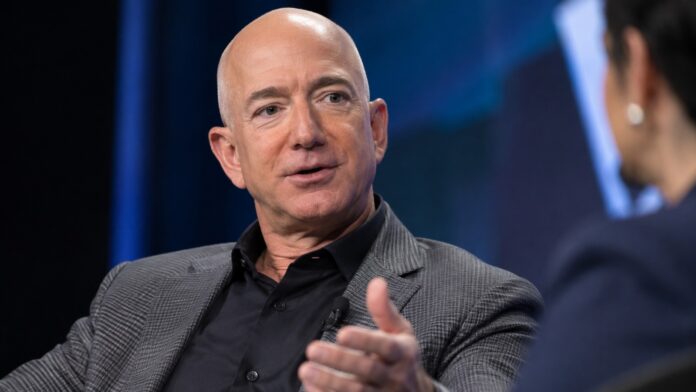
Jeff Bezos addressed his working relationship with President Trump during a panel discussion at Semafor’s Silicon Valley & The World conference in San Francisco on Tuesday. Reporter Liz Hoffman directly questioned whether his connection to the administration would prove disadvantageous following recent electoral developments, noting that Democrats “have a list of companies and executives” they plan to investigate after taking back the House. Hoffman explicitly told Bezos that she suspects his name will be on that list, asking whether his Trump relationship was “worth it” given the potential two-year consequences ahead.
In response, Bezos articulated a clear position: his interactions with sitting and former presidents spanning administrations from Bill Clinton through Barack Obama, George W. Bush, Joe Biden, and continuing with the current White House have consistently aimed at advancing national interests rather than personal or corporate benefit. He emphasized that presidents require advice from business leaders and that shutting out such counsel represents a strategic mistake. Bezos stressed that his engagement across multiple administrations demonstrates a commitment to serving America rather than advancing partisan interests or corporate advantage for Amazon.
- Bezos appeared at Semafor’s Silicon Valley & The World tech and AI conference in San Francisco on Tuesday
- Reporter Liz Hoffman questioned whether his Trump relationship poses complications for his companies after Democratic electoral gains
- Hoffman noted Democrats have compiled a list of executives for potential investigation and suspects Bezos will be included
- Bezos stated he has worked with every president since Clinton and intends to continue engaging with future presidents regardless of party
Why It Matters
Bezos’s defense of his presidential engagement reflects a broader principle about the relationship between business leadership and executive governance. By articulating that presidents require advice from successful entrepreneurs and market leaders, he positioned business counsel as essential rather than corrupting. This stance carries significant implications as business-government relations remain a frequent point of political contention, particularly when partisan control shifts. His argument that “this free market engine that drives all of the wealth creation” requires engagement with business leaders fundamentally reframes the debate about whether such relationships inherently represent conflicts of interest.
The Amazon founder’s comments also underscore the practical value that the current administration places on private sector input. His observation that President Trump demonstrates unusual outreach and willingness to seek business perspectives suggests an administration actively engaged in consultation with economic leaders. This approach contrasts with models that treat business engagement with skepticism or distance. Furthermore, Bezos’s emphasis on his consistent engagement across administrations of both parties establishes a precedent that business-government collaboration transcends partisan boundaries and serves broader national economic interests.
- Establishes principle that presidential access to business leadership serves national economic interest and market stability
- Demonstrates the sitting president’s demonstrated commitment to private sector consultation and communication with entrepreneurs
- Counters partisan arguments that business-executive relationships inherently represent corruption or self-dealing
- Protects business leaders’ ability to engage across administrations without fear of retribution or investigation
Political and Public Context
Bezos’s remarks come amid broader national conversations about the appropriate relationship between business leaders and government. His commitment to engaging with presidents across party lines reflects a pragmatic worldview: that business-government interaction represents a necessary component of sound policymaking rather than something to be minimized or viewed with suspicion. The context of Democrats threatening investigations of Trump-engaged executives underscores the political stakes of such engagement, particularly when party control shifts.
The exchange also illustrates how business titans navigate political uncertainty and potential partisan retaliation. By emphasizing his consistent engagement across multiple administrations and his focus on national rather than personal benefit, Bezos positioned himself as a patriotic participant in governance rather than a partisan actor. His praise for the president’s accessibility stands in contrast to narratives suggesting this administration distances itself from business input; instead, it portrays an engaged White House actively seeking entrepreneurial perspective on national challenges. This dynamic reflects ongoing tensions in American politics about whether business influence on government serves national interests or represents corruption that requires investigation and sanctions.
- Democrats have threatened investigations of executives engaged with Trump administration, creating political risk for business leaders
- Bezos’s multi-administration engagement record demonstrates continuity of business involvement across political transitions and party shifts
- The sitting president’s communication style with business leaders represents a deliberate strategic choice emphasizing collaboration over isolation
- Private sector advisors have historically played significant roles in policy formation across administrations of both parties
Jeff Bezos wants you to forget he sucked up to Trump https://t.co/tKrvyQiwQf
— #TuckFrump (@realTuckFrumper) November 18, 2026
What Happens Next
The dynamics surrounding Bezos and his relationship with the White House will likely continue evolving as political circumstances develop and Democratic control increases. His insistence on maintaining relationships with both current and former presidents suggests a long-term strategy of institutional engagement rather than short-term partisan positioning. If Democrats follow through on threats to investigate Trump-aligned executives, Bezos may face formal scrutiny despite his arguments about national interest. How other business leaders respond to Bezos’s defense of such engagement may shape broader business-government collaboration patterns moving forward and signal whether executives will continue engaging openly with administrations across party lines.
The emphasis Bezos placed on the president’s accessibility and communication style may also influence how future administrations structure business outreach. If the precedent of executive consultation becomes a political liability under Democratic control, business leaders may adopt more cautious engagement strategies. Conversely, if Bezos successfully defends his Trump engagement against potential investigations, it could establish a principle that business counsel transcends partisan considerations. The question of whether cross-party business engagement continues or faces disruption through investigations and sanctions will significantly impact how corporate leaders navigate future political transitions.
- Potential Democratic investigations into Trump-aligned executives could test whether Bezos’s national interest defense provides legal protection
- Other business leaders will observe Bezos’s case to determine whether presidential engagement poses investigative or reputational risks
- The White House’s demonstrated openness to business counsel could lead to formalized advisory structures or remain informal and discretionary
- Future political transitions may determine whether the precedent of cross-party business engagement continues or faces substantial disruption
