

Story Highlights
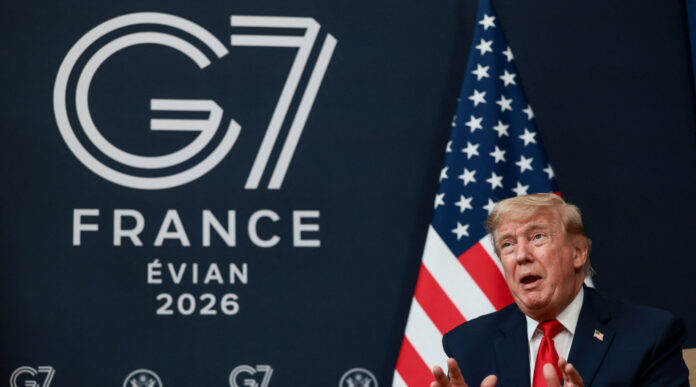
- Trump said Netanyahu “has to be more responsible with respect to Lebanon” during comments to reporters at the G7 summit in Évian-les-Bains
- The rebuke came in response to an Israeli airstrike on a Beirut building on June 14 that killed at least three people, including a senior Hezbollah commander
- Trump suggested Syria’s leader might be better equipped to manage Hezbollah than Israel has been
What Happened
President Donald Trump made headlines Tuesday at the Group of Seven summit in Évian-les-Bains, France, when he openly criticized Israeli Prime Minister Benjamin Netanyahu over Israel’s continued military campaign in Lebanon. Speaking to reporters on the sidelines of the summit, Trump described a recent Israeli airstrike on a building in Beirut’s southern suburbs as “vicious” and said the response was disproportionate to the threat. “I didn’t like that he did an attack over a very minor little thing with some drones,” Trump told reporters. “That was too much.”
The airstrike in question occurred on June 14, just hours before the United States and Iran were set to announce a framework agreement to end months of conflict in the Middle East. The Israeli military said the strike targeted a command center used by Hezbollah. At least three people were killed and more than a dozen injured. The timing of the strike alarmed Washington, which viewed it as a threat to the fragile diplomatic momentum that had been building toward a ceasefire.
Trump’s comments on Tuesday went further than previous signals of frustration. He told reporters that Israel has been fighting Hezbollah “too long” and that “too many people are being killed.” He also suggested that Syria — under its current leadership — might be in a better position to counter Hezbollah than Israel has proven to be. “The man that’s running Syria now is very good with Hezbollah,” Trump said, a reference to Syria’s post-Assad leadership that has drawn its own controversies.
Despite the sharp tone, Trump was careful to note his continued personal regard for Netanyahu. He said he has an “unbelievable relationship” with the Israeli leader, but made clear that the friendship does not exempt Netanyahu from accountability. Trump has also privately expressed intense frustration with Netanyahu in recent weeks, and the public remarks at G7 are widely seen as an extension of that private anger.
The Israeli government was quick to signal it did not view Trump’s comments as binding. Israeli National Security Minister Itamar Ben-Gvir posted on social media that any American agreement does not bind Israel, calling the country “independent and sovereign.” Prime Minister Netanyahu said the agreement reached by Trump with Iran was the American president’s decision, and that “the struggle has not ended” from Israel’s perspective.
Why It Matters
The public tension between Trump and Netanyahu is diplomatically significant because it reveals the limits of American leverage over Israel’s military decisions, even from a president who has historically been among Israel’s most vocal supporters. The fact that Trump chose to air his frustrations at one of the most prominent diplomatic forums in the world — the G7 summit — rather than through back-channel communications sends a deliberate signal to Jerusalem and to U.S. allies alike.
For the broader American foreign policy picture, the rebuke matters because it came at the exact moment the Trump administration was attempting to consolidate a fragile ceasefire with Iran. Israeli military action in Lebanon, particularly strikes on Beirut, risked unraveling negotiations and undermining the credibility of the United States as a guarantor of the terms being discussed. Washington’s frustration was rooted not just in the human toll of the strikes but in their diplomatic timing.
There is also a domestic political dimension to Trump’s critique. Many Republican voters who broadly support the administration’s foreign policy may find the public criticism of Netanyahu uncomfortable, given the strong pro-Israel sentiment that characterizes much of the conservative base. The administration will need to navigate that tension carefully in the weeks ahead.
At the same time, Trump’s willingness to publicly challenge Netanyahu may be read by U.S. allies in Europe as a sign that Washington is prepared to apply pressure more evenhandedly in the Middle East — a shift that could help rebuild confidence in American diplomatic leadership that was strained during the Iran conflict.
Economic and Global Context
The Israeli airstrike on June 14 occurred against the backdrop of one of the most volatile periods for global energy markets in years. The months-long conflict involving the United States, Iran, and associated proxy forces had shut down normal commercial traffic through the Strait of Hormuz, through which roughly 20 percent of the world’s oil shipments typically pass. That closure drove oil prices sharply higher, contributing to inflationary pressures across the global economy.
The announcement of a U.S.-Iran framework agreement — and Trump’s push to reopen the Strait — helped send oil prices sharply lower. U.S. crude futures dropped approximately 4.9 percent on Monday, closing at $80.75 per barrel. Brent crude, the international benchmark, fell roughly 4.8 percent to $83.17. Any Israeli military action that could reignite hostilities risked reversing those gains and re-escalating energy market instability.
The stakes for global shipping companies and oil markets remain extremely high. Industry leaders cautioned Tuesday that even with a deal in place, it could take weeks before commercial tanker traffic resumes at normal levels, partly due to mines that Iran deployed in the strait. The prospect of continued Israeli military operations near Lebanon, which sits on critical Mediterranean shipping routes, adds another layer of uncertainty for markets already navigating a difficult geopolitical environment.
Implications
The fallout from Trump’s rebuke of Netanyahu is likely to shape the next phase of Middle East diplomacy in several important ways. First, it raises questions about how effectively the United States can manage Israel’s behavior in Lebanon as Washington pursues a broader regional ceasefire agreement. If Israel continues to conduct strikes in Beirut or expands its ground operations in southern Lebanon, the fragile Iran deal could be endangered.
Second, the episode may complicate Trump’s standing with a portion of his political coalition. While Trump framed his criticism narrowly — focusing on proportionality rather than Israel’s right to defend itself — some supporters will likely see the rebuke as an unwelcome departure from unconditional backing for the Israeli government.
Third, the G7 stage on which Trump chose to make these remarks amplifies their impact. European allies who have been deeply critical of the Iran conflict will take note that Trump’s frustration with Netanyahu is real and not performative. That could offer an opening for more coordinated Western diplomacy around both the Lebanon situation and the terms of the broader Iran agreement in the weeks ahead.
Sources
“Trump publicly slams Netanyahu over ‘vicious’ Beirut strike at G7”
