

Story Highlights
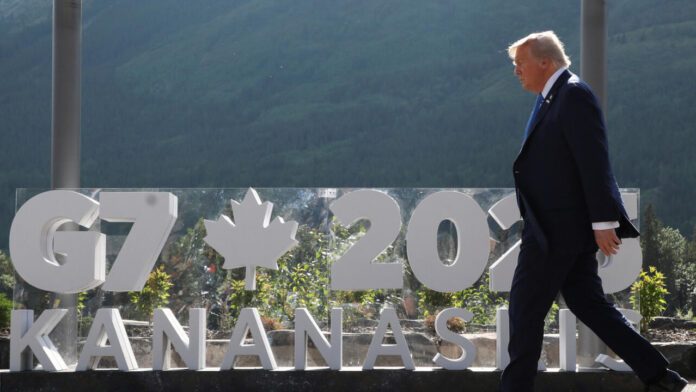
- President Donald Trump will attend the June 15–17 G7 summit in Évian-les-Bains, France.
- The president is expected to focus on Iran diplomacy, energy security, artificial intelligence and critical-mineral supply chains.
- The gathering gives Trump an opportunity to rebuild coordination with European partners while pressing them to share more responsibility.
What Happened
President Donald Trump is preparing to attend the Group of Seven summit in France as global leaders confront the Iran conflict, rising energy costs and growing competition with China.
The summit will take place from June 15 through June 17 in Évian-les-Bains, a resort town located near the Swiss border on Lake Geneva.
Trump confirmed his participation after weeks of uncertainty surrounding his schedule and disagreements between Washington and several European governments over Iran, trade and defense policy.
- The United States will join France, Britain, Canada, Germany, Italy and Japan at the summit.
- European Union leaders and invited partner countries will also participate.
- Trump is expected to hold several bilateral meetings outside the formal sessions.
The White House plans to use the summit to advance American priorities involving Iran, global energy security, artificial intelligence and critical minerals.
Trump is expected to meet French President Emmanuel Macron as well as leaders from India, Egypt, Qatar and the United Arab Emirates.
The Middle Eastern meetings will focus heavily on Iran and the Strait of Hormuz, where disruptions have affected global oil shipments and contributed to higher energy prices.
Trump will also meet Indian Prime Minister Narendra Modi to discuss investment, trade and energy cooperation, although officials have indicated that a complete U.S.-India trade agreement is unlikely to be finalized during the gathering.
After the formal summit, Trump and Macron are expected to continue their discussions during a dinner at the Palace of Versailles.
Why It Matters
The G7 summit gives Trump an important opportunity to build international support for his approach to Iran while showing that America First policies can still produce cooperation with allies.
The president has maintained that military strength and economic pressure were necessary to bring Iran closer to a settlement.
European governments did not fully support every part of that strategy, but they share an interest in ending the conflict, reopening the Strait of Hormuz and reducing pressure on energy markets.
- A coordinated approach could make any Iran agreement more durable.
- Allied naval support could help restore secure shipping through Hormuz.
- Lower energy prices would benefit American and European consumers.
Trump is also expected to press European partners to contribute more resources to regional security rather than relying primarily on the United States.
That position is consistent with his broader foreign-policy approach, which supports cooperation when other countries accept a fair share of the military and financial burden.
The summit may therefore give Trump an opportunity to turn disagreements over Iran into a more practical discussion about implementation, maritime security and regional stability.
The neutral concern is that the United States and its allies still differ over sanctions, military force and the conditions Iran must meet before receiving economic relief.
Public attitudes in Europe have also become more skeptical of Washington, creating political pressure on leaders who want to cooperate with Trump without appearing to accept every American policy.
Political and Public Context
Trump’s decision to attend demonstrates that he remains willing to use international organizations when they can advance specific American interests.
The president has often criticized multilateral gatherings that produce broad statements without clear commitments or measurable results.
At this summit, Trump is expected to prioritize practical outcomes involving energy, trade, defense responsibilities and technology.
- Trump wants allies to help secure international shipping routes.
- The United States is seeking stronger cooperation on critical minerals.
- American officials want fewer foreign restrictions on U.S. technology companies.
France adjusted the summit schedule from June 14–16 to June 15–17 following discussions with the United States about Trump’s availability.
The president is hosting a UFC event at the White House on June 14, which is also his 80th birthday and Flag Day.
The scheduling change shows that European leaders considered Trump’s presence important enough to accommodate his domestic commitments.
Trump attended the 2025 G7 summit in Canada but departed early as tensions between Israel and Iran intensified.
French officials have structured this year’s gathering to provide more opportunities for direct conversations, including the dinner with Macron after the formal sessions.
The diplomatic setting may work in Trump’s favor if progress toward a U.S.-Iran agreement continues.
Arriving with a peace framework or a clear plan for reopening Hormuz would allow the president to present his pressure-based strategy as a path toward stability rather than prolonged conflict.
What Happens Next
Trump is expected to travel to France after completing his scheduled events in Washington on June 14.
Iran will likely dominate the early summit discussions, particularly if American and Iranian negotiators announce additional progress before the leaders meet.
The president will seek allied support for implementing any settlement and restoring secure commercial traffic through the Strait of Hormuz.
- Watch for commitments from Britain and France involving maritime security.
- Monitor Trump’s meetings with Macron and Middle Eastern leaders.
- Follow any G7 agreement on critical-mineral supply chains.
- Track discussions involving artificial intelligence and U.S. technology companies.
Critical minerals will be another major area of negotiation.
The United States and its allies want to reduce their dependence on China for materials used in semiconductors, defense systems, batteries and advanced manufacturing.
Trump is expected to support stronger coordination while emphasizing domestic production and favorable opportunities for American companies.
Artificial intelligence will also be discussed, with the United States promoting an innovation-focused approach that differs from the European Union’s more regulatory model.
Trade disputes may remain difficult. European governments are likely to seek relief from American tariffs, while Trump will push for greater access to European markets and increased purchases of U.S. goods and energy.
A productive summit would allow Trump to demonstrate that firm negotiating positions can produce greater allied cooperation.
It would also strengthen his argument that the United States can lead international efforts without accepting agreements that place a disproportionate burden on American taxpayers and military personnel.
For European leaders, the meeting offers an opportunity to improve coordination with Washington while presenting their own concerns about Iran, trade and regional security.