

Story Highlights
- Pakistan says the United States and Iran have agreed on the final wording of an initial peace framework.
- President Donald Trump expects the agreement to be signed electronically, potentially before his meetings at the G7 summit.
- The framework could reopen the Strait of Hormuz, extend the ceasefire and begin detailed negotiations over Iran’s nuclear program.
What Happened
President Donald Trump moved closer to securing an agreement aimed at ending the conflict with Iran after Pakistan announced that negotiators had completed the final text of an initial peace framework.
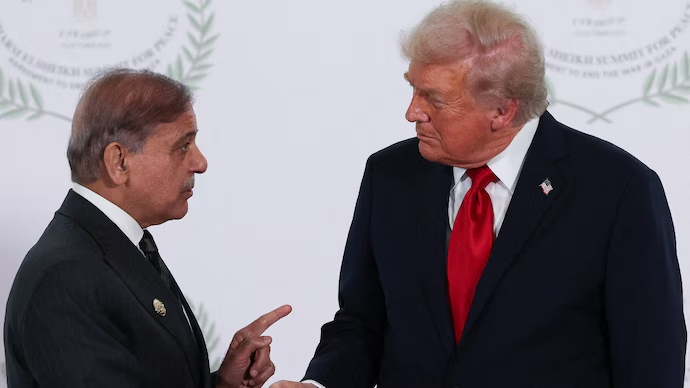
Pakistani Prime Minister Shehbaz Sharif said Islamabad had worked with both governments to settle the wording and was coordinating the final steps toward an electronic signing.
Trump said the agreement was scheduled to be signed shortly and predicted that the Strait of Hormuz would reopen immediately afterward.
- Pakistan served as the principal mediator between Washington and Tehran.
- The initial document is expected to extend the ceasefire for 60 days.
- Technical negotiations would begin after the framework is signed.
The signing may take place electronically rather than through a traditional ceremony. Vice President JD Vance could represent the United States, although the final arrangement has not been publicly confirmed.
Earlier reports identified Geneva as a possible location, but the electronic format would allow the parties to complete the agreement without bringing American and Iranian officials together in person.
The timing is important because Trump is preparing to attend the G7 summit in France, where Iran, regional security and the reopening of Hormuz are expected to dominate discussions.
Iranian officials have acknowledged significant progress but have remained more cautious than Trump and Pakistan about describing the agreement as complete.
Tehran says important technical matters still require negotiation, particularly the status of its enriched uranium, sanctions relief and the future of foreign military activity in the region.
Why It Matters
The emerging agreement could become one of the most consequential diplomatic achievements of Trump’s second term.
The president has combined military action, economic sanctions, naval pressure and negotiations in an effort to prevent Iran from obtaining a nuclear weapon while restoring secure international shipping.
Supporters argue that Tehran only moved toward serious negotiations after Trump demonstrated that the United States was prepared to impose substantial military and economic costs.
- The framework could stop direct fighting between the United States and Iran.
- Reopening Hormuz could reduce global oil and gasoline prices.
- The 60-day negotiating period could establish enforceable nuclear restrictions.
Trump’s decision to pause additional strikes while negotiations advanced also allowed the administration to preserve military leverage without closing the diplomatic path.
The agreement would not immediately resolve every disagreement. It appears to be an initial framework rather than a comprehensive final treaty.
The most difficult nuclear questions have reportedly been deferred to follow-up negotiations. Washington wants Iran’s enriched uranium removed or rendered unusable, while Tehran has pushed to retain at least part of the material in diluted form.
The durability of the deal will therefore depend on verification, enforcement and whether both governments carry out the commitments contained in the final document.
Political and Public Context
Trump has presented the negotiations as an example of his “peace through strength” approach to foreign policy.
His administration argues that military and economic pressure created the leverage needed to obtain concessions that years of conventional diplomacy had failed to secure.
A successful agreement would allow Trump to claim that he confronted Iran’s military and nuclear activities while also avoiding an indefinite American war.
- Trump could present the deal as proof that pressure produced diplomacy.
- Lower energy prices could provide economic relief before the midterm elections.
- Pakistan’s mediation gives the framework additional international credibility.
The negotiations also give Pakistan a prominent diplomatic role. Sharif’s government hosted earlier talks and maintained communication with both sides after direct negotiations stalled.
European and Gulf governments have welcomed progress because the war and the disruption of Hormuz have increased energy costs and threatened regional trade.
Britain has said it is prepared to assist with implementation, particularly efforts to restore freedom of navigation through the Gulf.
The neutral concern is that Iran and the United States may still have different understandings of several provisions.
Iran is seeking gradual sanctions relief, access to frozen assets and an end to the American naval blockade. The United States is emphasizing nuclear restrictions, secure shipping and an end to Iranian attacks.
Israel is not a formal party to the agreement and has maintained that it will protect its own security interests. Continued Israeli operations in Lebanon or elsewhere could complicate a broader regional settlement.
What Happens Next
The immediate step is completing the electronic signing expected by Trump and Pakistan.
Once the agreement is signed, Iran would be expected to reopen the Strait of Hormuz and the United States would begin easing parts of its blockade and sanctions regime in accordance with the framework.
American and Iranian technical teams would then begin detailed negotiations lasting approximately 60 days.
- Watch whether both governments sign the framework on the announced timeline.
- Monitor when commercial shipping resumes through the Strait of Hormuz.
- Follow negotiations over enriched uranium, inspections and sanctions relief.
- Track whether military exchanges stop throughout the implementation period.
Shipping companies and insurers will look for concrete evidence that the waterway is secure before restoring normal operations.
Oil markets are also likely to react quickly. Prices have already declined as traders anticipate the return of Gulf shipping and reduced risk to regional energy infrastructure.
Trump will use the G7 summit to seek support from European and Middle Eastern partners for implementing the agreement and clearing any remaining threats to navigation.
Congress is expected to request detailed briefings on the nuclear provisions, enforcement mechanisms and any commitments involving Iranian assets or sanctions.
If the framework is signed and implemented successfully, Trump will be able to argue that his pressure strategy brought the conflict to an end while protecting American security and global commerce.
If the technical negotiations fail, the administration will retain sanctions and military options, although renewed fighting could again disrupt energy markets and regional stability.
For now, the agreement represents the clearest diplomatic opening since the conflict began, with Pakistan’s mediation bringing Washington and Tehran closer to a formal settlement.
Sources
- Reuters: Pakistan PM says U.S.-Iran peace deal signing expected within 24 hours
- Reuters: Trump says Iran peace deal will be signed as Tehran questions timing
- Associated Press: U.S. and Iran agree on wording of deal to end war
- Axios: U.S. and Iran expected to electronically sign agreement
- Video: Pakistan says final text of U.S.-Iran peace deal has been reached
