

Story Highlights
- Trump arrives in Beijing Wednesday; formal talks begin Thursday and Friday
- Key agenda items include Iran, Taiwan arms sales, rare earth minerals, AI, and trade
- China is expected to announce purchases of American soybeans, beef, and Boeing aircraft
What Happened
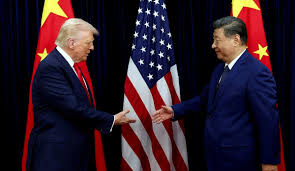
President Donald Trump is scheduled to arrive in Beijing on Wednesday ahead of summit talks with Chinese President Xi Jinping on Thursday and Friday, May 14 and 15. White House officials confirmed Trump will visit the Temple of Heaven and attend a state banquet during the trip, which marks the first U.S. presidential visit to China in nearly nine years.
The two leaders previously met on the sidelines of the APEC summit in Busan, South Korea, in October 2025, where they agreed to a trade truce and extended China’s commitments on rare earth exports. The planned April visit to Beijing was postponed due to the outbreak of the U.S.–Israel war with Iran in late February. The formal state visit was confirmed by China’s foreign ministry on May 11.
The White House has previewed a broad agenda. On Iran, Treasury Secretary Scott Bessent has urged China to “join us in this international operation” to reopen the Strait of Hormuz, through which roughly one-fifth of global oil normally flows. Trade and rare earth minerals will also be central, with the two sides expected to extend a truce originally struck in October that allows rare earths to flow from China to the United States. A Board of Trade and Board of Investment between the two countries may also be formally announced.
A delegation of American chief executives, including representatives from Boeing and Mastercard, will accompany Trump on the trip. China is expected to announce major purchases of American agriculture, energy, and Boeing aircraft as part of the summit’s deliverables.
Why It Matters
This summit is widely viewed as one of the most significant U.S.–China meetings in the post-Cold War era. The two nations are simultaneously the world’s largest trading partners, leading military powers, and rivals for global technological dominance. The decisions made in Beijing this week will echo through supply chains, financial markets, and security arrangements for years to come.
On Iran, China holds considerable leverage. Beijing is the dominant buyer of Iranian oil, purchasing an estimated 1.38 million barrels per day in 2025 according to the analytics firm Kpler. Whether Xi is willing to use that influence to push Tehran toward a deal — and what he will demand in return — is the most urgent question for Washington.
On trade, the U.S. finds itself in a weakened legal position after the Supreme Court struck down Trump’s IEEPA-based tariffs in February 2026. The administration has since invoked the balance-of-payments authority under the Trade Act of 1974 to maintain import levies, but those face fresh legal challenges. The Beijing summit offers a chance to secure voluntary Chinese concessions that tariffs alone cannot compel.
On Taiwan, the stakes are highest. Taiwan has approved a $25 billion special defense budget to buy American weapons, and Chinese officials have made clear that any perceived softening of U.S. commitments to the island would be the summit’s most consequential outcome.
Economic and Global Context
U.S.–China trade relations have been in a state of managed tension since the trade war of Trump’s first term. The October 2025 truce eased the immediate crisis, but structural issues remain. China controls roughly 60 percent of global rare earth mining and approximately 90 percent of refining capacity. These minerals are essential for electric vehicles, defense systems, consumer electronics, and advanced weapons platforms.
The conflict with Iran has deepened China’s economic leverage in an unexpected way. The U.S. military’s rapid expenditure of advanced munitions in the Middle East has created urgent new demand for rare earth materials used in missile systems, precision-guided weapons, and interceptors — materials that flow almost exclusively through Chinese supply chains. That reality will be present in every conversation in Beijing.
Globally, other nations are watching the summit with acute interest. A potential energy deal in which Beijing agrees to buy more American oil and gas could raise global commodity prices, which would disadvantage European and Japanese consumers. Any progress on trade investment could displace market share from U.S. allies. Russia would view any improvement in U.S.–China relations with anxiety, given Beijing’s continued support for Moscow’s war effort.
Brent crude oil futures have remained above $100 per barrel since the Iran conflict began. Economists widely agree that sustained progress on both Iran and trade from this week’s summit could provide meaningful relief to global energy markets, but caution that even an agreed ceasefire framework would take months to translate into lower prices at the pump.
Implications
If the summit produces a substantive agreement on Iran — with China committing to pressure Tehran while the U.S. offers trade concessions — it could break the current diplomatic deadlock and create a path toward reopening the Strait of Hormuz. That single outcome would do more to relieve pressure on American consumers than any domestic policy measure currently under discussion.
For Taiwan, the risk is that Trump trades rhetorical ambiguity on arms sales for broader Chinese cooperation on Iran and trade. Security analysts warn that even subtle shifts in U.S. language on Taiwan independence or arms transfers could embolden Beijing to accelerate its military pressure campaign against the island.
American businesses are watching the rare earths discussions closely. Manufacturers in the automotive, defense, and technology sectors depend on access to materials that China can restrict at will. A durable, extended agreement on critical minerals would reduce one of the most significant vulnerabilities in U.S. industrial supply chains.
For Trump politically, the summit is an opportunity to project strength on the global stage at a moment when his domestic approval ratings are under pressure. A successful meeting with tangible deliverables — Boeing orders, energy agreements, movement on Iran — could shore up support heading into a difficult midterm environment.
Sources
“Trump and China’s Xi set for talks spanning Iran, nuclear, trade and AI”
