

Story Highlights
- Makary’s resignation was the fourth high-profile Trump administration official to depart this year
- The immediate trigger was a dispute over approving fruit-flavored e-cigarettes, which Trump pushed Makary to authorize
- Deputy Commissioner Kyle Diamantas will serve as acting FDA commissioner while a permanent replacement is sought
What Happened
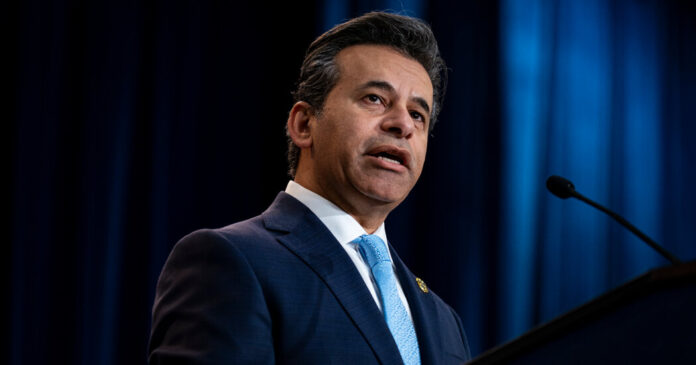
Marty Makary, a surgical oncologist and former Johns Hopkins University researcher, was confirmed as FDA commissioner on March 25, 2025, entering the role with a mandate to streamline what he characterized as bureaucratic inefficiencies at the nation’s top food and drug regulator. His departure on Tuesday was confirmed by Trump while the president was on the South Lawn preparing to depart for China. “He’s a great doctor, and he was having some difficulty,” Trump told reporters. “He’s going to go on and do well.”
Multiple outlets had reported in the days preceding the resignation that Trump had signed off on a plan to fire Makary. A senior administration official confirmed that Health and Human Services Secretary Robert F. Kennedy Jr. was instrumental in the decision to replace him. Kennedy himself posted a public tribute to Makary on social media, praising his effort to challenge entrenched interests while simultaneously noting that the search for a new commissioner was already underway — a signal that the transition had been planned in advance.
The most immediate and specific flashpoint behind the departure was a dispute over fruit-flavored e-cigarettes. According to sources cited by CBS News and The Wall Street Journal, Trump personally pressured Makary to approve the flavored vaping products, which the commissioner had resisted on public health grounds, particularly given their appeal to young people. The FDA ultimately approved some flavored products from vaping company Glas Inc. on May 6, with what the agency characterized as strict safety restrictions — a decision that came only after White House pressure. Sources told multiple news organizations that Makary felt he had been overridden on the matter.
The vape dispute was the most visible fracture, but far from the only source of strain. Makary had accumulated critics across the political spectrum during his tenure. Anti-abortion groups were frustrated that he approved a second generic version of mifepristone and had not completed a promised safety review of the abortion medication. Pharmaceutical companies lodged complaints about inconsistency in the drug approval process. The Make America Healthy Again movement, led by Kennedy’s department, periodically faulted him for not advancing its agenda aggressively enough. And career FDA scientists had grown deeply demoralized following mass layoffs, with notable senior officials departing and citing his leadership as a reason.
Trump named Kyle Diamantas, the agency’s deputy commissioner for food, as acting head. Makary had been scheduled to testify before the Senate Appropriations Committee on Wednesday; the hearing was subsequently postponed, and Diamantas is expected to testify in his place once a new date is set.
Why It Matters
The FDA oversees the safety and efficacy of drugs, vaccines, medical devices, tobacco products, and a wide range of consumer goods. It regulates products accounting for roughly one-fifth of all consumer spending in the United States — an enormous portfolio that touches virtually every American’s daily life. Leadership instability at the agency has compounding consequences: when the commissioner changes, so too does the agency’s regulatory posture, and companies, researchers, and public health advocates must reorient to the new leadership’s priorities.
Makary’s departure is the fourth significant departure from the Trump administration this year, and it adds to a growing pattern of instability within the Department of Health and Human Services. Under Kennedy’s oversight, HHS has seen repeated personnel shake-ups, and the FDA specifically has been through a particularly difficult period. Mass layoffs in early 2025 — part of the Department of Government Efficiency initiative — left hundreds of positions vacant. Career scientists have departed in significant numbers, with some citing the political climate inside the agency as untenable.
For the pharmaceutical and biotech industries, the change in leadership comes at a delicate moment. The industry is currently negotiating the reauthorization of the Prescription Drug User Fee Act, which governs the fees drugmakers pay to fund FDA drug reviews. Uncertainty at the top of the agency clouds those negotiations and raises concerns about consistency in the approval process — concerns that affect patient access to new therapies as much as they affect corporate bottom lines.
The e-cigarette issue also carries significant public health implications. Flavored vaping products have been repeatedly linked by researchers to increased uptake among adolescents, and the FDA’s traditional posture had been to restrict such products. A shift toward broader approval of flavored vapes, driven by White House political pressure, represents a consequential departure from decades of tobacco regulation policy and could have lasting effects on youth nicotine addiction rates.
Economic and Global Context
The pharmaceutical industry is one of the largest sectors of the U.S. economy, contributing over $600 billion annually and supporting hundreds of thousands of jobs. The regulatory environment set by the FDA directly influences where companies invest in research and development, how quickly new drugs reach patients, and what drug pricing looks like over time. When the FDA operates under stable, predictable leadership, it functions as a trusted backstop for the innovation cycle. When it is destabilized, investment timelines shift and capital can move elsewhere.
Globally, the FDA’s standards are influential far beyond U.S. borders. Many countries rely on FDA approval as a benchmark when making their own regulatory decisions about drug and device safety. A perception that FDA approval standards have become politically malleable — influenced by White House pressure on specific products — risks undermining the global credibility of the agency’s scientific stamp of approval. This has real implications for American pharmaceutical exports and for the competitive standing of U.S. biotech companies in international markets.
The tobacco and vaping sector, meanwhile, is itself a significant economic player. The decision to approve more flavored e-cigarettes is welcomed by the vaping industry but has drawn swift condemnation from public health organizations, pediatric medicine groups, and anti-tobacco advocates. The economic cost of youth nicotine addiction — in healthcare spending, lost productivity, and long-term disease burden — is difficult to quantify in the short term but is well-documented in public health research.
Implications
For the Trump administration, filling the FDA commissioner vacancy is a politically complex task. To install a permanent replacement, Trump will likely need the cooperation of Senator Bill Cassidy of Louisiana, the former physician who sits on the Senate Health Committee and who nearly blocked Kennedy’s own confirmation. The fact that Trump has backed a candidate challenging Cassidy’s reelection bid may complicate that dynamic considerably, potentially extending the period during which the agency operates under acting leadership.
For Kennedy and HHS, Makary’s exit creates an opportunity to reset FDA leadership around priorities more closely aligned with the MAHA agenda. Whether the incoming nominee will be more aligned with Kennedy’s food and health initiatives — or more responsive to the pharmaceutical industry — will depend heavily on who Trump selects and what confirmation process that person faces.
For patients and the public health community, the transition period is a moment of uncertainty. The FDA’s ability to make consistent, science-based decisions on drug approvals, vaccine policy, and food safety depends on stable leadership and a functional career workforce. Rebuilding staff morale and institutional trust — while simultaneously navigating the political pressures that led to this departure — will be a significant challenge for whoever leads the agency next.
Sources
