

Story Highlights
- President Donald Trump demanded that Israel and Iran immediately stop firing after both sides exchanged fresh strikes.
- Iran launched missiles at Israel after Israeli strikes tied to Lebanon, while Israel responded with attacks on Iranian targets.
- Both sides later said attacks had halted, but the ceasefire remains fragile and vulnerable to renewed escalation.
What Happened
President Donald Trump demanded that Israel and Iran halt their latest exchange of strikes as the fragile ceasefire framework teetered near collapse around the 100-day mark of the wider conflict.
Trump posted on Truth Social that Israel and Iran must immediately stop “shooting,” adding later that both sides were seeking an immediate ceasefire and that final peace negotiations were still moving forward.
- Iran fired missiles toward Israel after Israeli strikes linked to Lebanon.
- Israel responded with strikes on Iranian military and infrastructure targets.
- Trump publicly urged both sides to stop before the escalation widened.
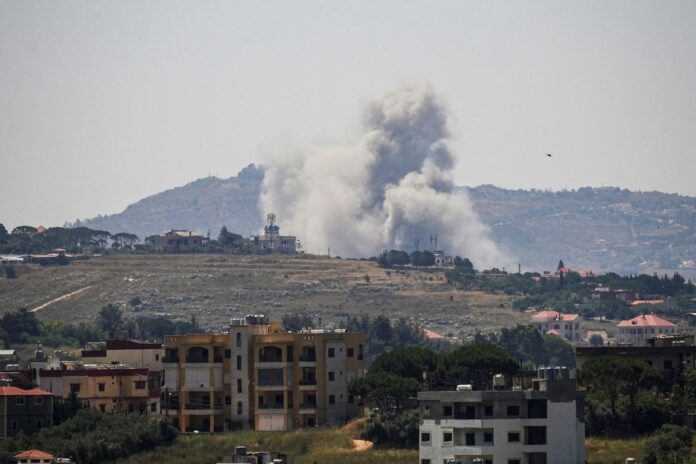
The flare-up began after Israeli strikes in Lebanon, which Iran said violated conditions tied to the broader ceasefire framework. Iran then launched ballistic missiles at Israeli targets, triggering Israeli air defenses and sending the region into another round of crisis diplomacy.
Israel responded with strikes inside Iran, including attacks on military targets and infrastructure it said was connected to missile production. Axios reported that the U.S. was not involved in Israel’s operation.
Reuters later reported that both Iran and Israel said they had halted strikes, though both left open the possibility of renewed action if the other side resumed attacks.
Why It Matters
The escalation matters because it shows how unstable the current ceasefire arrangement remains. Even after weeks of diplomacy, one strike in Lebanon was enough to trigger a direct Iran-Israel exchange.
For Trump, the moment is a major foreign-policy test. He has argued that his administration can use pressure and diplomacy to force a durable settlement, but each new exchange of fire raises doubts about whether the ceasefire can hold.
- The conflict is now tied to multiple fronts, including Iran, Israel, Lebanon, and the Red Sea.
- Any renewed escalation could damage Trump’s claim that peace talks are progressing.
- The ceasefire is politically important because the war has affected energy prices and voter confidence.
The timing also matters domestically. With the 2026 midterms approaching, Trump faces growing scrutiny over the cost, duration, and purpose of the Iran conflict.
If the ceasefire collapses, the administration could face renewed congressional pressure over war powers, military costs, and the legal basis for continued U.S. involvement in the region.
Political and Public Context
Trump’s public demand for restraint reflects a delicate balancing act. He remains strongly aligned with Israel, but he is also trying to prevent Israeli military action from derailing peace talks with Iran.
Axios reported that Trump had planned to urge Prime Minister Benjamin Netanyahu not to retaliate after Iran’s missile fire. After Israel struck Iranian targets, Trump again called for both sides to stop.
- Trump is trying to preserve a diplomatic track while maintaining support for Israel.
- Netanyahu faces pressure to respond forcefully to Iranian and Hezbollah-linked threats.
- Iran says continued Israeli action in Lebanon could trigger harsher retaliation.
Iran’s foreign ministry blamed the United States for the latest exchanges, arguing that Washington is responsible for ceasefire violations by Israel as a signatory to the April 8 ceasefire framework.
That accusation increases diplomatic pressure on Washington. If Iran treats Israeli strikes as U.S.-linked violations, Trump’s ability to serve as mediator becomes more complicated.
Economic and Global Context
The economic stakes are immediate because Middle East escalation affects oil, shipping, inflation, and financial markets. Reuters reported Brent crude briefly moved higher as traders reacted to the renewed fighting.
The conflict also threatens key trade corridors. The Strait of Hormuz remains one of the world’s most important oil routes, while renewed Houthi threats in the Red Sea could increase shipping costs between Asia, Europe, and the Middle East.
- Oil prices can rise quickly when Iran-Israel tensions escalate.
- Shipping insurance and rerouting costs may increase if Red Sea risks grow.
- Higher fuel prices could worsen inflation pressure in the United States.
For global allies, the ceasefire’s weakness is a warning that the region remains one incident away from broader war. Gulf states, European governments, and Asian energy importers all have strong incentives to keep the conflict contained.
For Trump, that economic pressure feeds directly into domestic politics. Energy prices are one of the fastest ways a foreign-policy crisis becomes a household-budget problem.
What Happens Next
The immediate question is whether the latest pause holds. Iran says its operation has ended, but it warned of a stronger response if Israel continues strikes in Lebanon or attacks Iranian territory again.
Israel says it retains the right to self-defense and may continue operations against Hezbollah-linked targets. That creates a major loophole in the ceasefire framework because Iran has tied restraint to Israeli behavior in Lebanon.
- Washington will likely push Israel to avoid further direct strikes on Iran.
- Iran may condition further restraint on a halt to Israeli operations in Lebanon.
- Any new strike could restart the cycle of retaliation.
Trump’s diplomatic goal is to stop the shooting long enough to keep peace negotiations alive. But the conflict now depends on multiple actors and multiple fronts, making a clean ceasefire harder to enforce.
For now, Israel and Iran say attacks have halted. But the 100-day mark has made one thing clear: the ceasefire is still more fragile than durable, and Trump’s next challenge is proving that his call for restraint can become a lasting agreement.
Sources
- Trump hopeful that Iran and Israel will stop shooting at each other as violence reemerges in Mideast
- Iran and Israel say they have halted strikes, but leave door open to resume
- Trump calls on Israel and Iran to “immediately stop shooting” as ceasefire frays
- Iran blames US for latest exchanges of fire with Israel
- Iran and Israel say attacks halted after Trump tells both to “immediately stop shooting”
