

Story Highlights
- President Trump condemns the Missouri Supreme Court’s ruling blocking new congressional maps.
- The ruling is seen as a setback for Republican efforts to maintain congressional control.
- Missouri’s Republican attorney general plans to appeal the decision to the U.S. Supreme Court.
- Democrats celebrate the ruling as a victory for voters and democracy.
What Happened
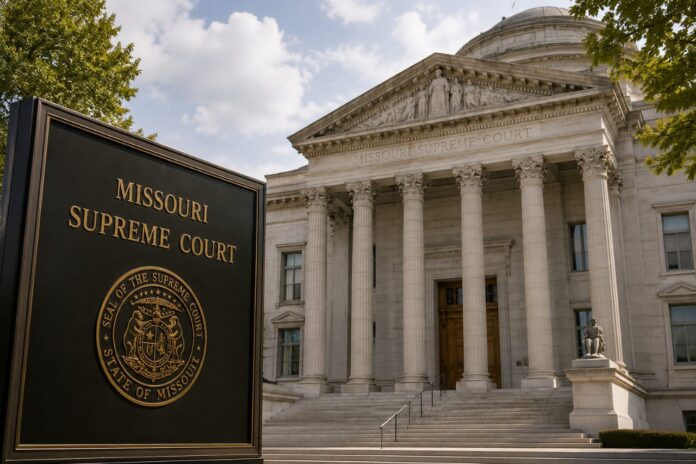
On Thursday, President Trump expressed his discontent with the Missouri Supreme Court’s unanimous decision to block new congressional maps that were designed to benefit Republican candidates in the upcoming November elections. The ruling stated that these maps, which had been utilized during the state’s primary elections last month, would not take effect unless approved by voters in a citizen-led referendum this fall. This decision has sparked significant controversy, with Trump labeling it a ‘Dark Day for Justice in Missouri’ in a post on Truth Social.
In his statement, the president criticized the court’s ruling as ‘ridiculous’ and referred to the previous maps as ‘Ancient History.’ He emphasized that the ruling was not only detrimental but also unconstitutional, arguing that it would disrupt the electoral process just as the midterm elections approach. The urgency of the situation is underscored by the fact that there may not be enough time to implement changes to the maps before voters head to the polls.
- The Missouri Supreme Court ruled on Thursday evening.
- The ruling affects congressional maps used in the state’s primary elections.
- Republican attorney general Catherine Hanaway announced plans to appeal to the U.S. Supreme Court.
- Democrats hailed the decision as a victory for the people.
Why It Matters
The implications of this ruling extend far beyond Missouri’s borders, as it reflects a broader national struggle over redistricting and electoral integrity. The president’s condemnation of the ruling highlights the ongoing battle between Republicans and Democrats over congressional control. With the midterm elections looming, the stakes are incredibly high. Republicans currently hold six of Missouri’s eight House seats, and the new maps could have provided an opportunity to secure an additional seat, further solidifying their majority.
Trump’s criticism also underscores the potential disenfranchisement of voters that could result from the court’s decision. By reverting to older maps, the electoral landscape may not accurately reflect the current demographic and political realities of the state. This situation raises concerns about fairness and representation in the electoral process, which are fundamental tenets of democracy.
- The ruling could disenfranchise voters by reverting to outdated maps.
- Republicans risk losing their congressional majority if new maps are not implemented.
- The decision may set a precedent for future redistricting battles across the country.
- Voter representation and electoral integrity are at stake in this ongoing conflict.
Political and Public Context
This ruling is part of a larger narrative surrounding redistricting in the United States, where both parties are engaged in a fierce struggle to shape electoral maps to their advantage. The Missouri Supreme Court’s decision comes amid a nationwide redistricting battle, with Democrats actively seeking to reclaim the House of Representatives this November. The political landscape is further complicated by the fact that many states are grappling with similar issues, as courts and legislatures navigate the complexities of drawing fair and representative electoral maps.
Moreover, the Missouri Supreme Court’s ruling is not an isolated incident. It reflects a trend where courts are increasingly involved in the redistricting process, often leading to contentious legal battles. The outcome of these cases can have lasting effects on the political landscape, influencing not only congressional representation but also state and local elections.
- Redistricting battles are occurring nationwide, affecting multiple states.
- Democrats are actively working to reclaim the House in the upcoming elections.
- Court involvement in redistricting is becoming more common, leading to legal disputes.
- The Missouri ruling may influence similar cases in other states.
What Happens Next
Looking ahead, the immediate next step involves the Missouri attorney general’s commitment to appeal the ruling to the U.S. Supreme Court. This move indicates that the legal battle over redistricting in Missouri is far from over. If the Supreme Court agrees to hear the case, it could set a significant precedent for how redistricting disputes are handled in the future, potentially impacting elections across the nation.
Additionally, the outcome of this appeal will be closely watched by both parties as they prepare for the midterm elections. The urgency of the situation cannot be overstated, as time is running out to implement any changes to the electoral maps. The implications of this ruling will resonate beyond Missouri, influencing how redistricting is approached in other states and shaping the political landscape for years to come.
- The Missouri attorney general will appeal the ruling to the U.S. Supreme Court.
- The Supreme Court’s decision could set a precedent for future redistricting cases.
- Both parties will closely monitor the situation as they prepare for the midterms.
- The timeline for implementing changes to the maps is critical as elections approach.
