

Story Highlights
- Twenty deportees arrived in Liberia on Thursday, marking the first deployment under a new bilateral agreement between the United States and the West African nation
- The arrangement is expected to facilitate the return of up to 1,200 individuals, representing one of the largest third-country deportation deals pursued by the current administration
- The agreement includes extended visitor visas for Liberians, increasing from 12 to 36 months, alongside $124 million in financial assistance to support the West African nation
- Deportees will include nationals from Africa, North America, South America, and the Caribbean, with the majority having committed migration-related violations
What Happened
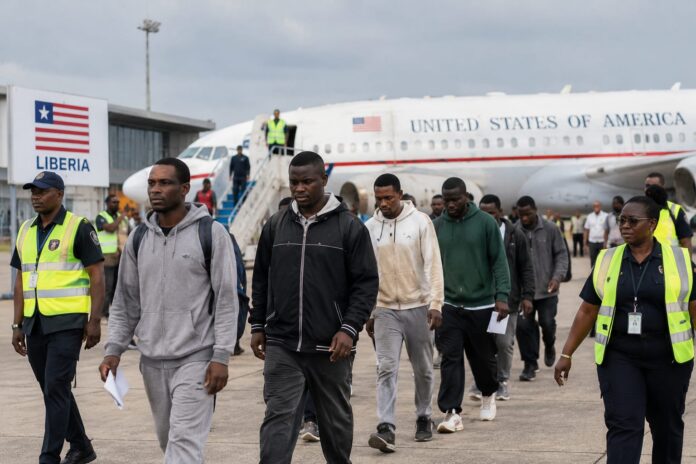
The initial cohort of 20 individuals arrived at Roberts International Airport outside Monrovia on Thursday as part of a comprehensive deportation arrangement between the United States and Liberia. This bilateral agreement represents a significant component of the administration’s broader immigration enforcement strategy, establishing a framework for processing individuals who have violated immigration laws or overstayed authorized periods of residence.
The arrangement encompasses far more than simple deportations. The United States has committed to extending visitor visas for Liberians from one year to three years, a substantial expansion of travel privileges that enhances cross-border mobility and economic opportunity. Additionally, the federal government pledged $124 million in assistance to support Liberia’s capacity to receive and process the incoming individuals. Liberian officials have indicated that deportees retain the option to seek asylum within the country rather than face immediate return to their nations of origin.
- Twenty deportees arrived at Roberts International Airport in Monrovia on Thursday
- Up to 1,200 individuals expected to be processed under the agreement over time
- Deportees originating from Africa, North America, South America, and the Caribbean
- Majority of those targeted committed migration-related violations and offenses
Why It Matters
This deportation arrangement addresses a critical challenge facing the administration: managing the complex intersection of immigration enforcement, humanitarian considerations, and international relations. By establishing cooperative relationships with nations willing to receive deportees, the administration has created a mechanism to process individuals more efficiently while avoiding the political and logistical complications associated with forced repatriation to countries in conflict or with deteriorating security situations. The provision of financial assistance and extended visa privileges demonstrates a strategic approach to securing partner nation participation in shared immigration management objectives.
The agreement also reflects an understanding that immigration challenges operate within a global context requiring multilateral solutions. Rather than pursuing purely unilateral enforcement actions, the administration has negotiated terms that benefit both nations involved. Liberia gains economic resources and enhanced diplomatic standing with the United States, while the administration gains access to a third-country processing capacity that expands its enforcement toolkit beyond traditional bilateral deportation channels. This approach allows officials to address immigration violations while maintaining constructive relationships with African nations.
- Expands administration capacity to enforce immigration laws and process violators efficiently
- Strengthens bilateral relationship with Liberia through economic assistance and expanded visa access for Liberian citizens
- Provides alternative pathway for handling individuals from multiple nations of origin, reducing processing bottlenecks
- Demonstrates proactive diplomatic engagement in support of border security objectives
Political and Public Context
Immigration enforcement has remained a central policy priority for the administration since returning to office. The president’s commitment to addressing what officials characterize as inadequate border management has driven numerous initiatives aimed at reducing unauthorized presence within the United States. Third-country deportation arrangements represent an evolution in enforcement strategy, enabling the administration to process individuals through alternative mechanisms when direct repatriation proves complicated or impractical.
The Liberia agreement joins a broader portfolio of similar arrangements the administration has negotiated with nations across Africa, Asia, and the Caribbean. These agreements typically involve financial incentives, trade benefits, or enhanced diplomatic recognition to encourage participating nations to accept deportees and establish processing infrastructure. The administration has pursued these relationships strategically, recognizing that international cooperation provides advantages over isolated enforcement approaches. These bilateral and regional arrangements have collectively facilitated the return or processing of thousands of individuals, demonstrating sustained commitment to immigration management as a governing priority.
- Administration has negotiated similar arrangements with approximately 35 nations globally
- Third-country deportation agreements have processed roughly 23,000 individuals as of early August
- Previous arrangements have involved varying levels of financial assistance and incentive structures
- Strategy reflects acknowledgment that international cooperation enhances enforcement effectiveness
Illegal immigrants deported from the U.S. to Liberia will mostly come from Latin American countries, including Cuba and Venezuela, the West African country’s information minister said.
The Liberian government announced on Tuesday that it had agreed to accept up to 1,200… pic.twitter.com/6BjehMpge3
— The Epoch Times (@EpochTimes) August 21, 2026
What Happens Next
The administration will continue processing deportees under the Liberia agreement over the coming months, with officials targeting completion of arrangements involving the full complement of 1,200 individuals. This phased approach allows for orderly processing, documentation review, and coordination with Liberian authorities to ensure receiving capacity remains adequate. The initial cohort of twenty serves as a operational test of logistics, documentation procedures, and bilateral coordination mechanisms that will inform subsequent deployments.
Additional third-country deportation arrangements will likely continue as the administration pursues broader immigration enforcement objectives. Officials have indicated that this strategy represents a significant component of their overall approach to managing immigration flows and enforcing existing law. The success or challenges encountered with the Liberia arrangement will likely influence how the administration structures future agreements and what incentive packages prove most effective in securing partner nation participation. Continued diplomatic engagement with African and other nations will remain essential to expanding and sustaining this enforcement mechanism.
- Remaining approximately 1,180 deportees expected to be processed under the agreement over coming months
- Administration likely to pursue similar arrangements with additional nations
- Operational performance and coordination outcomes will inform future agreement structures
- Continued diplomatic engagement with potential partner nations anticipated as priority
