

Story Highlights
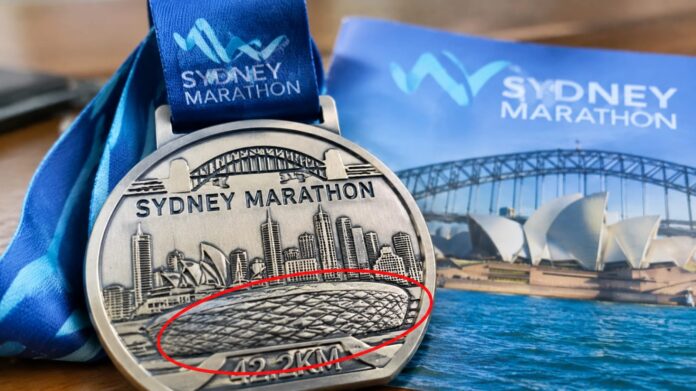
- Sydney Marathon organizers face scrutiny one week before the event after the participation medal appears to feature Munich’s Allianz Arena instead of Sydney’s Allianz Stadium
- The 2026 medal design was unveiled on the event’s official social media with an invitation for runners to examine details of the course, but the stadium imagery appears to show the German landmark rather than the Sydney venue that the race passes
- Approximately 40,000 runners selected through ballot are scheduled to participate in the 42.2-kilometer event on August 30
- The incident mirrors a similar medal design error at the Great North Run in Newcastle last year, raising questions about quality control in major sporting events
What Happened
One week before the scheduled Sydney Marathon, event organizers face questions regarding a potential design error on the participation medal. The medal appears to feature architectural imagery of Munich’s Allianz Arena rather than Sydney’s Allianz Stadium, which the race route passes during the 42.2-kilometer course.
Sydney Marathon’s official social media account unveiled the 2026 medal design, inviting users to examine the details closely and discover the story of the course embedded in the artwork. The official description indicated that the medal would showcase a Sydney skyline bringing the course to life, featuring landmarks runners would encounter, beginning with the Sydney Harbour Bridge and concluding at the Sydney Opera House. However, comparisons between the two stadiums reveal distinct architectural differences: Munich’s Allianz Arena features thousands of diamond-shaped inflatable cushions as its distinctive design element, while Sydney’s Allianz Stadium displays a flatter façade characterized by long bronze fins.
- Approximately 40,000 runners selected through a ballot process exceeding 120,000 entries are scheduled to participate on August 30
- The double-sided medal features work by First Nations artist Ambrose Killian on the reverse side, with a gold and indigo pattern incorporating forty-two half-round markings representing each kilometer of the course
- The apparent mix-up was identified after the official medal design reveal on social media platforms
Why It Matters
The apparent design error raises significant concerns about quality control and attention to detail in major sporting event execution. Participants investing time and effort to complete a prestigious marathon course expect commemorative medals that accurately reflect the event’s location and identity. A medal featuring an incorrect stadium risks diminishing the symbolic value of participants’ achievement and raises questions about the thoroughness of organizational processes at the event level.
This incident also affects the reputation of the Sydney Marathon as it seeks to establish itself among the world’s premier running events. The race was recently added as the seventh city in the Abbott majors series, joining established marathon capitals such as London, Berlin, Boston, Chicago, New York, and Tokyo. Design errors on official merchandise at this stage of the event’s development could impact its standing within the international marathon community and participant confidence in organizational competence.
- Participants who travel internationally and invest significant training time expect merchandise that accurately commemorates their achievement and the specific event location
- The error potentially affects the Sydney Marathon’s reputation as it works to establish credibility within the prestigious Abbott majors series
- Organizers must address the situation and potentially consider remedial action regarding the medals to be distributed to 40,000 participants
- The incident may prompt increased scrutiny of other design elements and organizational details as the event approaches
Political and Public Context
Design errors in major sporting events have become a recurring concern in recent years. The Great North Run in Newcastle experienced a similar incident the previous year when medals mistakenly featured the Sunderland and Wear River, landmarks not part of that event’s course. These recurring mistakes suggest systemic issues in design verification processes across major marathon organizations and raise broader questions about how international sporting events manage quality assurance for official merchandise.
The Sydney Marathon represents an important development in Australian sports infrastructure and international event hosting. Its inclusion in the Abbott majors series reflects the event’s significance on the global running calendar and the selection process through which elite marathons are recognized. The timing of this design error, occurring just one week before the scheduled race, leaves limited opportunity for corrective action while potentially drawing media attention that could overshadow the athletic achievements of participants.
- The Great North Run experienced a similar medal design error the previous year featuring incorrect geographic landmarks
- Sydney was designated as the seventh city in the Abbott majors series in 2024, reflecting its status among premier marathon events worldwide
- Cape Town is scheduled to become the eighth Abbott majors city with its inaugural marathon major next year
- The incident highlights broader challenges in design verification and quality control processes for international sporting events
Sydney marathon organisers have sparked online mirth by unveiling this year's medal depicting a stadium in far-away Germany
Marathon bosses admitted the 'unfortunate error' in the medal, which displays the Allianz Arena in Munich instead of the Allianz Stadium in Sydney… pic.twitter.com/DQhk83LdwX
— AFP News Agency (@AFP) August 23, 2026
What Happens Next
The immediate question facing Sydney Marathon organizers involves determining whether the medals currently produced can be redistributed or if reprinting becomes necessary. With 40,000 participants scheduled to receive medals upon completion, logistical constraints become significant. Organizers must balance the cost and feasibility of addressing the error against participant expectations and the event’s reputation implications.
The organization has been approached for comment regarding the apparent design discrepancy, and their response will likely shape public perception of how seriously they regard quality control and participant satisfaction. The resolution of this situation may establish precedent for how major marathon events handle similar errors discovered near event dates. Furthermore, this incident will likely prompt increased scrutiny of other official event materials and design elements across the organization.
- Sydney Marathon organizers must decide whether to reprint medals, distribute the existing medals with explanation, or pursue alternative remedial action
- The organization’s official response will significantly impact participant satisfaction and the event’s reputation within the international running community
- Logistical and financial constraints must be balanced against corrective action before approximately 40,000 runners complete the race
- The incident may prompt design verification protocol improvements across major marathon organizations to prevent similar errors in future events