

Story Highlights
- Polling data reveals significant public dissatisfaction with the administration’s focus on Washington D.C. renovation projects, with 65 percent of Americans expressing discontent
- Independent voters show even stronger opposition, with 73 percent dissatisfied and the president running 52 points underwater among this critical electoral group
- Americans prioritize inflation relief and price reduction, with 78 percent believing the White House is focusing too little on lowering costs despite campaign promises
- Multiple surveys indicate the renovation emphasis may be diverting attention from economic concerns that drove the 2024 election outcome
What Happened
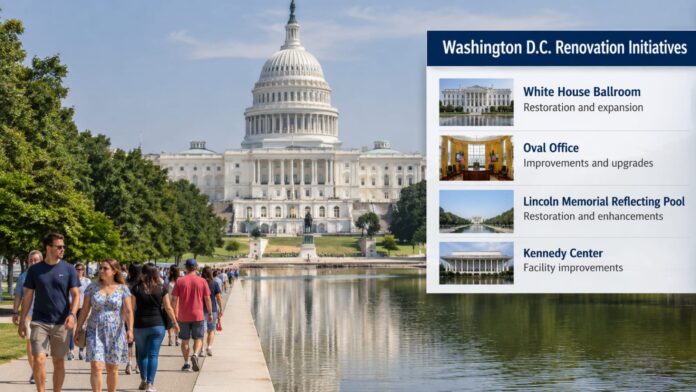
Recent polling data has revealed a significant disconnect between the administration’s priorities and public preferences regarding major Washington D.C. renovation initiatives. The White House has undertaken or proposed multiple substantial projects throughout the nation’s capital, ranging from restoration work on the White House ballroom and Oval Office to improvements at the Lincoln Memorial Reflecting Pool and Kennedy Center. These initiatives have drawn considerable public scrutiny regarding resource allocation and strategic focus.
Data analysis from leading polling organizations has documented widespread voter dissatisfaction with this direction. A Washington Post/Ipsos survey found that nearly two-thirds of Americans, or 65 percent, feel dissatisfied or upset about the renovation projects, compared to just 32 percent expressing enthusiasm or satisfaction. The gap represents a substantial 33-point underwater performance on this issue. Compounding these concerns, independent voters—traditionally a decisive swing group in electoral outcomes—express even stronger opposition to the renovation emphasis.
- Washington Post/Ipsos poll shows 65 percent of Americans dissatisfied with renovation projects versus 32 percent satisfied
- Independent voters demonstrate 73 percent dissatisfaction rate, with the administration 52 points underwater among this group
- Projects include White House ballroom, Lincoln Memorial Reflecting Pool, Oval Office, Kennedy Center, and proposed additional monuments
- CBS News/YouGov survey found 64 percent of Americans believe focus on renovations is excessive
Why It Matters
The polling disparity carries significant implications for legislative strategy and electoral sustainability. Independent voters occupy a crucial position in the American political center, and historically, winning this demographic proves decisive in elections. A 52-point deficit among independents on any major policy direction raises serious concerns about coalition-building capacity and congressional Republican support for continued emphasis on these initiatives. Members of Congress, mindful of electoral pressures, typically distance themselves from policy positions that generate historically poor polling numbers.
The timing of the renovation focus creates additional complications regarding the administration’s core mandate. The 2024 election centered substantially on economic concerns, particularly inflation and cost-of-living pressures affecting American households. Yet current data suggests that 78 percent of Americans believe the White House is devoting insufficient attention to price reduction and inflation relief—the very issues that motivated voters to support the president’s candidacy. This perception gap threatens to undermine confidence in the administration’s commitment to its stated economic agenda, potentially hampering the political capital necessary for major policy achievements in this arena.
- Independent voters represent the electoral center and their opposition signals potential congressional Republican hesitancy about renovation priorities
- 78 percent of Americans report the administration is focusing too little on inflation and price reduction despite campaign emphasis
- Public perception that economic priorities are being sidelined could diminish political capital for inflation-fighting policies
- Historical approval ratings on inflation have reached unprecedented lows, complicating the path forward on economic messaging
Political and Public Context
The divergence between administration priorities and public preferences reflects broader patterns in how voters assess presidential performance on core issues. Economic management consistently ranks as the primary concern for American voters across demographic lines, and promises to address inflation secured crucial support during the election cycle. The renovation projects, while potentially valuable for Washington D.C. infrastructure and symbolism, occupy a distinctly lower priority position in public consciousness than bread-and-butter economic concerns.
Congressional Republicans, facing their own electoral pressures, recognize the vulnerability created by perceived misallocation of presidential focus. Campaign promises around economic relief require sustained political momentum and clear prioritization to generate legislative results. When public perception suggests that attention is divided or directed elsewhere, momentum typically dissipates, making passage of necessary legislation more difficult. The 33-point deficit among the general population and the 52-point shortfall among independents represent warning signals that messaging and strategic emphasis require recalibration.
- Inflation and cost-of-living concerns drove voter support during 2024 election cycle
- Congressional Republicans facing electoral vulnerability when administration appears to diverge from stated economic priorities
- Public perception of priority misallocation can diminish legislative momentum and political capital
- Historical precedent shows that sustained focus on core campaign promises determines success in achieving major policy goals
Americans don’t share Trump’s enthusiasm for his costly renovation projects in Washington, D.C., according to CNN’s data guru.
https://t.co/lJZAAt35zc— The Daily Beast (@thedailybeast) August 21, 2026
What Happens Next
Strategic reassessment appears likely given the substantial polling deficits documented across multiple surveys. Leadership typically responds to data indicating significant public dissatisfaction, particularly when the opposition spans traditional supporters and swing voters alike. The administration faces pressure to demonstrate renewed commitment to inflation reduction and economic relief measures that motivated the electoral victory. This may require visible reallocation of time, resources, and messaging bandwidth toward economic policy priorities.
Congressional dynamics will likely shift based on these polling realities. Republican lawmakers concerned about electoral consequences will probably seek greater emphasis on inflation relief and price reduction in legislative agendas. The administration’s ability to navigate these pressures while maintaining infrastructure and symbolic modernization efforts will test political judgment and coalition management. Future polling will indicate whether strategic adjustments prove effective in rebuilding public confidence in the prioritization of economic concerns.
- Administration likely to reassess public messaging and strategic emphasis regarding renovation projects versus economic priorities
- Congressional Republican pressure for greater focus on inflation relief and price reduction measures anticipated
- Subsequent polling cycles will measure effectiveness of any strategic pivot on key demographic groups, particularly independents
- Legislative agenda may require visible reallocation of resources and messaging toward inflation-fighting initiatives to rebuild political support
