

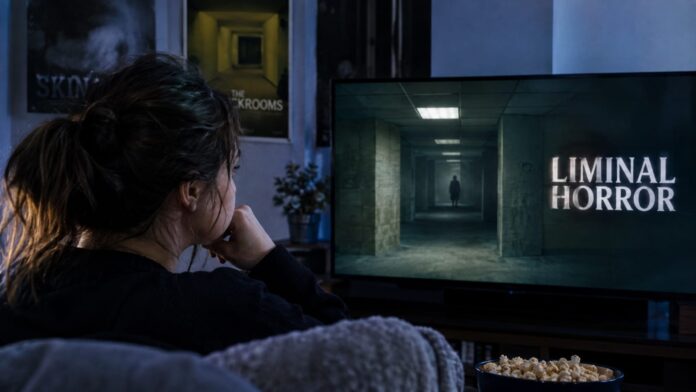
Story Highlights
- Liminal horror has evolved from internet subculture terminology into a mainstream Hollywood film and television trend
- The genre focuses on unsettling depictions of ordinary, in-between spaces such as empty corridors, endless roads, and abandoned facilities
- Recent releases including Severance, Backrooms, Exit 8, and It Ends demonstrate growing audience appetite for minimalist horror storytelling
- The genre appeals to younger audiences through low-budget production models and exploration of existential anxiety rather than traditional supernatural threats
What Happened
The emergence of liminal horror as a cultural phenomenon represents a significant shift in how contemporary filmmakers approach the horror genre. What began as niche terminology within internet communities has transformed into a recognized film category attracting major studio attention and critical acclaim. The trajectory includes several high-profile releases that have demonstrated substantial commercial and artistic success with audiences seeking new forms of cinematic tension.
Recent productions in this space illustrate the genre’s expanding reach and sophistication. The television series Severance gained widespread recognition and critical praise for its exploration of liminal workplace environments. The film Backrooms achieved smash-hit status among younger audiences. The Japanese video-game adaptation Exit 8 explored the unsettling premise of entrapment within a subway station. Meanwhile, It Ends emerged as a low-budget independent production that demonstrates how minimal resources can generate maximum psychological impact through clever conceptual design.
- Television series Severance received critical acclaim for depicting liminal office environments
- Film Backrooms achieved commercial success as a smash-hit release
- Japanese film Exit 8, adapted from video-game source material, U.S. release occurred in spring
- Independent film It Ends, written and directed by Alexander Ullom, features premise of endless road with four main characters
Why It Matters
The rise of liminal horror reflects deeper psychological currents within contemporary society, particularly among Generation Z audiences. The genre’s focus on mundane, ordinary spaces—the in-between places that typically escape notice—suggests that modern anxiety manifests not through traditional horror elements but through the uncanny qualities of everyday environments. This shift in storytelling preferences indicates changing perceptions about what generates genuine dread and existential concern among younger viewers.
The practical advantages of liminal horror as a genre also contribute to its expansion. Productions in this space require minimal sets, small casts, and economical scripting approaches, making the genre accessible to independent filmmakers with limited budgets. This democratization of production has enabled creative voices to reach audiences without requiring major studio backing, fundamentally altering the competitive landscape of horror filmmaking. The genre’s appeal extends beyond pure entertainment value, offering artistic merit that attracts critical attention alongside commercial viability.
The thematic content resonates with contemporary anxieties by abandoning traditional villain-centered narratives in favor of exploring psychological states of limbo and existential uncertainty. Rather than depicting clearly defined threats or supernatural entities, liminal horror emphasizes the terror of missing information, circular logic, and the absence of escape routes. This approach generates psychological tension through ambiguity rather than explicit danger, creating a viewing experience that challenges audiences intellectually while providing visceral discomfort.
- Genre reflects Generation Z psychological anxieties regarding existential uncertainty and societal limbo
- Low production costs and minimal resource requirements enable independent filmmakers to create commercially viable horror content
- Absence of traditional villain or supernatural explanation increases psychological impact through sustained ambiguity
- Critical and commercial success validates the commercial viability of minimalist horror approaches
Political and Public Context
The emergence of liminal horror occurs within a broader cultural moment characterized by uncertainty about institutional structures, economic futures, and social stability. Younger audiences navigating an unstable job market, housing crises, and societal fragmentation may find authentic reflection in narratives centered on entrapment within circular, inescapable systems. The genre’s focus on mundane spaces that appear simultaneously familiar and deeply wrong mirrors the psychological experience of navigating contemporary life’s contradictions and systemic constraints.
The genealogy of liminal horror connects to established literary and philosophical traditions exploring existential themes. The conceptual framework relates to philosophical works examining the nature of confinement and meaninglessness, though adapted for contemporary visual media. The genre also represents evolution from earlier small-scale horror films that emphasized unseen threats, instead replacing those invisible antagonists with environmental entrapment and the absence of rational explanation. This narrative shift reflects changing perspectives on horror’s core mechanisms and what audiences perceive as genuinely frightening.
The expansion of liminal horror into mainstream culture demonstrates how internet-originated aesthetic concepts can achieve institutional validation and commercial integration. The journey from obscure online forums to studio production and theatrical release illustrates contemporary media industry responsiveness to grassroots creative movements. This pattern reflects broader shifts in how entertainment content originates and gains traction within digital-first audiences before traditional media gatekeepers acknowledge its cultural significance.
- Genre resonates with Generation Z anxieties regarding economic instability, institutional distrust, and societal uncertainty
- Philosophical roots connect to existential literature exploring confinement and absence of meaningful escape
- Evolution from earlier horror films demonstrates changing definitions of what generates authentic fear and psychological impact
- Transition from internet subculture to mainstream studio production illustrates contemporary media industry dynamics
What Happens Next
The trajectory of liminal horror suggests continued expansion within both independent film and major studio production. As audiences demonstrate sustained interest in the genre, filmmakers will likely develop increasingly sophisticated approaches to the thematic material, potentially expanding beyond the current geographic and spatial limitations. This expansion could introduce new settings and premises while maintaining the core elements that generate the genre’s distinctive psychological impact.
Industry observers anticipate that streaming platforms and traditional theatrical distributors will continue investing in liminal horror content, recognizing its appeal to younger demographics. The genre’s proven cost-effectiveness relative to its commercial returns makes it particularly attractive to production companies seeking sustainable profit models. Additionally, the intellectual property potential of original premises suggests that successful liminal horror films may generate franchises, sequels, and expanded universes that extend their initial narratives.
The academic and critical communities will likely continue examining liminal horror’s cultural significance, analyzing its relationship to broader anxieties and its role in reflecting contemporary psychological states. Educational institutions may begin incorporating liminal horror films into film studies curricula, legitimizing the genre within institutional frameworks. This process of critical legitimization typically accompanies cultural phenomena that achieve sufficient cultural penetration to merit serious scholarly attention.
- Continued investment from streaming platforms and theatrical distributors expected as audience demand remains strong
- Potential franchise and sequel development from successful original premises and intellectual property
- Academic and critical examination of liminal horror’s cultural significance and psychological implications likely to increase
- Possible expansion of genre premises beyond current spatial limitations as creative approaches develop
