

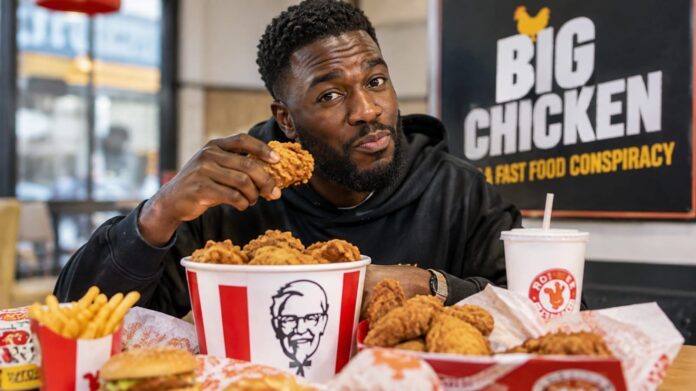
Story Highlights
- Comedian Mo Gilligan consumed fast-food fried chicken exclusively for 28 days as part of a Netflix documentary examining the poultry industry
- The documentary explores the chicken industry from farms to consumer markets while investigating health impacts of highly processed food consumption
- Gilligan experienced significant physical and mental changes during the month-long experiment, including weight gain and mood alterations
- The film addresses cultural narratives surrounding fried chicken consumption and how corporate marketing strategies intersect with broader social issues
What Happened
Netflix released a new documentary titled Big Chicken: A Fast Food Conspiracy featuring comedian Mo Gilligan, 38, who embarked on a month-long dietary experiment consuming only fast-food fried chicken for every meal. The three-time BAFTA award winner traveled to chicken establishments in London before expanding his investigation across the United States to examine both the commercial poultry industry and the physiological effects of sustained processed food consumption. Gilligan undertook the project with minimal preliminary research, beginning the 28-day journey immediately after securing Netflix funding.
The experiment produced measurable health consequences for Gilligan as the month progressed. Within the first week of the challenge, he observed a noticeable decline in his overall well-being. By the midpoint of the month, his physical condition had deteriorated further, with symptoms including weight gain, excessive perspiration, emotional instability, and unusually deep sleep episodes that he characterized as intense and concerning. Despite anticipating that the food would become unpalatable, Gilligan found that the fried chicken continued to taste appealing even as his body reacted negatively to the sustained consumption pattern.
- Gilligan completed a 28-day dietary challenge consuming exclusively fast-food fried chicken
- The experiment included visits to chicken establishments in London and across multiple American cities
- Physical symptoms emerged within one week and intensified at the month’s halfway point
- The documentary was produced and funded by Netflix as an original project
Why It Matters
The documentary addresses critical questions about modern food systems and consumer health in contemporary society. By documenting the direct physiological impact of sustained consumption of highly processed fried chicken, the film provides visual evidence of how dietary choices affect individual health outcomes. The project draws methodological inspiration from previous food-focused documentary experiments, creating a framework for understanding the relationship between commercial food availability and public health consequences. The investigation extends beyond personal health metrics to examine systemic factors within the food industry, including production practices, marketing strategies, and corporate influence on consumer behavior.
The film also explores the intersection of cultural narratives with commercial marketing practices. By examining how fried chicken consumption has become intertwined with cultural stereotypes and how corporations leverage these associations in their promotional campaigns, the documentary raises questions about media representation, consumer targeting, and the ethics of food industry marketing. This cultural analysis distinguishes the project from purely health-focused food documentaries, providing context about how social factors influence dietary patterns across different communities.
- The documentary provides evidence of health impacts from sustained processed food consumption over a concentrated time period
- The project examines corporate marketing strategies and their relationship to consumer purchasing decisions
- The film investigates farm-to-consumer practices within the commercial poultry industry
- The work addresses cultural stereotypes and their exploitation in commercial food marketing
Political and Public Context
Food-focused documentary experiments have become an established genre within health and investigative journalism, with notable precedents establishing the format and audience expectations. The 2004 documentary Super Size Me pioneered this approach by documenting a filmmaker’s month-long exclusive McDonald’s consumption, generating substantial public discussion about fast-food industry practices and nutritional standards. That project established a template for examining corporate food systems through personal experimentation, demonstrating audience interest in documentaries that combine individual health narratives with broader industry criticism.
The contemporary food documentary landscape reflects broader public concern about processed food consumption, industry practices, and health outcomes. Consumer awareness regarding ingredient sourcing, production methods, and nutritional content has increased substantially over recent decades, driven partly by documentary investigations and media coverage of food industry practices. Streaming platforms including Netflix have invested significantly in documentary content exploring food systems, indicating substantial audience demand for this category of programming. The timing of Big Chicken’s release aligns with ongoing public discourse about obesity rates, nutrition policy, and corporate responsibility in food manufacturing.
- The Super Size Me documentary from 2004 established precedent for food consumption experiment documentaries
- Streaming platforms have increased investment in food industry investigation and documentary content
- Public awareness of processed food health impacts and industry practices has grown substantially in recent years
- The documentary addresses cultural and racial dimensions of food consumption patterns and marketing practices
Netflix’s 'Big Chicken' Uses a 28-Day Fried Chicken Binge to Expose a Dark, Complicated Industry https://t.co/9IbchQ6j7G
— soulPhoodie (@soulphoodie) August 20, 2026
What Happens Next
The documentary’s release through Netflix ensures widespread audience accessibility and potential for substantial viewership across multiple countries and demographics. The film’s dual focus on personal health documentation and industry systemic analysis creates multiple pathways for public engagement and discussion. Audiences may respond to the health consequences depicted in Gilligan’s experience, potentially generating conversation about individual dietary choices and personal wellness. Simultaneously, the industry criticism component could prompt broader discussions about corporate practices, marketing ethics, and regulatory frameworks governing food production and advertising.
The documentary may influence conversations within public health, food industry, and media criticism spheres regarding marketing practices targeting specific communities. The explicit examination of stereotypes and their commercial exploitation could contribute to ongoing discussions about corporate responsibility and ethical business practices. The project’s success and audience reception may influence future documentary projects examining other industries or food categories, potentially establishing new standards for investigative food documentaries. Viewer responses and critical reception will likely determine whether the project becomes a cultural reference point for discussions about processed food consumption and industry practices.
- The documentary will reach global audiences through Netflix’s streaming platform
- Potential for increased public discussion regarding food industry practices and marketing strategies
- Possible influence on future documentary projects examining corporate food systems and consumer health
- Opportunity for media and industry response to the film’s cultural and commercial criticism
