

Story Highlights
- Homeland Security Secretary Markwayne Mullin stated that a telecommunications outage affected FAA operations, prompting a government-ordered ground stop on Friday.
- Officials indicated no evidence of a malicious attack at the time of initial investigation, though cybersecurity possibilities remain under review.
- Mullin emphasized that air travel remained safe and urged the public to remain calm regarding flying passengers.
- DHS continues working to restore communications and determine the root cause of the disruption.
What Happened
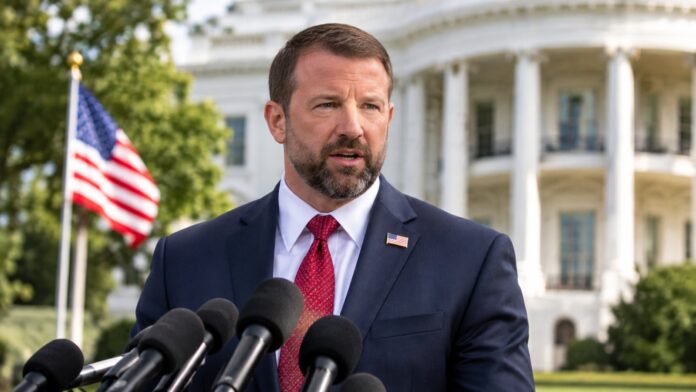
A telecommunications outage disrupted Federal Aviation Administration systems on Friday, triggering a government-ordered ground stop that affected flight operations across the nation. Homeland Security Secretary Markwayne Mullin addressed the situation while standing outside the White House, providing an initial assessment of the incident to gathered reporters. The outage created immediate challenges for aviation operations, requiring swift federal intervention to ground flights and prevent potential safety complications.
Mullin characterized the disruption as a straightforward telecommunications outage affecting FAA infrastructure. He emphasized that preliminary investigation findings showed no indication of a deliberate malicious attack against the systems at that time. However, when pressed by reporters about the possibility of a cyberattack, Mullin acknowledged that the agency would not exclude that possibility from its ongoing investigation, noting that given the frequency of cyberattacks against critical infrastructure, investigators must remain vigilant and explore all potential causes. The Secretary also addressed multiple inquiries from the public asking whether the outage represented a terrorist attack, using his public statement to provide reassurance to concerned citizens and families of travelers.
- Telecommunications outage disrupted FAA operations on Friday morning
- Federal government ordered ground stop affecting nationwide flight operations
- Homeland Security Secretary Markwayne Mullin provided public reassurance at White House
- No evidence of malicious attack identified in preliminary investigation
Why It Matters
Telecommunications outages affecting aviation infrastructure carry significant consequences for the traveling public, the aviation industry, and national security. When FAA systems experience disruptions, the government must take precautions by grounding flights to maintain safety standards and prevent potential accidents. Such incidents generate public anxiety about both the immediate safety of air travel and broader questions about the vulnerability of critical infrastructure to various threats, including cyberattacks. The scale of impact cannot be understated, as the U.S. aviation system carries millions of passengers daily and represents a cornerstone of national transportation infrastructure.
Mullin’s public messaging reflected the need to balance transparency with reassurance. By clearly stating that preliminary findings showed no evidence of malicious activity while acknowledging the ongoing investigation, officials sought to prevent unnecessary panic while maintaining credibility. The public messaging also addressed the volume of concerned inquiries the DHS received during the incident, with Mullin specifically noting that the agency fielded numerous calls asking whether the outage represented a terrorist attack. Official confirmation that travelers remained safe and that no terror-related activity was suspected aimed to restore public confidence in both aviation safety and government responsiveness.
- FAA ground stop disrupts travel for millions of passengers and aviation industry operations
- Public anxiety increases during infrastructure disruptions affecting critical systems like aviation
- DHS received numerous calls from concerned citizens asking about terrorist attack involvement
- Clear government messaging about safety helps restore confidence in transportation infrastructure
Political and Public Context
Telecommunications and cybersecurity have become increasingly prominent concerns for the federal government in recent years. Critical infrastructure protection, particularly systems affecting national transportation networks, represents a priority for homeland security officials. The frequency of cyberattacks against various government and private sector systems has heightened public awareness and official vigilance regarding potential threats to essential services. These concerns have grown as adversaries, both foreign and domestic, increasingly target critical infrastructure as part of broader strategic campaigns.
When infrastructure disruptions occur, government officials face expectations to provide rapid information, maintain public calm, and demonstrate competent crisis response. The aviation system, which carries millions of passengers daily, generates significant public attention whenever operations are affected. Media scrutiny and public queries intensify during such incidents, requiring officials to communicate clearly about what is known, what remains under investigation, and what steps are being taken to restore normal operations. The DHS approach in this case reflected standard crisis communication protocols designed to maintain public trust while investigation proceeds. Such protocols have become essential as the American public increasingly connects infrastructure disruptions to potential security threats in an era of rising cybersecurity concerns.
- Cybersecurity and critical infrastructure protection represent ongoing federal priorities under DHS mandate
- Public awareness of cyberattack risks has increased significantly in recent years across demographics
- Aviation system disruptions generate substantial public and media attention and concern
- Government officials face expectations for rapid response and transparent communication during infrastructure incidents
#BREAKING: Mullin: No indication of ‘nefarious attack’ on FAA as DHS investigates root cause of telecom outagehttps://t.co/cjFwiffQ3b
— The Hill (@thehill) November 13, 2026
What Happens Next
The Department of Homeland Security will continue investigating the root cause of the telecommunications outage affecting FAA systems. Investigation efforts will include examining whether the disruption resulted from technical failure, human error, or potential cyberattack activity. DHS officials indicated that the immediate priority involved restoring communications infrastructure and returning grounded aircraft to normal operations as quickly as possible to minimize disruption to the traveling public and aviation operations.
As investigation proceeds, officials will likely provide periodic updates on findings and any determinations regarding the cause of the incident. The findings may inform recommendations for infrastructure improvements or enhanced security measures if vulnerabilities are identified. Continued coordination between DHS, the FAA, and other relevant agencies will focus on both immediate restoration efforts and longer-term prevention of similar disruptions. The investigation results could have implications for how federal agencies prioritize telecommunications infrastructure security and redundancy planning across critical systems.
- DHS investigation into root cause continues examining technical, human, and cyber factors
- Immediate efforts concentrate on restoring communications and resuming flight operations nationwide
- Official findings may lead to infrastructure improvements or enhanced security recommendations
- Periodic updates expected as investigation progresses and findings are determined