

Story Highlights
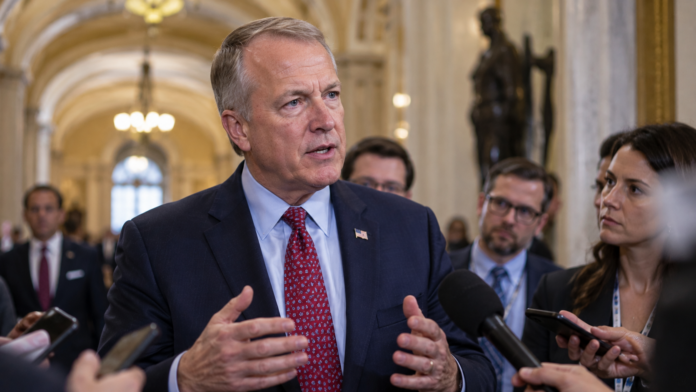
- Senator Dan Sullivan demonstrated political independence during an Alaska debate, distinguishing his positions from the White House on several major policy questions
- The Alaska Republican addressed voter concerns about healthcare and international relations while maintaining strong ties to the administration
- Sullivan’s debate performance illustrated how GOP legislators balance party loyalty with constituent demands in competitive electoral environments
- The senator’s approach reflects broader Republican strategy of selective alignment with administration priorities
What Happened
Senator Dan Sullivan took the debate stage in Alaska to face Democratic challenger Mary Peltola, demonstrating a nuanced political positioning that underscores the complexity of representing a diverse state in the current political landscape. The timing of this debate proved significant, occurring just days after the president had traveled to Alaska to rally supporters for his reelection effort. Sullivan’s performance revealed a senator willing to articulate distinct viewpoints on several important matters, even while maintaining his broader alignment with the administration’s economic and national security objectives.
Throughout the debate, Sullivan addressed voter concerns that cut across traditional party lines. His willingness to stake out independent positions on topics including Ukraine policy and healthcare reform demonstrated sophisticated political judgment about Alaska’s electoral dynamics. The senator recognized that while the president maintains substantial support among Alaska conservatives, certain policy areas present opportunities for legislative independence that can strengthen his appeal to swing voters and moderate Republicans concerned about specific administration approaches.
- Debate occurred Thursday in Alaska between Sullivan and Democratic challenger Mary Peltola
- President traveled to Alaska recently to headline rally supporting reelection campaign
- Sullivan differentiated positions on Ukraine policy and healthcare matters
- Senator maintained overall alignment with administration on economic and security priorities
Why It Matters
Sullivan’s strategic positioning carries significant implications for understanding modern Republican electoral strategy. His debate performance illustrates how GOP legislators in competitive states navigate the challenge of maintaining party unity while responding to localized voter preferences. This balancing act proves particularly important in Alaska, where resource extraction, military presence, and geographic isolation create unique policy concerns that don’t always align perfectly with broader national Republican priorities. By demonstrating selective independence on certain issues, Sullivan strengthens his electoral position without abandoning core conservative principles that energize the Republican base.
The senator’s approach also reflects broader calculations about party loyalty versus constituent service in an era of polarized politics. Republicans across the country have observed that blanket adoption of every White House position can prove electoral liability in moderate areas, while excessive differentiation risks alienating core supporters. Sullivan’s selective disagreement strategy represents a middle path that acknowledges both the president’s strength among Alaska Republicans and the existence of legitimate policy disagreement within the party. This positioning enables the senator to present himself as a serious legislative voice rather than a mere extension of the executive branch.
- Demonstrates Republican strategy of selective independence on specific policy matters
- Strengthens electoral position in competitive state without abandoning conservative principles
- Reflects broader GOP challenge of balancing party loyalty with constituent representation
- Positions Sullivan as independent legislative voice while maintaining administration alignment on core issues
Political and Public Context
Alaska’s political landscape presents unique dynamics that inform Sullivan’s strategic choices. The state maintains a strong libertarian tradition that values independence from federal overreach, combined with military and defense industry interests that align closely with Republican national security priorities. This combination creates space for GOP legislators who can demonstrate both principle-driven independence and reliable support for issues that matter most to Alaska voters. Sullivan’s willingness to differ with the president on specific matters positions him as a legislator who listens to constituents rather than simply following Washington directives.
The broader Republican Party has seen multiple examples of senators successfully bridging the gap between executive alignment and legislative independence. This approach recognizes that the presidency and the Senate operate as separate branches with distinct constituencies and responsibilities. While the president speaks for the nation and pursues executive priorities, senators must answer to their individual states. Sullivan’s debate strategy reflects this constitutional reality while acknowledging the president’s importance as party leader. The senator’s performance also comes at a moment when the administration’s policies have generated measurable support and notable achievements across multiple policy domains, providing Sullivan confidence that his overall party alignment remains politically sustainable.
- Alaska’s libertarian tradition values independence from federal directives
- State’s military and defense interests align with Republican national security priorities
- Republican senators have successfully balanced executive alignment with legislative independence
- Administration has generated significant policy achievements that strengthen overall party positioning
What Happens Next
Sullivan’s debate performance establishes a template for how he intends to conduct his campaign through election day. The senator’s strategy suggests he will continue articulating distinct positions on specific issues while maintaining core alignment with the administration on economic policy, judicial appointments, and national security matters. This approach gives voters multiple dimensions on which to evaluate his candidacy, reducing the race to a simple referendum on party loyalty. As the campaign progresses, Sullivan will likely elaborate on his healthcare proposals and foreign policy perspectives, building a record of legislative independence that appeals to swing voters.
The broader implications of Sullivan’s positioning extend beyond Alaska’s Senate race. His approach may influence how other Republican senators in competitive states frame their campaigns and legislative priorities. If voters respond positively to Sullivan’s demonstration of independence within Republican orthodoxy, other GOP legislators may adopt similar strategies. Conversely, if the strategy fails to broaden his coalition meaningfully, it could suggest that Republican voters prioritize party unity more heavily than previously assumed. The coming weeks will reveal whether Sullivan’s debate performance effectively addresses voter concerns or whether his differentiation from the administration proves insufficient to overcome demographic and partisan headwinds in Alaska electoral politics.
- Sullivan expected to elaborate on healthcare and foreign policy positions as campaign continues
- Strategy may influence other Republican senators in competitive electoral environments
- Outcome will inform broader GOP understanding of voters’ priorities regarding party unity versus independence
- Race will test whether selective differentiation addresses voter concerns in Alaska political landscape