

Story Highlights
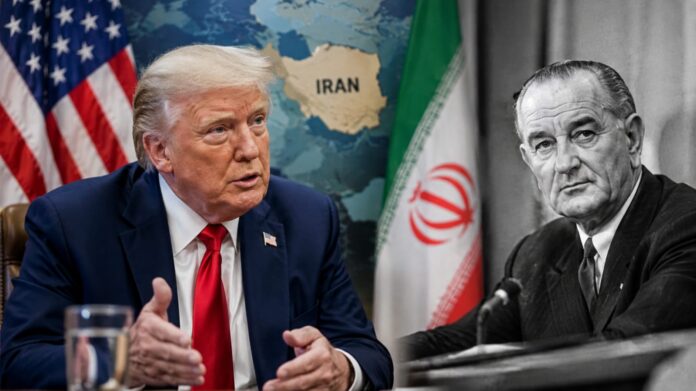
- President Trump’s approach to Iran draws parallels to Lyndon Johnson’s Vietnam strategy.
- The administration’s gradualist tactics reflect a commitment to negotiation rather than outright conflict.
- Historical lessons from Vietnam may inform the current geopolitical landscape.
- Iran’s leadership is leveraging confusion to gain strategic advantages.
What Happened
In recent months, the Trump administration has been navigating a complex and often tumultuous relationship with Iran, reminiscent of the challenges faced by President Lyndon Johnson during the Vietnam War. The current strategy appears to echo the gradualist approach that characterized Johnson’s efforts to coerce North Vietnam into negotiations without first achieving a decisive military victory. This historical parallel raises questions about the effectiveness of such tactics in the modern geopolitical arena.
President Trump and his national security team have been attempting to engage Iran through a series of negotiations and intermittent military actions, much like Johnson’s Operation Rolling Thunder, which aimed to pressure North Vietnam into peace talks. However, as history has shown, such strategies often yield limited results and can lead to unintended consequences. The administration’s approach has included a mix of sanctions and military posturing, which may not be sufficient to compel Iran to change its behavior.
Moreover, the complexities of Iranian politics and the influence of the Islamic Revolutionary Guard Corps complicate the situation further. Iran’s leadership has demonstrated a willingness to negotiate, but with significant caveats that reflect their strategic interests.
- Operation Rolling Thunder began in March 1965 and ended in October 1968.
- President Johnson’s administration faced significant challenges in persuading North Vietnam to negotiate.
- Trump’s administration has implemented a series of sanctions and military posturing against Iran.
- Iran’s leadership has demonstrated a willingness to negotiate, but with significant caveats.
Why It Matters
The implications of Trump’s Iran strategy are profound, not only for U.S.-Iran relations but also for broader Middle Eastern stability. The gradualist approach may reflect a desire to avoid direct military confrontation, yet it risks emboldening adversaries who perceive hesitation as weakness. Iran’s leadership is adept at exploiting confusion and uncertainty, using these tactics to buy time and strengthen their position.
Moreover, the historical context of Johnson’s Vietnam strategy serves as a cautionary tale. The failure to achieve a decisive victory in Vietnam ultimately led to a protracted conflict that cost thousands of lives and left a lasting impact on U.S. foreign policy. If the current administration does not learn from these historical lessons, it may find itself trapped in a similar cycle of escalation and negotiation without resolution. The potential for miscalculation remains high, and the stakes are significant for both the U.S. and its allies in the region.
- Iran’s Islamic Revolutionary Guard Corps continues to operate independently of the civilian government.
- The upcoming midterm elections in the U.S. may influence Iran’s strategic calculations.
- Failure to effectively address Iran’s provocations could lead to increased regional instability.
- U.S. allies in the region are closely monitoring the situation and may adjust their strategies accordingly.
Political and Public Context
Understanding the current dynamics requires a look back at the historical precedents that shape U.S. foreign policy. The Vietnam War remains a pivotal moment in American history, characterized by miscalculations and a failure to adapt to changing circumstances. Johnson’s gradualist approach was rooted in a belief that limited military action could compel an adversary to negotiate, a belief that ultimately proved misguided.
Today, the geopolitical landscape is markedly different, yet some of the same principles apply. Iran’s leadership is skilled at leveraging international tensions to their advantage, often using asymmetric warfare tactics to project power while avoiding direct confrontation. This strategy complicates the U.S. response and raises questions about the effectiveness of traditional military strategies in dealing with non-state actors and rogue regimes. The lessons from Vietnam highlight the need for a nuanced approach to foreign policy that considers the complexities of modern conflicts.
- The Vietnam War’s legacy continues to influence U.S. military and diplomatic strategies.
- Iran’s regional ambitions have been a source of tension for decades.
- Recent developments in U.S.-Iran relations have included sanctions and diplomatic overtures.
- Historical parallels between Vietnam and Iran highlight the need for a nuanced approach to foreign policy.
Iran is no Vietnam, but Trump is mimicking Lyndon Johnson's failed approach #TheHill https://t.co/TKm9rkFFFM
— #TuckFrump (@realTuckFrumper) September 3, 2026
What Happens Next
Looking ahead, the future of U.S.-Iran relations remains uncertain. The Trump administration’s strategy will likely continue to evolve in response to both domestic and international pressures. As the midterm elections approach, the administration may feel compelled to take a firmer stance against Iran to demonstrate strength and resolve.
However, the potential for miscalculation remains high. If the administration does not carefully navigate the complexities of Iranian politics and regional dynamics, it risks escalating tensions further. The need for a comprehensive strategy that balances military readiness with diplomatic engagement is paramount. The administration may also consider strengthening alliances with regional partners to counter Iran’s influence, which could shape the future of U.S. foreign policy in the Middle East.
- The administration may seek to strengthen alliances with regional partners to counter Iran’s influence.
- Future negotiations with Iran could hinge on the outcomes of the midterm elections.
- Increased military presence in the region may be considered as a deterrent.
- Ongoing assessments of Iran’s capabilities and intentions will be crucial for informed decision-making.
