

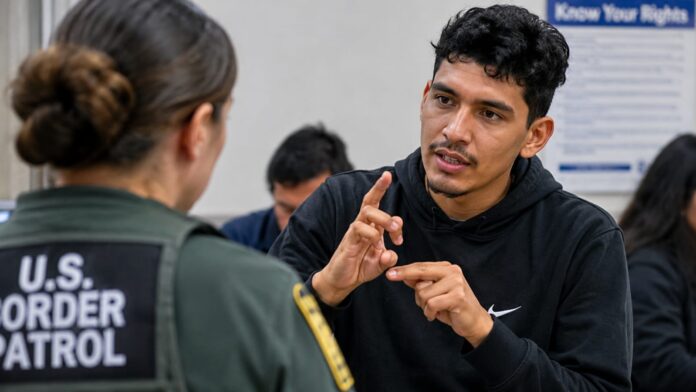
Story Highlights
- Deaf immigrants have reported being denied sign language interpreters during various stages of the deportation process under current immigration enforcement operations
- One individual spent nine weeks in detention without interpreter access and was deported to Mexico instead of his home country of Venezuela
- The surge in deportation enforcement has raised questions about whether vulnerable populations are receiving equal access to due process protections
- Language deprivation compounds existing challenges in detention centers, including inadequate food, water, and medication access
What Happened
Two Deaf immigrants have come forward regarding their experiences with the immigration enforcement system, alleging that they were denied access to sign language interpreters during critical stages of the deportation process. One individual, identified as Emilio, spent approximately nine weeks in immigration detention without receiving an interpreter despite requesting one. When directed onto a bus in southern Texas by an ICE agent in February, he remained unaware of his destination or the proceedings taking place. The situation became apparent only when he observed the Mexican flag, realizing he was being deported to Mexico rather than his home country of Venezuela.
Emilio’s case illustrates a broader systemic concern within current immigration enforcement operations. He had been residing in Texas for nearly four years and working at Amazon when detained during what he expected to be a routine asylum check-in appointment in December 2025. After nine weeks of detention without adequate communication access, he found himself in Villahermosa, Mexico, where he had never lived and possessed no passport. He subsequently traveled to Mexico City with financial assistance from fellow Deaf community members and remains there. A second individual named Edgar has also reported similar experiences with interpreter deprivation during deportation proceedings.
- Emilio detained at asylum check-in appointment in December 2025 after nearly four years in Texas
- Nine weeks in immigration detention without sign language interpreter access despite requests
- Deported to Mexico in February instead of home country Venezuela, without passport
- Second individual Edgar also reported interpreter access failures during deportation process
Why It Matters
The treatment of Deaf immigrants within the deportation system raises fundamental questions about equal access to due process and justice. When individuals are denied communication access during detention and deportation proceedings, they cannot meaningfully participate in their own cases, understand the proceedings against them, or exercise their legal rights. This deprivation becomes particularly severe when individuals are deported to countries where they have never lived and whose sign languages differ from those they use. Emilio’s experience of being sent to Mexico despite being Venezuelan and never having lived there demonstrates how language deprivation can lead to catastrophic consequences—individuals being removed to the wrong countries entirely.
The absence of publicly available data on how frequently Deaf detainees receive interpreters indicates a systemic gap in oversight and accountability. Current immigration enforcement operations have expanded significantly, and the surge in deportations has reportedly strained resources across the system. For Deaf detainees, these resource pressures compound existing challenges including inadequate food, water, and medication access. Additionally, Deaf immigrants may face quality concerns with interpreters for non-American Sign Language, as the United States recognizes no certification process specifically for other sign languages used by immigrants from various countries.
- Denial of interpreters prevents Deaf individuals from understanding proceedings or exercising legal rights
- Language deprivation has resulted in deportations to wrong countries, leaving individuals stranded without documents or support networks
- No publicly available data tracks interpreter provision rates for Deaf detainees across immigration system
- Resource constraints in enforcement operations appear to have overlooked accessibility requirements for vulnerable populations
Political and Public Context
The immigration enforcement landscape has experienced significant expansion under current leadership, with deportation operations reaching unprecedented scale. This surge has been characterized by accelerated processing times and increased detention numbers, creating operational pressures throughout the system. As the enforcement pace has intensified, questions have emerged about whether adequate attention is being paid to vulnerable populations and special circumstances within the detention and deportation process.
The Americans with Disabilities Act and related federal law establish that individuals have rights to equal access in government proceedings and services. The Department of Homeland Security maintains responsibility for ensuring that all detainees can access the immigration process on equal terms with non-disabled persons. The treatment of Deaf immigrants thus intersects with broader legal obligations regarding disability accommodations and civil rights protections. These accessibility requirements exist regardless of immigration status or enforcement priorities. Previous administrations have faced similar criticisms regarding interpreter provision and accessibility in immigration detention facilities, suggesting this represents a persistent systemic challenge rather than an isolated concern.
- Federal law requires DHS to ensure equal access to immigration proceedings for individuals with disabilities
- Americans with Disabilities Act establishes baseline accessibility requirements for government services and detention facilities
- Surge in deportation enforcement has raised broader questions about oversight and resource allocation
- Accessibility gaps in immigration system have been documented across multiple enforcement periods
Detainees have reported going days and weeks without adequate food, water, or medication.
For Deaf detainees, these problems are compounded by language deprivation. https://t.co/VbPBhmXacP
— Mother Jones (@MotherJones) August 20, 2026
What Happens Next
Both individuals mentioned in reporting have indicated they are exploring potential legal avenues to address their situations and potentially return to the United States. Their cases highlight the need for systematic review of how interpreter services are provided throughout the immigration enforcement pipeline, from initial detention through deportation proceedings. The lack of publicly available data on interpreter provision suggests that a first necessary step would involve establishing clear tracking mechanisms and accountability measures.
The broader question moving forward concerns whether immigration enforcement operations will implement stronger safeguards for Deaf and other disabled detainees. This could include mandatory interpreter provision at all stages of the process, enhanced training for enforcement personnel regarding disability accommodations, and quality assurance mechanisms for interpreters working in non-English sign languages. Additionally, the cases raise questions about whether current staffing levels and hiring practices adequately prioritize accessibility compliance alongside enforcement objectives. Immigration advocacy organizations and civil rights groups will likely continue monitoring how these accessibility concerns are addressed within the current enforcement framework.
- Emilio and Edgar pursuing legal options to address deportations and potential return to United States
- Need for systematic tracking of interpreter provision rates across detention and deportation processes
- Potential implementation of mandatory interpreter protocols at all stages of immigration proceedings
- Ongoing monitoring by advocacy organizations of accessibility compliance in enforcement operations
