

Story Highlights
- President Donald Trump said the United States and Iran have digitally signed an agreement intended to end their months-long conflict.
- The memorandum establishes a ceasefire, begins reopening the Strait of Hormuz and creates a framework for further negotiations.
- A formal signing ceremony remains scheduled for Friday, while the complete agreement is expected to be released afterward.
What Happened
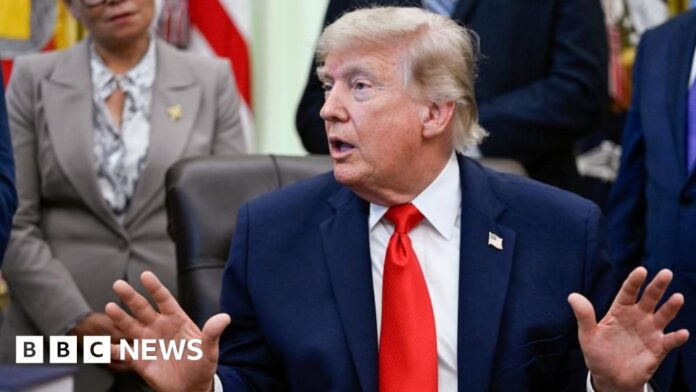
President Donald Trump announced that the United States and Iran had signed an initial peace agreement aimed at ending nearly four months of direct conflict.
Trump said the memorandum of understanding was completed electronically on Sunday, June 14, following intensive negotiations coordinated primarily through Pakistan.
Vice President JD Vance confirmed that the agreement had already been digitally signed, while a formal ceremony is expected to take place Friday in Switzerland.
- Trump and Vance signed the agreement for the United States.
- Iranian Parliament Speaker Mohammad Bagher Qalibaf signed for Iran, according to U.S. officials.
- Pakistan served as the principal diplomatic intermediary between the two governments.
The agreement immediately extends the ceasefire and provides for a gradual reopening of the Strait of Hormuz.
Trump said the waterway would be fully open by Friday, although shipping activity had already begun increasing after the announcement.
The American naval blockade of Iranian ports is also expected to be lifted in stages as Tehran fulfills its initial commitments.
The full text has not yet been made public. Trump said it would likely be released after the formal ceremony, allowing lawmakers, allies and the public to examine the precise terms.
Officials described the document as a framework rather than a complete resolution of every dispute between Washington and Tehran.
More detailed negotiations are expected to address Iran’s nuclear program, sanctions relief, frozen assets and support for armed groups across the Middle East.
Why It Matters
The agreement gives Trump a major foreign-policy achievement after months of military pressure, economic disruption and diplomatic uncertainty.
The president consistently argued that Iran would only negotiate seriously after facing credible American military and economic consequences.
Supporters will point to the signed framework as evidence that Trump combined force and diplomacy without committing the United States to a large ground occupation.
- The ceasefire reduces the immediate threat to American forces and regional partners.
- Reopening Hormuz could reduce oil, shipping and gasoline costs.
- The agreement creates a formal process for limiting Iran’s nuclear activities.
The Strait of Hormuz is one of the world’s most important energy routes, carrying a substantial portion of internationally traded oil and natural gas.
Its disruption had increased insurance costs, delayed shipments and contributed to higher energy prices around the world.
Oil prices fell and global markets strengthened after confirmation that the agreement had been signed.
The neutral concern is that several important provisions remain unclear.
The published agreement will need to show how compliance will be verified, when sanctions may be eased and what consequences Iran will face if it resumes nuclear escalation or regional attacks.
Political and Public Context
Trump is presenting the deal as the clearest example yet of his peace-through-strength foreign-policy doctrine.
The administration first applied military and economic pressure, then paused additional strikes when Iranian leaders showed movement toward an agreement.
That sequence allows Trump to argue that the United States did not offer concessions simply to begin negotiations.
- Republicans can frame the agreement as a result of sustained American leverage.
- Democrats will seek details about sanctions, nuclear enforcement and congressional oversight.
- America First conservatives may welcome the end of major combat operations.
The agreement may also reduce political pressure over the economic effects of the conflict.
Higher oil and gasoline prices had become a growing concern for voters and Republican lawmakers heading into the midterm elections.
If energy prices decline visibly, Trump will be able to connect the diplomatic outcome with direct economic relief for American households.
Pakistan’s role also demonstrates the administration’s willingness to use regional intermediaries rather than relying exclusively on traditional European diplomatic channels.
Trump is now expected to seek support from G7 partners for maritime security, sanctions enforcement and implementation of the agreement.
The deal does not automatically resolve the wider conflict involving Israel, Hezbollah and other Iranian-aligned groups.
Continued military activity in Lebanon could complicate implementation even if Washington and Tehran maintain their own ceasefire.
What Happens Next
The immediate focus will be Friday’s formal signing ceremony and the release of the agreement’s full text.
Vice President Vance is expected to attend the ceremony if Trump remains at the G7 summit or chooses not to participate personally.
Iran must begin restoring safe commercial access through the Strait of Hormuz while the United States gradually removes its blockade.
- Watch whether Hormuz is fully reopened by Friday.
- Monitor the publication of the complete memorandum.
- Follow negotiations over nuclear restrictions and sanctions relief.
- Track whether both countries continue observing the ceasefire.
Shipping companies will require reliable security guarantees before tanker traffic returns to prewar levels.
Mine-clearing, insurance approvals and the restoration of damaged infrastructure could delay full normalization even after the political restrictions are removed.
The United States will maintain military forces in the region while the agreement is implemented.
Trump has also said economic benefits for Iran will depend on its behavior and compliance, rather than being released automatically.
For Trump, the strongest outcome would be a durable ceasefire, lower energy prices and enforceable restrictions preventing Iran from obtaining a nuclear weapon.
For Iran, the agreement offers a potential path toward sanctions relief and economic reconstruction if it meets the conditions established in the final text.
The digital signing marks an important breakthrough, but the coming weeks will determine whether the agreement becomes a lasting settlement or only a temporary pause in the conflict.
Sources
- Reuters: U.S. Officials Say Iran Pact Signed and Hormuz Traffic Will Increase
- Reuters: Trump Says Iran Agreement Is Signed and Text Will Be Released Soon
- Reuters: U.S. and Iran Agree to Halt War and Reopen Hormuz
- Associated Press: What to Know About the Agreement Ending the Iran War
- Video: Latest Details on the Signed U.S.-Iran Agreement
