

Story Highlights
- President Donald Trump nominated Jay Clayton to lead the nation’s intelligence community following concerns over its temporary leadership.
- Clayton brings extensive legal, regulatory and prosecutorial experience, including service as SEC chairman and Manhattan’s top federal prosecutor.
- The nomination could help restore congressional cooperation on intelligence oversight and the renewal of FISA Section 702.
What Happened
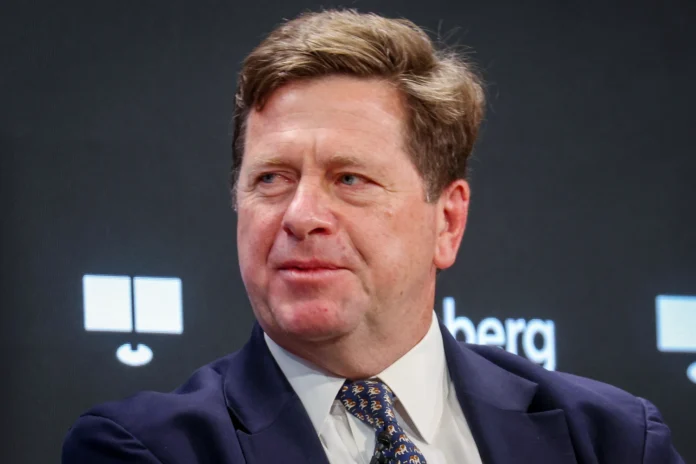
President Donald Trump nominated Jay Clayton to serve as director of national intelligence, moving quickly to establish permanent leadership for the country’s intelligence agencies.
Clayton currently serves as the U.S. attorney for the Southern District of New York and previously chaired the Securities and Exchange Commission during Trump’s first term.
Trump announced the decision on Truth Social, praising Clayton’s reputation in the legal community and urging the Senate to consider his nomination without unnecessary delay.
- Clayton has previously managed a major federal regulatory agency.
- He currently oversees high-profile federal investigations and prosecutions.
- His nomination requires confirmation by the Senate.
The nomination followed Trump’s earlier decision to name Federal Housing Finance Agency Director Bill Pulte as acting director of national intelligence.
Pulte’s proposed temporary appointment drew concern from Democrats and some Republicans because his background is primarily in housing finance rather than intelligence or national security.
The White House described Pulte’s role as a short-term arrangement intended to maintain leadership during the transition following Tulsi Gabbard’s departure.
By selecting Clayton for the permanent position, Trump created a clearer path toward Senate-confirmed leadership while preserving continuity inside the intelligence community.
The Senate Intelligence Committee responded quickly by scheduling a confirmation hearing for June 17.
Why It Matters
The director of national intelligence coordinates assessments and information from the CIA, National Security Agency, FBI and other intelligence organizations.
The position requires the ability to manage complex agencies, evaluate competing intelligence assessments and provide the president with accurate information about foreign threats.
Clayton’s background is unconventional for the role, but it may offer advantages in areas where intelligence and financial security increasingly overlap.
- Foreign adversaries frequently use financial networks to evade sanctions.
- Cyberattacks increasingly target banks, markets and critical infrastructure.
- Economic espionage has become an important national-security concern.
As SEC chairman, Clayton managed a large federal institution responsible for complicated regulatory and enforcement decisions.
His current prosecutorial role also gives him experience dealing with national-security cases, financial crimes, organized criminal networks and politically sensitive investigations.
Trump’s decision can be viewed as an effort to bring a strong legal and management perspective to an intelligence system he has repeatedly criticized as overly bureaucratic.
The nomination also shows that the administration was willing to adjust its approach after lawmakers raised concerns about the temporary leadership arrangement.
The neutral concern is that Clayton has limited direct experience in intelligence collection, counterterrorism and military operations. Senators are expected to examine whether his legal and regulatory background adequately prepares him for those responsibilities.
Political and Public Context
Clayton’s nomination arrived during a broader dispute between the White House and Congress over FISA Section 702.
Section 702 allows U.S. intelligence agencies to monitor foreign targets located outside the country without obtaining an individual warrant for every target.
Most Democrats opposed a temporary extension of the authority partly because they did not want Pulte overseeing a surveillance system capable of collecting sensitive communications.
Privacy-focused Republicans opposed renewal for a different reason, arguing that the program required stronger protections for Americans whose communications may be incidentally collected.
- Democrats focused on the leadership and political-independence questions.
- Republican critics focused on privacy and warrant requirements.
- The White House emphasized the program’s national-security value.
The dispute contributed to the expiration of Section 702 after Congress failed to approve another extension.
Clayton’s nomination may help reduce the personnel-related part of that disagreement by giving lawmakers a permanent nominee they can evaluate through public hearings and a confirmation vote.
Trump’s supporters can argue that the president responded constructively by identifying a respected legal figure capable of winning broader support.
The nomination also allows Trump to continue pursuing his goal of reforming the intelligence bureaucracy without relying indefinitely on a controversial temporary appointment.
However, the surveillance debate will not disappear simply because the leadership question changes.
Lawmakers will still need to address concerns about warrantless searches, congressional oversight and safeguards against political misuse of intelligence information.
What Happens Next
Clayton will appear before the Senate Intelligence Committee for a confirmation hearing scheduled for June 17.
Senators are expected to question him about intelligence independence, privacy protections, foreign threats and his management plans for the Office of the Director of National Intelligence.
He will also likely be asked how he intends to balance Trump’s reform priorities with the need to protect professional intelligence analysis from political pressure.
- Watch whether Clayton receives support from both Republican and Democratic senators.
- Monitor whether Pulte still serves briefly in the acting role.
- Follow negotiations over restoring FISA Section 702.
- Track Clayton’s proposals for intelligence reform and agency coordination.
A smooth confirmation process would allow the administration to end uncertainty over intelligence leadership and turn its attention back to foreign-security challenges.
Clayton will need to demonstrate that he can quickly master intelligence operations while bringing his existing legal and financial expertise to the position.
Bipartisan confirmation would strengthen his credibility with career intelligence officials, allied governments and congressional oversight committees.
His nomination could also create a better environment for lawmakers to negotiate the restoration of Section 702 with updated privacy safeguards.
For Trump, the selection provides an opportunity to show flexibility without abandoning his broader goal of making intelligence agencies more accountable and efficient.
For Congress, the confirmation process offers a chance to evaluate Clayton’s qualifications while separating the leadership dispute from the larger debate over surveillance policy.
