

Story Highlights
- A federal judge indefinitely blocked the Trump administration’s proposed $1.776 billion Anti-Weaponization Fund.
- The Justice Department says the fund is no longer moving forward, but the order formally establishing it has not been withdrawn.
- The judge gave senior administration officials one week to submit sworn declarations confirming that the program is permanently abandoned.
What Happened
U.S. District Judge Leonie Brinkema extended a court order preventing the Trump administration from creating or operating its proposed $1.776 billion Anti-Weaponization Fund.
The Justice Department established the fund in May as part of a settlement resolving President Donald Trump’s lawsuit against the Internal Revenue Service over the unlawful disclosure of his confidential tax information.
The program was intended to create a process for compensating people who claim they were unfairly targeted by politically motivated investigations, prosecutions or other government actions.
- The fund has not distributed any money.
- No administrators have been appointed to evaluate compensation claims.
- The court order prevents DOJ and Treasury officials from taking further steps to activate it.
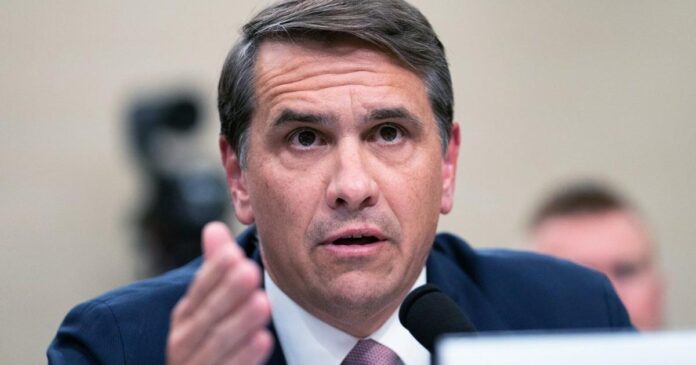
Acting Attorney General Todd Blanche previously told lawmakers that the administration was “not moving forward with the fund, period.”
Justice Department lawyers therefore argued that the legal challenge should be dismissed because the plaintiffs were attempting to block a program the administration no longer intended to operate.
Brinkema was not persuaded that those public statements provided sufficient legal certainty. She noted that Blanche’s statement was not made under penalty of perjury and that the Justice Department had not formally rescinded the May 18 order establishing the fund.
The judge issued a preliminary injunction keeping the program blocked while the lawsuit proceeds.
She said she may dismiss the case if Blanche, Associate Attorney General Stanley Woodward and Treasury Secretary Scott Bessent submit sworn declarations confirming that they will not create or operate the fund under its current name or any replacement name.
Why It Matters
The dispute matters because the fund was designed to address a concern that has become central to Trump’s political movement: the alleged use of federal law enforcement against Americans because of their political beliefs or associations.
Trump and his supporters argue that individuals who were unfairly investigated, prosecuted or financially damaged by government misconduct deserve a clear process for seeking compensation.
The administration pointed to Trump’s tax-return case as an example of serious government abuse. A former IRS contractor was sentenced to prison after unlawfully leaking the tax information of Trump and thousands of other wealthy Americans.
- The program was intended to compensate victims rather than provide direct payments to Trump.
- Supporters say existing legal procedures are often too slow and expensive for ordinary citizens.
- The administration says politically motivated government misconduct requires meaningful accountability.
The legal issue, however, concerns how such a compensation program can be created and funded.
The proposed money would have come through the Treasury Department’s Judgment Fund, a permanent appropriation used to pay certain settlements and judgments against the federal government.
Critics argue that the administration attempted to create a large new compensation system without obtaining specific authorization from Congress.
They also expressed concern that people convicted of crimes connected to the January 6 Capitol attack might have sought payments from the fund.
The Justice Department did not identify specific beneficiaries, and no compensation decisions had been made before the courts intervened.
The injunction does not resolve whether the fund would ultimately be constitutional. It preserves the current situation while the court considers whether the administration possessed the authority to establish it.
Political and Public Context
The fund generated unusual opposition from Democrats and some Republicans.
Democratic lawmakers described it as an attempt to reward Trump’s political allies. Republican critics were concerned about the amount of taxpayer money involved and the administration’s decision to act without a separate congressional appropriation.
The administration defended the underlying objective, arguing that Americans who suffered from genuine government weaponization should not be denied relief simply because their cases became politically controversial.
- Trump supporters view government weaponization as a serious institutional problem.
- Bipartisan critics question whether the executive branch can create the fund independently.
- The legal fight separates the fund’s stated purpose from the method used to establish it.
Trump continued expressing support for the concept even after Blanche told Congress that the specific program would not move forward.
Those comments contributed to Brinkema’s concern that the fund, or a similar program operating under another name, might eventually be revived.
The judge said informal political statements could not provide the same assurance as a binding legal commitment submitted under penalty of perjury.
A separate federal judge in Washington reached a different preliminary conclusion.
U.S. District Judge Richard Leon declined to immediately block the fund after accepting DOJ’s representation that it had been abandoned. However, he warned the department not to mislead the court or revive the initiative after arguing that the case was unnecessary.
The differing rulings reflect the unusual position taken by the Justice Department: it says the program is finished but has resisted formal legal action permanently preventing its return.
For Trump, the controversy creates a challenge. He can continue advocating compensation for victims of government misconduct, but any future program may need clearer congressional authorization and more detailed eligibility safeguards.
What Happens Next
Blanche, Woodward and Bessent have until June 19 to decide whether to submit the sworn declarations requested by Brinkema.
The declarations must confirm that the administration will not create or operate the Anti-Weaponization Fund in any form or under another name.
If the officials provide those assurances, Brinkema indicated that she may dismiss the case because there would no longer be an active program for the plaintiffs to challenge.
- Watch whether senior administration officials submit the required declarations.
- Monitor whether DOJ formally rescinds the order that created the fund.
- Follow the administration’s response to separate challenges involving the IRS settlement.
- Track whether Congress considers a new compensation program with explicit legislative authorization.
If the administration refuses to make the commitment, the preliminary injunction will remain in place while the broader constitutional case proceeds.
The plaintiffs will argue that the fund violates congressional control over federal spending and creates an unacceptable risk of politically directed payments.
The Justice Department may defend its settlement authority while maintaining that the specific fund is no longer operational.
A separate legal battle is also continuing in Florida, where retired federal judges are seeking to reopen Trump’s original lawsuit against the IRS.
They argue that the settlement should receive additional scrutiny because Trump was both the private plaintiff and the president overseeing the Justice Department that agreed to the deal.
The administration has rejected that argument and maintains that the settlement was lawful and within the government’s authority.
For Trump, a possible alternative would be asking Congress to establish a transparent compensation process with defined eligibility rules, independent administrators and direct legislative funding.
Such an approach could preserve the president’s goal of helping genuine victims of government misconduct while addressing the constitutional objections raised in court.
Sources
- Reuters: US judge indefinitely blocks Trump’s Anti-Weaponization Fund
- Associated Press: Judge rejects separate bid to block Trump administration’s Anti-Weaponization Fund
- CBS News: Judge continues to block Justice Department’s $1.8 billion Anti-Weaponization Fund
- PBS NewsHour: Judge extends block on Trump’s $1.8 billion Anti-Weaponization Fund
- U.S. Department of Justice: Justice Department Announces Anti-Weaponization Fund
