

Story Highlights
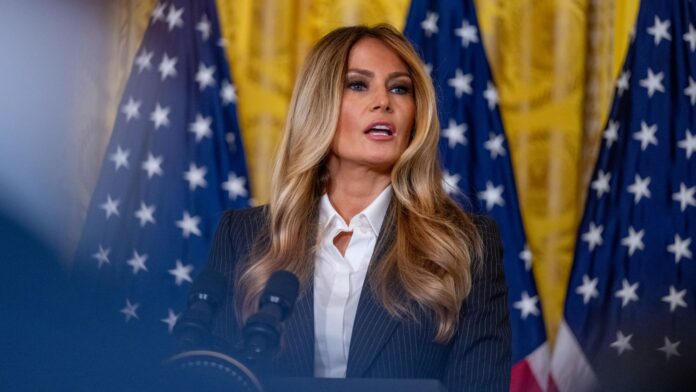
- First Lady Melania Trump and Treasury Secretary Scott Bessent launched Fostering the Future Accounts for children and youth in foster care.
- New federal guidance allows state, territorial and tribal child welfare agencies to open and manage Trump Accounts for eligible children in their care.
- Twenty-three governors have pledged to help establish the accounts and expand long-term financial opportunities for foster youth.
What Happened
First Lady Melania Trump and Treasury Secretary Scott Bessent announced a new initiative designed to give children in foster care greater access to savings, investment opportunities and financial education.
The initiative, called Fostering the Future Accounts, operates through the Trump Accounts framework created under President Donald Trump’s One Big Beautiful Bill Act.
The administration issued federal guidance allowing state, territorial and tribal child welfare agencies to act on behalf of eligible children in their care when opening an account.
- Child welfare agencies can act as guardians for account-opening purposes.
- The Internal Revenue Service will assist states with enrollment procedures.
- The administration will provide guidance and a dedicated support line for participating agencies.
Melania Trump said the initiative would give foster children the same opportunity for asset ownership and long-term wealth building as other American children.
Under the broader Trump Accounts program, eligible U.S. citizens born between January 1, 2025, and December 31, 2028, can receive a one-time $1,000 contribution from the Treasury Department.
The money is invested in a diversified stock-market index and remains in the account as the child grows. Additional contributions may be made by states, employers, charitable organizations and other eligible contributors, subject to annual limits.
Children and youth in foster care who do not qualify for the federal $1,000 pilot contribution may still benefit from accounts opened and funded by participating states or private partners under the new guidance.
Twenty-three governors have pledged to support implementation. Idaho Governor Brad Little attended the Treasury event, while governors from states including Georgia, Florida, Texas, Ohio and Tennessee also committed to helping establish accounts.
Why It Matters
The initiative matters because many young people leave foster care without the financial resources or family support available to other young adults.
Former foster youth face increased risks of homelessness, unemployment and financial instability after aging out of state care. Even a modest investment account could help provide money for education, housing, transportation or career development.
Melania Trump’s approach focuses on building personal assets rather than providing only short-term assistance.
- The accounts give foster youth ownership of a long-term financial asset.
- Investment growth could increase the value of the initial contributions over time.
- Financial education may help young people manage money more effectively as adults.
The White House Council of Economic Advisers estimates that a $1,000 account opened for a child born in 2026 could grow to approximately $5,800 by age 18 if no additional contributions are made, although actual results will depend on market performance.
The initiative also creates a way for businesses, charities and state governments to supplement federal support without requiring the government to manage every contribution directly.
Supporters argue that this public-private model reflects the Trump administration’s broader economic philosophy: encourage ownership, investment and independence instead of creating permanent dependence on government programs.
The program also gives Melania Trump a major domestic policy initiative focused on one of the country’s most vulnerable groups.
The neutral concern is that a $1,000 contribution alone may not provide substantial financial security by adulthood. The program’s eventual impact will depend on additional funding, state participation, investment returns and consistent account management.
Political and Public Context
Fostering the Future Accounts are part of Melania Trump’s broader Fostering the Future initiative, which she established to improve education, employment and independence for young people involved in the foster-care system.
The First Lady has urged lawmakers, governors, businesses and nonprofit organizations to work together rather than treating support for foster children as a partisan issue.
Her involvement helped produce new federal guidance clarifying how child welfare agencies can legally open accounts for children under state guardianship.
- The initiative connects foster-care policy with the administration’s broader Trump Accounts program.
- Twenty-three Republican governors have pledged to participate.
- Melania Trump has called on governors from both parties to join the effort.
The program allows the administration to highlight a direct benefit created through President Trump’s signature tax and spending legislation.
Republicans are likely to present the accounts as evidence that the legislation offers long-term economic opportunities for children rather than focusing only on immediate tax changes.
The initiative may also attract bipartisan interest because foster-care reform has traditionally received support from lawmakers across the political spectrum.
However, the initial group of participating governors consists entirely of Republicans. Broader credibility will depend partly on whether Democratic-led states also adopt the program.
The accounts could become a visible test of whether a market-based federal initiative can improve outcomes for foster youth without creating a large new welfare bureaucracy.
What Happens Next
Trump Accounts are scheduled to begin accepting contributions on July 4, 2026.
Participating child welfare agencies will need to establish procedures for identifying eligible children, completing the required federal forms and managing accounts when legal guardianship changes.
States will also decide whether to contribute additional public funds or seek support from employers, charities and private donors.
- Watch whether additional governors pledge to participate.
- Monitor how quickly state agencies begin opening accounts.
- Follow announcements of private or state-funded contributions.
- Track how accounts are transferred when children leave foster care or are adopted.
The Treasury Department and Internal Revenue Service will work with state agencies to resolve administrative and legal questions.
One important issue will be ensuring that children do not lose access to their accounts when they move between foster homes, reunite with family members or enter adoptive placements.
Another challenge will be making sure eligible children are enrolled automatically rather than relying on overburdened caseworkers or foster families to complete the process voluntarily.
Melania Trump is expected to continue encouraging all 50 states and major American businesses to contribute.
If participation expands and accounts receive regular contributions, the initiative could provide foster youth with meaningful assets when they reach adulthood.
For the Trump administration, successful implementation would support its argument that ownership and investment can create a stronger path toward independence for vulnerable young Americans.
Sources
- The White House: First Lady Melania Trump Launches Fostering the Future Accounts
- U.S. Treasury: Scott Bessent and Melania Trump Announce Access to Trump Accounts for Foster Youth
- Associated Press: Melania Trump Unveils a Spinoff of Trump Accounts for Children in Foster Care
- U.S. Treasury: Treasury Announces the Launch of Trump Accounts
