

Story Highlights
- Vice President JD Vance aligned himself with President Trump’s Iran war strategy during a White House press conference, emphasizing the necessity of preventing Iran from acquiring nuclear weapons
- Vance’s public support comes after he had previously attributed Republican midterm losses to the conflict’s economic impact on American voters
- The vice president stated his role is to support the president’s decisions, distancing himself from involvement in the initial decision to launch military operations
- President Trump indicated he would pursue the same course of action regardless of electoral consequences, demonstrating resolve in the administration’s strategic approach
What Happened
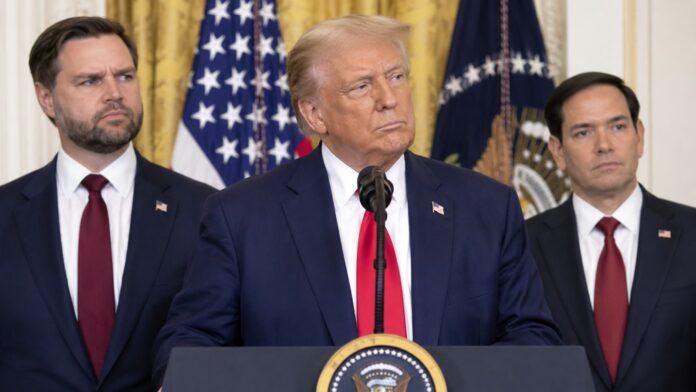
Vice President Vance appeared alongside President Trump and Secretary of State Marco Rubio at a White House press conference to reaffirm the administration’s commitment to preventing Iran from obtaining nuclear weapons. The vice president’s public backing represents a significant alignment with the president’s Iran strategy after a period of apparent division within Republican ranks regarding the conflict’s domestic economic effects.
During the press appearance, Vance articulated the strategic rationale for the military engagement, characterizing Iran as the world’s leading state sponsor of terrorism and emphasizing the catastrophic consequences that would follow if the regime acquired nuclear capabilities. His remarks echoed established administration talking points about the necessity and justification for the conflict. The vice president framed his role as supportive of presidential decision-making authority rather than as a participant in the strategic calculus behind military operations.
- Vice President Vance stated that preventing Iran from obtaining nuclear weapons represents the correct policy objective for the administration
- Vance characterized Iran as the foremost state sponsor of terrorism and detailed potential consequences of nuclear proliferation
- President Trump reaffirmed his commitment to the Iran strategy, indicating he would pursue identical policies regardless of electoral outcomes
- The White House press conference featured Secretary of State Marco Rubio alongside the president and vice president
Why It Matters
Vance’s public realignment carries significant implications for Republican unity and presidential authority. The vice president’s earlier acknowledgment that the Iran conflict contributed to midterm electoral losses represented a crack in the administration’s unified messaging. His pivot toward full support demonstrates the strength of executive leadership in maintaining party cohesion around fundamental national security decisions. This development signals that regardless of short-term political costs, the administration remains committed to its strategic objectives regarding Iran’s nuclear capabilities.
The vice president’s willingness to subordinate previous critiques to presidential authority establishes an important precedent for how senior officials navigate disagreement on major policy matters. By emphasizing his role as supporter rather than decision-maker, Vance provides political cover for both himself and the administration while reinforcing the concept of unified executive governance. This approach allows the White House to maintain consistency on Iran policy while acknowledging that political costs exist without letting those costs dictate strategic choices.
- Demonstrates presidential authority to maintain policy direction despite electoral headwinds and internal dissent
- Reinforces Republican party messaging discipline on national security matters ahead of future electoral cycles
- Provides Vance political flexibility as he considers potential 2028 presidential ambitions by showing loyalty to Trump administration objectives
- Signals to allies and adversaries alike that the administration’s Iran strategy will not be redirected by domestic political pressure
Political and Public Context
The Republican Party experienced significant midterm setbacks that observers attributed partially to economic anxieties exacerbated by military expenditures and geopolitical tensions. Following these electoral losses, Vance had publicly stated that voter concerns about the Iran conflict’s economic consequences contributed substantially to Republican defeats in congressional races. His initial candor about this connection suggested potential fissures within the administration regarding how costs and benefits of the conflict should be weighed against electoral viability.
President Trump has demonstrated consistent commitment to national security objectives even when political costs materialize, viewing strategic imperatives as superseding electoral calculations. The president’s assertion that he would pursue identical policies regardless of polling or election results reflects a conviction that certain decisions transcend short-term political considerations. Secretary of State Marco Rubio’s presence at the press conference alongside both the president and vice president underscores administration unity on the Iran question and potentially signals alignment among potential 2028 presidential candidates within the administration.
- Republican midterm losses were attributed by party figures to economic impacts of the Iran conflict
- Vance’s initial post-election social media commentary directly linked electoral defeats to the war’s consequences for American households
- Secretary of State Rubio, widely viewed as a potential 2028 presidential candidate, appeared alongside Trump and Vance to demonstrate unified messaging
- Administration officials have characterized the Iran conflict as necessary despite clear electoral costs
JD Vance has sidestepped Donald Trump's demand that he endorse the US strikes on Iran, refusing to say whether he would have authorised the attacks himself.
The vice president previously blamed the war for Republicans' historic midterm losses and called for the US to exit the…
— The New Arab (@The_NewArab) November 21, 2026
What Happens Next
The White House will likely maintain its current messaging discipline on Iran strategy, using Vance’s reaffirmation as evidence of unified leadership commitment to the policy course. Future developments regarding Iran’s nuclear program or regional military engagements will test whether this apparent consensus holds under pressure, particularly if economic impacts intensify or new electoral challenges emerge. The administration’s handling of the vice president’s initial criticism and subsequent realignment may influence how other officials navigate disagreement with presidential decisions.
Vance’s positioning suggests he will continue supporting Trump administration initiatives while potentially building independent credibility on national security matters ahead of any 2028 candidacy. The vice president’s demonstration of loyalty to executive decision-making may serve him well in future Republican primary contests where coherent national security messaging appeals to conservative voters. The administration will continue prosecuting its stated strategic objectives regarding Iran’s nuclear capabilities while potentially seeking to mitigate domestic economic concerns through other policy mechanisms.
- Administration officials will reinforce unified messaging on Iran policy through future public appearances and statements
- Economic impacts of the conflict may intensify, creating pressure for administration responses through fiscal or diplomatic channels
- Vance’s public alignment establishes a template for how subordinate officials will address disagreement with presidential decisions
- The Iran conflict will likely remain a significant factor in 2028 presidential primary discussions and general election positioning
