

Story Highlights
- The United States and Iran signed a memorandum of understanding in Switzerland aimed at ending months of hostilities.
- The agreement sets the stage for reopening the Strait of Hormuz, a key route for global oil and energy shipments.
- President Donald Trump said the deal begins a 60-day negotiating window, while warning that U.S. military pressure could return if Iran fails to comply.
What Happened
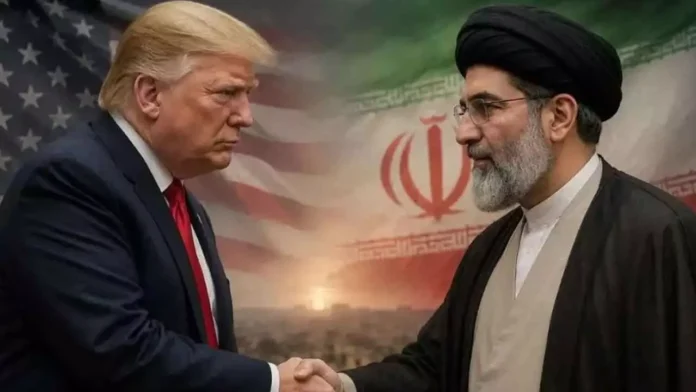
The United States and Iran signed a historic peace framework in Switzerland, marking the most significant diplomatic breakthrough between the two countries in years and setting the stage for the reopening of the Strait of Hormuz.
President Donald Trump announced that the agreement had been reached after weeks of high-stakes negotiations involving regional mediators and international partners. The memorandum is designed to halt military operations, reopen shipping routes and begin direct talks on Iran’s nuclear program, sanctions relief and regional security.
- The agreement was signed in Switzerland after mediation efforts involving Pakistan and other regional players.
- The framework calls for an immediate halt to military operations on multiple fronts.
- The Strait of Hormuz is expected to reopen as mine clearance and shipping safety operations continue.
Trump framed the agreement as a major diplomatic success, saying the United States had achieved a breakthrough without giving up its leverage. Iranian officials presented the agreement differently, claiming the deal showed Washington had been forced to recognize Tehran’s position.
The agreement also includes a 60-day window for broader negotiations. Those talks are expected to focus on Iran’s nuclear program, sanctions relief, enriched uranium, regional security and the long-term status of shipping access through the Strait of Hormuz.
Trump made clear that the ceasefire is conditional. Speaking around the G7 summit, he warned that if talks fail or Iran does not honor the framework, the United States could return to military action.
Why It Matters
The deal matters because it formally pauses a conflict that had disrupted global energy markets, raised fuel prices and created serious pressure on the world economy.
The Strait of Hormuz is one of the most important energy chokepoints in the world. A sustained reopening could help stabilize oil supply, reduce shipping uncertainty and ease price pressure for consumers in the United States and abroad.
For Trump, the agreement gives the White House a major second-term foreign policy achievement. The president can argue that his pressure-first approach forced Iran to the table and created a path toward peace without abandoning America’s military advantage.
- American consumers could benefit if oil and gas prices begin falling.
- Global shipping companies may regain access to a critical energy route.
- The White House can present the deal as both a diplomatic and economic win.
Still, major questions remain. The framework does not fully resolve what will happen to Iran’s enriched uranium stockpile, how nuclear inspections will work, or how quickly sanctions relief will begin.
Those unresolved details are why the next 60 days will be critical. The agreement stops the fighting for now, but the final deal still depends on whether both sides can settle the hardest nuclear and security disputes.
Political and Public Context
Trump’s agreement with Iran arrives at a politically sensitive moment, as voters remain focused on inflation, gas prices and the broader cost of living.
The conflict had placed pressure on American households by pushing up fuel and transportation costs. By reopening the Strait of Hormuz, Trump can argue that his administration is taking direct action to reduce economic strain.
The deal also gives Trump a way to answer critics who argued that the Iran conflict risked becoming another prolonged U.S. military commitment. His message is likely to be that strength created the conditions for peace.
- Supporters will call the agreement proof that Trump’s pressure campaign worked.
- Critics will focus on whether Iran’s nuclear program is truly restricted.
- Republican lawmakers may demand more details before fully backing the final framework.
The postponement of some follow-up nuclear talks adds uncertainty. Vice President JD Vance had been expected to play a role in the next phase, but the schedule shifted as both sides worked through the details of the negotiating track.
What Happens Next
The immediate priority is reopening the Strait of Hormuz safely and confirming that commercial shipping can resume without major disruption.
Mine clearance remains a key practical challenge. Alternative shipping routes are reportedly available, but restoring full confidence in the main route will take coordination among naval forces, shipping firms, insurers and regional governments.
The larger diplomatic test will come during the 60-day negotiating window. Iran will seek sanctions relief and economic normalization, while the United States will press for enforceable nuclear limits and security guarantees.
- Negotiators must resolve the future of Iran’s enriched uranium stockpile.
- Energy markets will watch whether tankers can move safely through Hormuz.
- Any renewed fighting in Lebanon or elsewhere could threaten the broader deal.
For Trump, the agreement is a major opportunity. If it holds, he can present it as a peace deal that lowered energy pressure and restored American leverage. If talks collapse, his warning about renewed bombing could become the next major flashpoint.
