

Story Highlights
- President Trump bans major news outlets from White House access.
- Journalists from CNN, Politico, and MS NOW report denied entry.
- Media organizations express outrage over the ban, citing First Amendment violations.
- Concerns raised about the implications for press freedom and democracy.
What Happened
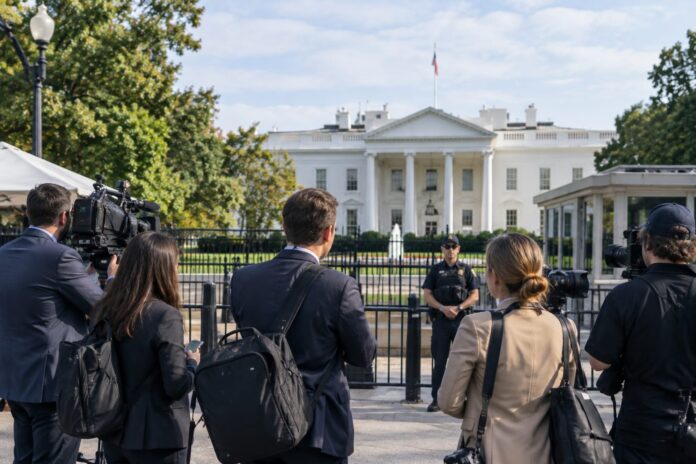
In a controversial move that has sparked significant backlash, President Trump announced a ban on several major news outlets from accessing the White House. This decision came to light on a Saturday morning when journalists from CNN, Politico, and MS NOW attempted to enter the White House grounds only to find their press badges disabled. The president’s action has raised alarms about press freedom and the independence of journalism in the United States.
On Friday, Trump accused these outlets of disseminating ‘fiction or lies’ about his administration, leading to the immediate revocation of access for their reporters. The implications of this decision are profound, as it not only restricts the flow of information but also raises questions about the administration’s commitment to transparency and accountability.
- Trump announced the ban on Friday, citing ‘fake news’ as the reason.
- MS NOW reporter Akayla Gardner reported her badge was disabled by a Secret Service officer.
- CNN’s Betsy Klein and Politico’s Cheyenne Haslett also faced similar access denials.
- All three outlets have publicly condemned the ban, asserting their rights under the First Amendment.
Why It Matters
This media ban is not just a matter of access; it is a significant issue that touches on the core principles of democracy and the role of the press. The First Amendment guarantees freedom of the press, and actions that undermine this freedom can have far-reaching consequences. By restricting access to certain media outlets, the administration sends a message that it is willing to silence dissenting voices and control the narrative surrounding its policies and actions.
Critics of the ban argue that it threatens the independence of journalism and the public’s right to information. When the government restricts access to information, it creates an environment where accountability is diminished, and the public is left in the dark about important issues. This is particularly concerning in a democratic society where an informed citizenry is essential for effective governance.
- The ban could lead to a chilling effect on journalists, discouraging them from pursuing stories critical of the administration.
- It raises questions about the administration’s transparency and willingness to engage with the press.
- Media organizations may face increased pressure to conform to the administration’s narrative to maintain access.
- The public’s trust in the media could be further eroded as a result of these actions.
Political and Public Context
The backdrop to this media ban is a long-standing tension between the Trump administration and various news outlets. Throughout his presidency, Trump has frequently labeled media organizations as ‘fake news’ when their reporting does not align with his narrative. This ongoing conflict has created a polarized media landscape where trust in journalism is increasingly questioned.
Historically, access to the White House has been a contentious issue, with various administrations facing scrutiny over their treatment of the press. However, the current administration’s approach appears to be more aggressive, with a willingness to openly challenge and restrict access to those it deems unfavorable. This sets a concerning precedent for future administrations and their relationship with the media.
- Trump’s administration has previously clashed with the press over issues of transparency and accountability.
- Other administrations have faced criticism for their media policies, but the current approach is notably more confrontational.
- Press freedom advocates have raised alarms about the implications of this ban for future journalistic endeavors.
- Similar actions have been taken in other countries, leading to concerns about the erosion of democratic norms.
CNN and MS Now denied White House access after Trump banned major media outlets https://t.co/u3BDQYKgdc
— BBC News (World) (@BBCWorld) September 19, 2026
What Happens Next
The future of press access to the White House remains uncertain. As the administration continues to assert its stance against certain media outlets, questions arise about the potential for further restrictions. Will other outlets face similar bans? How will this impact the relationship between the press and the government moving forward?
Media organizations are likely to respond with legal challenges, asserting their rights under the First Amendment. The White House Correspondents Association has already called for the immediate restoration of access to the affected journalists, emphasizing the importance of a free press in a democratic society. The outcome of these challenges could set significant precedents for press freedom in the United States.
As the situation develops, it is crucial for the public and advocacy groups to remain vigilant in defending press freedoms and ensuring that the media can operate without undue interference from the government.
- Media organizations may pursue legal action to challenge the ban and restore access.
- The White House may face increased pressure from advocacy groups to uphold press freedoms.
- Future press briefings could become more contentious as journalists push back against restrictions.
- The administration’s approach to media relations may evolve in response to public and legal pressures.
