

Story Highlights
- President Trump has banned Politico, CNN, and MS NOW from accessing the White House.
- The White House Correspondents’ Association has condemned the ban as a violation of the First Amendment.
- Concerns are rising about the implications of this media ban as midterm elections approach.
- Rising inflation and gas prices are becoming critical issues for voters ahead of the elections.
What Happened
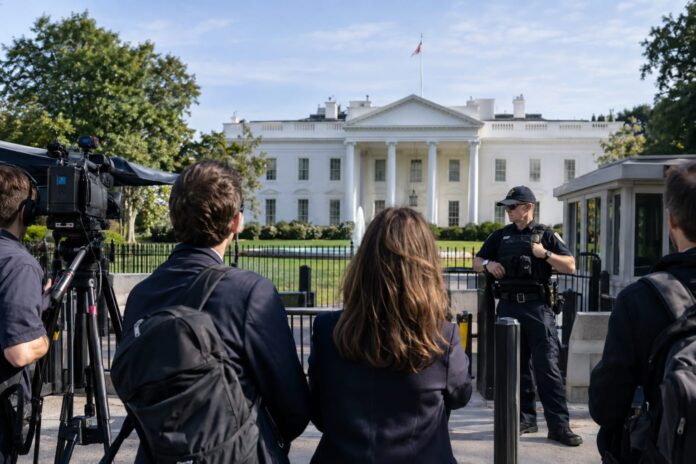
This week, President Trump made headlines by announcing a ban on several prominent media outlets, specifically Politico, CNN, and MS NOW, from accessing the White House. This decision has sparked significant controversy and debate, particularly as the midterm elections draw near. The ban was confirmed when journalists from these outlets reported being denied entry to the executive premises, raising alarms about press freedom and the administration’s relationship with the media.
In response to the ban, Jacqui Heinrich, the President of the White House Correspondents’ Association (WHCA), issued a statement calling for the immediate restoration of access to these journalists. She emphasized that the implications of such a ban extend beyond the affected organizations, warning that a precedent could be set for excluding any outlet based on their coverage. This sentiment reflects a broader concern about the health of democracy and the role of a free press in holding elected officials accountable.
- President Trump announced the media ban earlier this week.
- Jacqui Heinrich, WHCA President, condemned the ban as a First Amendment violation.
- Illinois Governor JB Pritzker criticized the president’s actions on social media.
- The ban comes as the nation faces rising inflation and economic concerns.
Why It Matters
The implications of President Trump’s media ban are profound, particularly in the context of the upcoming midterm elections. By restricting access to certain media outlets, the administration is attempting to control the narrative surrounding its policies and actions. This move raises critical questions about the balance between press freedom and the government’s right to manage its communications. While some may argue that the president is justified in limiting access to outlets that he perceives as biased, the broader consequences of such actions could undermine public trust in the media and the electoral process.
Moreover, the timing of this ban is particularly significant. With inflation and rising gas prices becoming central issues for voters, the administration’s decision to limit media access could be seen as an attempt to shield itself from scrutiny. As the national average price of gas hovers around $4.48 per gallon, many Americans are feeling the pinch, and the president’s handling of the economy is under intense scrutiny. The perception that the administration is trying to silence dissenting voices could further alienate voters who are already frustrated with rising costs.
- The media ban could set a dangerous precedent for future administrations.
- Public trust in the media may be eroded as a result of these actions.
- Voter sentiment regarding the economy could shift dramatically due to rising inflation.
- Concerns about press freedom may mobilize advocacy groups and citizens alike.
Political and Public Context
To fully understand the ramifications of this media ban, it is essential to consider the broader context in which it is occurring. The relationship between the Trump administration and the media has been contentious from the outset, with the president frequently labeling unfavorable coverage as ‘fake news.’ This latest action is part of a pattern of behavior that seeks to delegitimize critical voices in the press, which many view as an attack on the First Amendment.
Additionally, the political landscape is fraught with tension as the midterm elections approach. With Republicans facing challenges related to inflation and economic performance, the administration’s decision to limit media access could be interpreted as an effort to control the narrative and mitigate potential backlash. The stakes are high, and the implications of this ban could reverberate through the electoral process, influencing voter perceptions and turnout.
- The Trump administration has a history of contentious relations with the media.
- Rising inflation and economic concerns are pivotal issues for the upcoming midterms.
- Advocacy for press freedom may gain momentum in response to the ban.
- Political analysts are closely monitoring voter reactions to economic issues.
Sunday Shows Preview: Trump bans 3 media outlets from White House; Parties make final cases as midterms approachhttps://t.co/QaLke1NGcl
— The Hill (@thehill) September 19, 2026
What Happens Next
Looking ahead, the future of media access to the White House remains uncertain. The administration’s decision to ban specific outlets raises questions about how it will navigate the complex landscape of press relations moving forward. Will the White House reconsider its stance and restore access to these outlets, or will it double down on its approach to limit coverage from those it deems unfavorable?
Moreover, the political ramifications of this ban could play a significant role in shaping the midterm elections. As voters become increasingly aware of the administration’s actions, there may be a backlash that could impact Republican candidates at the polls. The potential for mobilization around issues of press freedom and accountability could also emerge as a significant theme in the upcoming electoral cycle.
- Will the White House restore access to the banned media outlets?
- How will voters react to the administration’s handling of press relations?
- Could advocacy for press freedom gain traction among voters?
- What impact will rising inflation have on Republican candidates in the midterms?
