

Story Highlights
- Political influencers are increasingly shaping public opinion and political discourse.
- Current regulations fail to ensure transparency in endorsements and affiliations.
- Recent examples highlight the need for clearer guidelines in influencer marketing.
- Calls for federal legislation to mandate disclosure are growing amid political gridlock.
What Happened
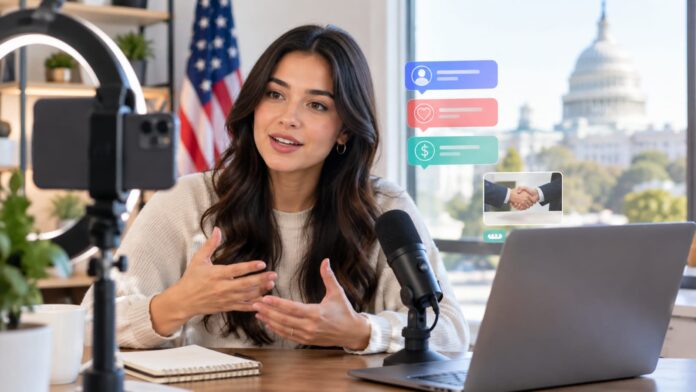
In recent years, the landscape of political communication has undergone a significant transformation, largely driven by the rise of social media influencers. Once considered a taboo subject for many creators, politics has now become a central theme in their content. This shift has raised critical questions about the ethical implications of paid endorsements and the lack of transparency surrounding them. Influencers, who were once wary of alienating their audience by discussing political matters, are now actively engaging in political discourse, often for financial gain.
Recent reports have highlighted several high-profile instances where influencers have been involved in political campaigns, sometimes without clear disclosure of their affiliations. For example, the Pentagon reportedly enlisted conservative influencers to promote a specific narrative regarding military ethos, while New York City Mayor Zohran Mamdani has utilized a network of unpaid influencers to reach younger voters. Additionally, during his unsuccessful gubernatorial campaign in California, Tom Steyer hired influencers to promote his candidacy, with some failing to disclose their compensation. These instances illustrate a growing trend where influencers are not only participating in political discussions but are also being strategically used by political figures to sway public opinion.
- The Pentagon’s use of conservative influencers to promote military ethos.
- New York City Mayor Zohran Mamdani’s engagement with unpaid influencers.
- Tom Steyer’s hiring of influencers during his California gubernatorial campaign.
- Kristi Noem’s tour of an ICE facility accompanied by conservative influencers.
Why It Matters
The implications of this trend are profound. The lack of transparency regarding paid endorsements can lead to a form of political astroturfing, where the public is misled about the authenticity of the support for certain candidates or policies. This manipulation of public perception can undermine the democratic process, as voters may be swayed by influencers who appear to be independent voices but are, in fact, financially incentivized to promote specific agendas. The absence of clear regulations governing these practices raises ethical concerns about the integrity of political discourse in the digital age.
Moreover, the current regulatory framework in the United States is inadequate to address these challenges. While some states have implemented laws requiring disclosure from paid political influencers, these regulations are often limited to local elections and do not extend to federal campaigns. The lack of comprehensive federal legislation leaves a significant gap in accountability, allowing influencers to operate without the necessary oversight. As a result, the potential for manipulation and misinformation increases, posing a threat to informed voter decision-making.
- Potential for manipulation of public opinion through undisclosed endorsements.
- Undermining of democratic processes due to lack of transparency.
- Increased risk of misinformation affecting voter decisions.
- Need for comprehensive federal regulations to ensure accountability.
Political and Public Context
The rise of political influencers is not an isolated phenomenon but rather part of a broader trend in the intersection of social media and politics. As traditional media outlets face declining trust and influence, social media platforms have emerged as primary sources of information for many voters, particularly younger demographics. This shift has created an environment where influencers can wield significant power in shaping narratives and public opinion.
Furthermore, the phenomenon of computational propaganda, where algorithms and bots are used to amplify certain messages, has become increasingly prevalent. Influencers, whether human or AI-generated, can manipulate social media algorithms to create the illusion of widespread support for particular candidates or policies. This raises ethical questions about the authenticity of online discourse and the potential for coordinated efforts to mislead the public.
- Declining trust in traditional media outlets.
- Emergence of social media as a primary information source for voters.
- Prevalence of computational propaganda in shaping narratives.
- Ethical concerns regarding the authenticity of online discourse.
What Happens Next
Looking ahead, the demand for transparency in political influencer marketing is likely to intensify. As more individuals become aware of the potential for manipulation, there will be increased pressure on lawmakers to establish clear guidelines governing the disclosure of paid endorsements. Advocacy groups and concerned citizens are expected to push for federal legislation that mandates transparency, ensuring that voters can make informed decisions based on accurate information.
However, the path to reform may be fraught with challenges. The current political climate is characterized by gridlock, making it difficult to pass comprehensive legislation. Additionally, influencers and political figures may resist changes that threaten their ability to operate without oversight. As discussions surrounding transparency continue, it will be crucial for stakeholders to engage in constructive dialogue to find solutions that balance the interests of influencers, politicians, and the public.
- Increased advocacy for federal legislation on transparency.
- Potential resistance from influencers and political figures to regulatory changes.
- Need for constructive dialogue among stakeholders.
- Continued monitoring of the influence of social media on political discourse.
