

Story Highlights
- President Trump announces a landmark deal granting the U.S. permanent security control in Greenland.
- The agreement enhances U.S. military presence and strategic influence in the Arctic region.
- Greenland and Denmark confirm the deal, which is set to be signed during the UN General Assembly.
- Secretary of State Marco Rubio hails the agreement as a significant victory for national security.
What Happened
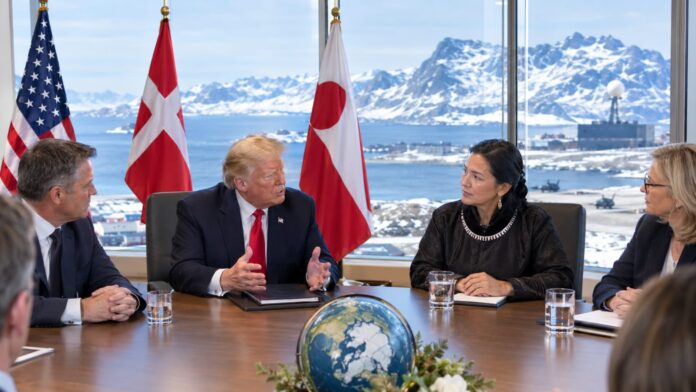
In a significant move for U.S. national security, President Trump announced on Friday that he has successfully negotiated a deal that grants the United States permanent control over security in Greenland. This agreement comes as part of a broader strategy to bolster U.S. influence in the Arctic, a region that has become increasingly important due to its geopolitical significance and natural resources. The deal is expected to be formalized in New York City on Tuesday, coinciding with the United Nations General Assembly, where numerous world leaders will gather.
The governments of both Greenland and Denmark, which oversees the semi-autonomous island, have confirmed the agreement. While details remain somewhat limited, it is clear that this deal does not entail an outright takeover of Greenland, a notion that had previously caused concern among Danish officials and NATO allies. Instead, it provides the U.S. with guaranteed access to the island, including overflight rights, which could facilitate the establishment of additional military bases.
- The deal was announced by President Trump on Friday.
- It is set to be signed in New York City during the UN General Assembly.
- Greenland and Denmark have confirmed their participation in the agreement.
- The deal includes provisions to block non-NATO countries from establishing military bases in Greenland.
Why It Matters
This agreement is a pivotal development in U.S. foreign policy, particularly in the context of national security. By securing permanent control over security in Greenland, the United States is not only enhancing its military presence in the Arctic but also sending a clear message to adversaries, particularly Russia, about its commitment to safeguarding its interests in the region. The Arctic is becoming a focal point for global power dynamics, with melting ice caps opening new shipping routes and access to untapped natural resources.
Secretary of State Marco Rubio characterized the deal as a ‘huge win’ for the United States, emphasizing that it solidifies Greenland’s role as a critical component of North America’s strategic defense. The implications of this agreement extend beyond mere military presence; it also addresses broader national security concerns by restricting adversarial investments in Greenland and preventing non-NATO countries from establishing military footholds in the area.
- The agreement strengthens U.S. military capabilities in the Arctic.
- It enhances national security by limiting adversarial influence in Greenland.
- Local authorities in Greenland will collaborate with the U.S. on development projects.
- The deal reinforces U.S. strategic interests in a rapidly changing geopolitical landscape.
Political and Public Context
The backdrop to this agreement is a series of strategic maneuvers by President Trump aimed at increasing U.S. control over Greenland. The president has long argued that the U.S. needs to assert its influence over the island, which lies strategically between North America and Europe and is in close proximity to Russia. His administration has previously explored the possibility of purchasing Greenland from Denmark, a proposal that was met with resistance from Danish officials.
Earlier this year, the president escalated his efforts to secure U.S. interests in Greenland, even threatening tariffs on Denmark if they did not cooperate with his plans. This aggressive stance reflects a broader shift in U.S. foreign policy under Trump’s leadership, characterized by a willingness to take bold actions to protect national interests. The deal with Greenland is a culmination of these efforts, showcasing the administration’s commitment to maintaining a strong military presence in key regions.
- President Trump previously proposed purchasing Greenland from Denmark.
- His administration has threatened tariffs on Denmark to push for U.S. interests.
- The U.S. has maintained a military base in Greenland since the 1950s.
- Russia’s increasing activity in the Arctic has heightened U.S. concerns.
Breaking news: The White House has struck a deal that gives “permanent control over security” in Greenland to the U.S., President Trump said, declaring victory in his desire to increase U.S. sway over the Arctic territory. https://t.co/shwbur8hPb
— The Washington Post (@washingtonpost) September 18, 2026
What Happens Next
Looking ahead, the signing of this agreement marks the beginning of a new chapter in U.S.-Greenland relations. The administration plans to immediately initiate the process of expanding its military presence on the island, which has been home to a U.S. base for decades. This expansion is expected to involve collaboration with local authorities in Greenland, ensuring that development projects align with the needs and interests of the island’s residents.
As the geopolitical landscape continues to evolve, questions remain about the long-term implications of this deal. Will the U.S. face pushback from other nations, particularly Russia, in response to its increased military presence? How will local Greenlandic authorities respond to the expansion of U.S. military operations? These questions will be critical as the U.S. navigates its role in the Arctic moving forward.
- The agreement will be signed during the UN General Assembly.
- The U.S. plans to expand its military presence in Greenland.
- Local collaboration on development projects will be prioritized.
- Future geopolitical tensions in the Arctic may arise as a result of this deal.
