

Story Highlights
- President Trump warned Iran could face devastating consequences if the ceasefire collapses.
- U.S. forces struck Iranian military infrastructure after alleged attacks near the Strait of Hormuz.
- Iran retaliated against U.S.-linked sites in Bahrain and Kuwait, raising fears of a wider regional conflict.
What Happened
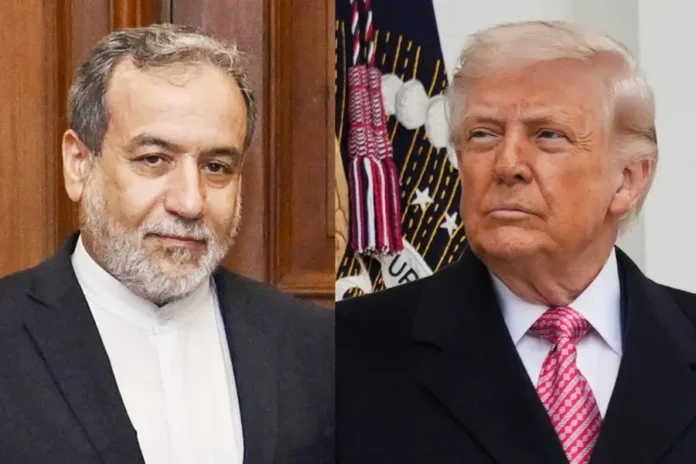
President Donald Trump issued one of his strongest warnings yet to Iran after a weekend of strikes placed the fragile U.S.-Iran ceasefire under renewed pressure.
The latest escalation began after U.S. officials accused Iranian forces of targeting a commercial oil tanker near the Strait of Hormuz. Trump said Iranian drones were fired at the vessel, calling the incident another violation of the ceasefire agreement.
In response, U.S. forces struck Iranian military infrastructure, including missile and drone facilities, surveillance systems, coastal radar sites, and assets tied to mining or disrupting shipping lanes.
- The U.S. said its strikes were a response to Iranian ceasefire violations.
- Iran denied Washington’s version and accused the U.S. of breaking the agreement.
- The Strait of Hormuz remained the center of the military and diplomatic standoff.
Trump then warned on Truth Social that the United States may be forced to “militarily complete the job” if Iran continues violating the ceasefire. He said that if such a moment comes, “the Islamic Republic of Iran will no longer exist.”
Iran’s Islamic Revolutionary Guard Corps later claimed responsibility for attacks on U.S.-linked military sites in Bahrain and Kuwait. Gulf governments condemned the strikes, describing them as a dangerous escalation and a violation of their sovereignty.
Why It Matters
The weekend strikes show how quickly the ceasefire can move from diplomacy back toward direct military confrontation.
For Trump, the warning appears designed to restore deterrence and make clear that the United States will not tolerate attacks on commercial shipping, U.S. assets, or Gulf partners.
Supporters of Trump’s approach are likely to argue that strong warnings are necessary because Iran has repeatedly tested ceasefire boundaries while trying to assert control over the Strait of Hormuz.
- The administration is trying to keep diplomacy alive without appearing weak.
- Iran’s attacks on Gulf sites risk pulling U.S. partners deeper into the conflict.
- Shipping security remains central to both military strategy and global energy stability.
At the same time, the confrontation creates real risks. If either side misreads the other’s intentions, limited strikes could turn into a broader war.
That is why the administration’s message now appears to combine two tracks: continue technical talks where possible, but respond forcefully if Iran escalates again.
Political and Public Context
Trump has presented his Iran strategy as peace through strength: use overwhelming pressure to force Tehran into compliance while keeping a diplomatic path open.
The weekend events tested that strategy. Trump’s sharp language signaled that the White House is willing to escalate if it believes Iran is using negotiations as cover for attacks.
Vice President JD Vance and other administration officials have continued backing the diplomatic track, even as military action remains on the table. That gives Trump flexibility to negotiate while maintaining a credible threat of force.
- Trump’s allies see the warning as a deterrent message to Tehran.
- Critics may argue the language increases the risk of escalation.
- Congress is likely to renew questions about war powers and military authorization.
The political stakes are also high because any renewed Middle East conflict could affect oil prices, inflation, and U.S. military commitments heading into the next election cycle.
Iran’s internal politics add another layer of uncertainty. Civilian officials may want to preserve negotiations, while the IRGC appears more willing to escalate militarily.
What Happens Next
The immediate question is whether the reported “stand down” holds and whether technical talks remain on track after the weekend exchange.
Reuters reported that uncertainty over Qatar diplomacy has already clouded prospects for a broader U.S.-Iran deal, with Iran refusing direct meetings with U.S. envoys despite continued mediation efforts. :contentReference[oaicite:2]{index=2}
If the ceasefire holds, negotiators may return to issues involving shipping access, nuclear limits, sanctions relief, and control arrangements around the Strait of Hormuz.
If Iran or its military wing launches another attack, Trump may face pressure to follow through on his warning with additional military action.
For now, the ceasefire remains active but highly unstable, with Gulf allies, energy markets, and global shipping companies watching for any sign that the conflict is widening.
