
Story Highlights
- President Trump signed a memorandum expanding Americans’ “Freedom to Fix” their own vehicles.
- The order directs EPA Administrator Lee Zeldin to clarify emissions-related repair rules and reduce uncertainty for owners and repair shops.
- The move targets repair-cost bottlenecks while preserving federal authority over illegal emissions tampering.
What Happened
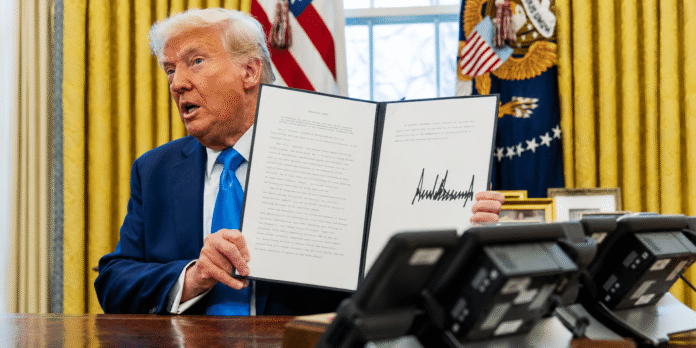
President Donald Trump signed a memorandum aimed at making it easier and more affordable for Americans to repair their own vehicles, framing the action as part of his broader push to lower everyday costs.
The memorandum directs EPA Administrator Lee Zeldin to clarify which emissions-related vehicle repairs owners may legally perform without violating federal tampering rules under the Clean Air Act.
Trump said the action is about common sense and consumer freedom, arguing that Americans should not be blocked from fixing their own cars or forced into expensive repair channels when safe and legal alternatives are available.
- The EPA must issue repair guidance within 30 days.
- The administration wants faster review of compliant aftermarket emissions parts.
- The policy is designed to help drivers, independent repair shops, and aftermarket-parts businesses.
The White House said the current system can create confusion around which repairs are legal, particularly when emissions-related parts are involved. Officials also pointed to the California Air Resources Board’s certification process as a bottleneck that can delay approval for aftermarket parts.
Zeldin said the EPA will not target people making good-faith repairs to their own vehicles, while still maintaining rules against illegal emissions tampering.
Why It Matters
The memo matters because vehicle repairs have become a major household expense for many Americans, especially as drivers keep older cars on the road longer.
Trump is positioning the issue as a direct affordability measure. By giving consumers and independent shops more clarity, the administration argues repair costs can fall and competition can increase.
Supporters say right-to-repair policies give vehicle owners more control, reduce dependence on dealership service networks, and help small repair businesses compete.
- Drivers could benefit from more repair options.
- Independent shops may gain more confidence handling emissions-related repairs.
- Aftermarket-parts companies could see faster pathways for compliant products.
The key policy challenge is balancing lower repair costs with emissions compliance, safety, and protection against counterfeit or low-quality parts.
Automakers and dealers have warned that poorly regulated aftermarket parts could create safety risks, cybersecurity concerns, or insurance-driven pressure to use cheaper components.
Political and Public Context
The “Freedom to Fix” memo fits into Trump’s broader cost-of-living and deregulation agenda.
The administration has already moved to roll back several Biden-era vehicle rules, including emissions and electric vehicle mandates that Trump argues increased costs for consumers.
The vehicle repair memo also follows an earlier administration action supporting farmers’ ability to repair agricultural and non-road equipment, which the White House framed as a major savings measure for rural America.
- Trump is tying right-to-repair policy to lower consumer costs.
- Republicans are likely to frame the memo as pro-consumer and pro-small business.
- Some consumer groups may support the direction while arguing broader repair-data access is still needed.
Right-to-repair has drawn interest across party lines because it appeals to consumers, mechanics, farmers, small businesses, and drivers frustrated by rising repair bills.
At the same time, the auto industry continues to argue that modern vehicles are complex computer-driven systems, and that repair access must be handled carefully to protect safety, software security, and emissions controls.
What Happens Next
The practical impact will depend on EPA’s 30-day guidance and how clearly the agency distinguishes legal repairs from prohibited emissions-system tampering.
If the guidance is broad and clear, independent repair shops and vehicle owners may gain more confidence using certified aftermarket parts for emissions-related repairs.
The EPA is also expected to work on speeding up review of aftermarket parts that manufacturers submit for compliance approval.
Congress may continue moving in the same direction. Reuters reported that Trump met with auto industry leaders earlier in June as lawmakers considered right-to-repair legislation affecting diagnostic data, repair tools, and independent shop access. :contentReference[oaicite:1]{index=1}
For consumers, the administration’s goal is simple: more repair choices, lower costs, and less regulatory confusion when fixing a vehicle.
Sources
- Lowering the Cost of Living by Promoting the Freedom to Fix
- Trump signs memo making it easier for Americans to fix own vehicles
- Trump signs memo backing Americans’ right to repair their own cars
- EPA Delivers on President’s “Freedom to Fix” Memorandum for Vehicles and Equipment
- Trump EPA Memorandum Could Strengthen Right to Repair for Vehicle Owners