

Story Highlights
- President Trump arrived at the NATO summit in Ankara with tough messages on Greenland, Turkey, and European defense.
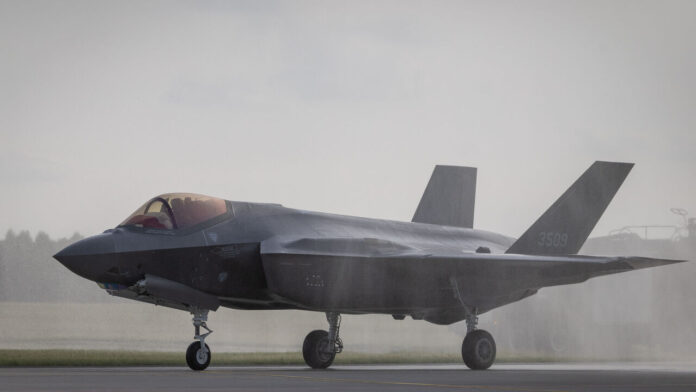
- Trump said he will soon decide whether to support selling F-35 fighter jets to Turkey despite congressional restrictions.
- The president also refused to rule out further U.S. troop reductions in Europe as NATO faces pressure from Russia’s war in Ukraine.
What Happened
President Donald Trump arrived in Ankara for a NATO summit already marked by tension over defense spending, Russia’s war in Ukraine, Turkey’s military ambitions, and Trump’s renewed interest in U.S. control of Greenland.
Trump told reporters he was “very disappointed” with NATO and suggested he may not have attended the summit if it had been hosted somewhere other than Turkey. He cited his relationship with Turkish President Recep Tayyip Erdoğan as a key reason for attending.
During bilateral talks with Erdoğan, Trump said he would soon decide whether to move forward with selling F-35 stealth fighter jets to Turkey. The sale is currently blocked by congressional restrictions tied to Turkey’s 2019 purchase of Russia’s S-400 air defense system.
- Trump said a decision on Turkey’s F-35 request could come soon.
- He also suggested he may consider lifting sanctions imposed over the S-400 purchase.
- Erdoğan said Turkey has been “promised five jets” and expects progress at the summit.
Erdoğan praised Trump as “a man of his word” and said he expects the F-35 issue, along with American engine support for Turkey’s KAAN fighter program, to be resolved favorably.
Trump also used his arrival remarks to revisit his interest in U.S. control of Greenland, a territory of NATO member Denmark. He acknowledged that pressing the issue could further strain relations with allies, but he did not back away from the idea.
The summit is also being shaped by Russia’s continued attacks on Ukraine. Ukrainian President Volodymyr Zelensky is expected to meet with Trump and press NATO allies for more anti-ballistic missile production and stronger support for Ukraine’s defense infrastructure.
Why It Matters
The summit matters because Trump is using NATO’s pressure points to advance a more aggressive America First strategy.
For Trump and his supporters, the Greenland issue is about long-term U.S. security. Greenland’s Arctic location, natural resources, and military value make it a strategic asset at a time when Russia and China are expanding their interest in the region.
The Turkey talks are equally important. Turkey is a difficult but powerful NATO ally, positioned between Europe, Russia, the Middle East, and the Black Sea. Trump’s willingness to consider F-35 sales and sanctions relief suggests he may be trying to pull Ankara closer to Washington after years of friction.
- Supporters say Trump is forcing NATO to confront strategic realities.
- The F-35 talks could reset strained U.S.-Turkey defense ties.
- The Greenland push reinforces Trump’s focus on Arctic security and U.S. leverage.
The F-35 issue is sensitive because Israel strongly opposes the sale. Prime Minister Benjamin Netanyahu has warned that giving Turkey advanced stealth jets could weaken Israel’s regional military edge.
Trump now faces a strategic balancing act: strengthen ties with Turkey inside NATO, preserve Israel’s security advantage, and manage congressional resistance to rewarding Ankara after its Russian weapons purchase.
Political and Public Context
Trump’s approach to NATO has always centered on leverage, burden-sharing, and direct U.S. benefit.
At this summit, that approach is on full display. Trump is pressuring allies on defense spending, keeping troop reductions on the table, reopening the Greenland debate, and using the Turkey relationship to explore a possible defense reset.
For European allies, the message is uncomfortable. Trump is making clear that U.S. support cannot be treated as automatic, especially if NATO countries do not spend enough or align with American strategic priorities.
For Trump’s base, the message is likely to land differently. Many supporters see NATO as an alliance that has relied too heavily on American money and military strength. Trump’s pressure campaign allows him to argue that he is forcing allies to pay more, defend more, and respect U.S. priorities.
The Turkey issue also gives Trump a chance to show he can negotiate with difficult partners. Erdoğan’s praise of Trump suggests Ankara sees this summit as a possible turning point after years of tension with Washington.
What Happens Next
The biggest immediate question is whether Trump formally backs an F-35 sale to Turkey or sanctions relief tied to the S-400 dispute.
Any deal would likely face congressional review and possible resistance from lawmakers concerned about Turkey’s Russian defense purchase. Israel is also expected to continue lobbying against the sale or demand strict conditions to preserve its military edge.
- Trump may announce a decision on Turkey’s F-35 request after further talks.
- Congress could challenge or condition any sale to Ankara.
- NATO allies will watch closely for any signal on U.S. troop reductions in Europe.
The Greenland issue is also likely to continue creating tension with Denmark and other European allies, even if no immediate policy action follows.
For Trump, the summit is a chance to show that his foreign policy is built on strength and bargaining power. He is pressing NATO to serve American interests more directly — even if that means forcing allies into difficult conversations they would rather avoid.
