

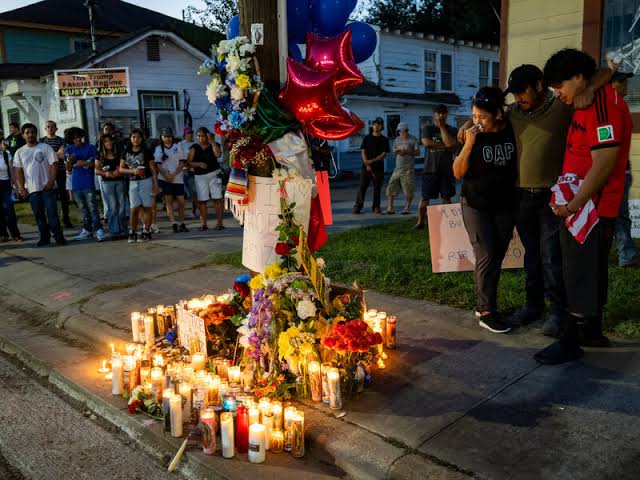
President Trump publicly reversed a decision by his own Department of Homeland Security to temporarily suspend most ICE vehicle stops, just days after two fatal shootings during immigration enforcement operations in Maine and Texas prompted the agency to pull back. The reversal, delivered via a furious Truth Social post, has reignited criticism from civil rights advocates while pleasing hardline immigration voices who accused the administration of going soft. The episode highlights the growing tension between operational safety concerns inside ICE and political pressure from the president’s base to maintain aggressive enforcement.
Story Highlights
- ICE had quietly paused most vehicle stops this week following fatal shootings in Biddeford, Maine, and Houston, Texas
- Trump called the pause a mistake, writing that ICE is “doing a GREAT job, one that has to be done”
- At least four people have been killed during vehicle-related immigration operations since the deportation campaign began
- A third fatal incident occurred in Florida on Tuesday when a man was struck by a tractor trailer while fleeing agents
What Happened
Immigration and Customs Enforcement leadership was caught off guard this week when President Trump publicly overturned a Department of Homeland Security decision to pause most vehicle stops conducted by the agency’s Enforcement and Removal Operations division, according to a senior DHS official who spoke to NBC News. The pause had been implemented quietly following two fatal shootings tied to ICE operations: the killing of Lorenzo Salgado Araujo in Houston and Joan Sebastian Durán Guerrero in Biddeford, Maine. Neither man was reportedly the actual target of the enforcement operations in which they died, a detail that has fueled criticism of the tactic.
Under the paused guidance, agents were directed to work with partner law enforcement agencies before initiating vehicle stops, except when executing a criminal warrant against a specific individual inside a vehicle. The Department of Homeland Security had also pledged to rapidly deploy body cameras to ICE officers nationwide in the wake of the shootings, an acknowledgment of mounting public scrutiny over the tactic’s safety record.
Trump’s reversal came via Truth Social on Wednesday morning, where he wrote that ICE is “doing a GREAT job, one that has to be done,” and argued that crime in America is down substantially as a result of the administration’s enforcement posture. He blamed the Biden administration’s border policies for what he described as 25 million people entering the country illegally and unchecked, and insisted that criminals among that population need to be removed. According to CNN, Trump was described by two sources as furious over both the pause itself and the political blowback it generated from prominent MAGA-aligned voices who suggested the administration was weakening its enforcement posture.
Compounding the controversy, a third fatal incident occurred in Florida on Tuesday, when a 28-year-old man died after being struck by a tractor trailer while fleeing from immigration and other federal officers. The pattern of violent outcomes tied to vehicle stops has drawn sustained criticism from policing experts, who have long warned that stops and pursuits involving vehicles carry inherent danger, particularly when officers resort to using firearms against moving cars.
Why It Matters
The reversal illustrates the political bind facing the Trump administration on immigration enforcement. Having built much of his political identity around aggressive deportation efforts, Trump faces intense pressure from his base to avoid any appearance of retreat, even when career law enforcement officials within his own administration raise legitimate safety concerns. The episode suggests that operational decisions within ICE are increasingly subject to direct political override from the White House, a dynamic that could affect how field agents approach future enforcement actions.
For communities across the country, particularly in cities where ICE vehicle stops have become common, the reversal signals that the aggressive tactic will continue despite its documented lethal consequences. Immigration advocates argue the pattern of shootings reflects deeper structural problems with how ICE conducts stops, including its reliance on administrative warrants rather than judicial ones, which advocates say pushes agents toward riskier field tactics.
The controversy also exposes friction within the administration’s own ranks. DHS’s initial decision to pause stops suggests that career and appointed officials within the department saw legitimate operational risk in continuing the practice unchanged, only to be overruled from the top. That dynamic raises questions about accountability structures within the immigration enforcement apparatus and whether safety concerns will consistently take a back seat to political messaging.
Economic and Global Context
While the ICE stops controversy is primarily a domestic policy and public safety issue, it carries broader implications for the administration’s overall immigration enforcement strategy, which remains one of the signature initiatives of Trump’s second term. The mass deportation campaign has already reshaped labor markets in sectors reliant on immigrant labor, including agriculture, construction, and hospitality, with businesses in several states reporting workforce shortages tied to enforcement activity.
The continued use of aggressive tactics also carries legal and financial risk for the federal government. Wrongful death lawsuits stemming from fatal ICE encounters are likely, and previous immigration enforcement controversies have resulted in significant settlements and prolonged litigation that consume both political capital and taxpayer resources.
Internationally, the optics of continued fatal encounters during immigration enforcement operations feed into broader diplomatic friction with countries whose citizens have been affected, complicating negotiations on deportation agreements and repatriation flights that require cooperation from foreign governments.
Implications
In the near term, expect ICE to resume vehicle stops largely unchanged, despite the recent fatalities, given Trump’s explicit directive. Civil rights organizations and immigration advocacy groups are likely to intensify legal challenges and public pressure campaigns targeting the practice, potentially seeking court intervention in jurisdictions where fatal incidents have occurred.
For ICE agents in the field, the reversal sends a clear signal that continued use of vehicle stops carries political protection from the top, even amid internal safety concerns. This may affect morale and risk tolerance among rank-and-file officers navigating an increasingly scrutinized enforcement environment.
For lawmakers, the pattern of fatal encounters is likely to generate renewed congressional attention, particularly from Democrats seeking independent investigations into ICE tactics, though any legislative response faces long odds given the current composition of Congress and the administration’s firm stance on enforcement priorities.
Sources
“ICE leadership surprised by Trump’s call for continued immigration traffic stops”
