

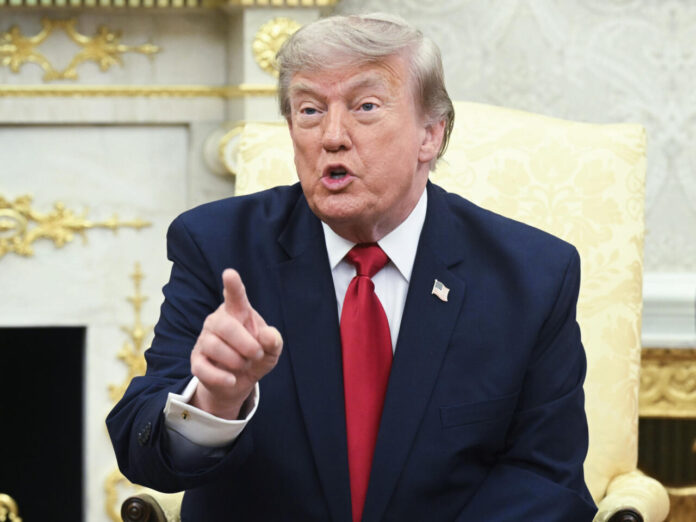
President Trump has overturned a Department of Homeland Security decision to pause ICE vehicle stops, ordering the controversial enforcement tactic to continue just days after it led to fatal shootings in Maine and Texas. The reversal, which reportedly blindsided senior ICE leadership, comes as immigration arrests hit their highest monthly pace of the administration and as mounting fatalities intensify calls for outside investigations into federal agents’ conduct.
Story Highlights
- Trump overturned a temporary DHS suspension of ICE vehicle stops after fatal shootings in Biddeford, Maine, and Houston, Texas
- ICE has averaged more than 1,400 arrests per day in July, the highest monthly pace recorded under the administration
- At least eleven fatal shootings involving federal immigration officers have occurred since January 2025, including the death of 26-year-old Colombian national Joan Sebastian Guerrero
What Happened
President Donald Trump this week ordered Immigration and Customs Enforcement to resume vehicle traffic stops, reversing a temporary suspension that the Department of Homeland Security had put in place following fatal shootings involving agents in Maine and Texas. According to two sources familiar with the matter, Trump became furious after watching news coverage suggesting the pause represented a weakening of his signature immigration crackdown, particularly after prominent voices within his political base criticized the suspension publicly.
Senior ICE leadership was reportedly surprised by the president’s decision, according to a senior DHS official who spoke to NBC News. The vehicle stop suspension, which included some exceptions, had been characterized by White House border czar Tom Homan as a temporary measure following the shootings, not a permanent change in enforcement posture. Trump’s early Wednesday reversal, delivered in a post on Truth Social, dismissed the pause and criticized what he characterized as politically motivated opposition to enforcement.
The controversy stems from a string of fatal encounters involving ICE agents. The most recent, which killed 26-year-old Colombian national Joan Sebastian Guerrero in Biddeford, Maine, marked at least the eleventh fatal shooting involving federal immigration officers since the start of 2025. A separate fatal shooting in Houston, Texas, contributed to the initial decision to pause the vehicle stop tactic. Vigils and protests have followed in multiple cities, with local officials and immigrant rights groups calling for independent investigations free from federal interference.
The reversal comes amid a broader surge in immigration enforcement activity. ICE has arrested an average of more than 1,400 people per day throughout July, according to Washington Post reporting, marking the highest sustained arrest pace of the Trump administration to date. Nayna Gupta, national director of policy for the American Immigration Council, characterized the pattern of fatal encounters as part of what she described as increasingly widespread aggression in enforcement operations nationwide.
Democratic lawmakers, including Representative Ayanna Pressley, have pressed for greater congressional oversight of ICE conduct, including calls to end qualified immunity protections for agents involved in fatal encounters and to prioritize accountability for the families of those killed during enforcement operations. The administration has so far shown no indication that it intends to change its underlying enforcement strategy despite the mounting death toll and public criticism.
Why It Matters
The episode illustrates the degree to which political pressure from the president’s base is shaping operational decisions inside federal law enforcement agencies, even when those decisions involve immediate public safety considerations following fatal incidents. DHS’s initial pause reflected an internal judgment that the tactic carried elevated risk in the immediate aftermath of two deaths, a judgment the president overrode within days based largely on political optics rather than a fresh safety review.
For communities where ICE operates, the resumption of vehicle stops raises the prospect of further fatal encounters, particularly given that eleven such shootings have already occurred since the administration took office. Immigrant rights advocates argue that the pace and intensity of current enforcement, now averaging over 1,400 arrests daily, is outstripping agencies’ ability to ensure consistent training and de-escalation practices among field agents.
The controversy also highlights a deepening tension between local governments, some of which maintain sanctuary city policies, and federal immigration authorities. Confrontations between local law enforcement, protesters, and federal agents have become a recurring feature of major enforcement operations, raising questions about coordination, jurisdiction, and accountability when fatal incidents occur.
For Trump’s political coalition, the episode reflects the ongoing influence of vocal enforcement hardliners who view any operational pause as a betrayal of campaign commitments, even temporarily. That dynamic constrains the administration’s flexibility to make risk-based adjustments to enforcement tactics without facing significant backlash from its own base.
Economic and Global Context
Immigration enforcement at this scale carries substantial economic implications for industries that rely heavily on immigrant labor, including agriculture, construction, hospitality, and food processing. Business groups in several states have raised concerns that sustained high-volume arrests could disrupt labor supply in sectors already experiencing worker shortages, potentially contributing to upward pressure on prices in affected industries.
The financial cost of expanded enforcement operations is also significant. Sustained daily arrest volumes at this scale require substantial federal resources, including personnel, detention capacity, and transportation infrastructure, at a time when the administration is simultaneously managing large military expenditures tied to the ongoing conflict with Iran and broader fiscal pressures from its tax and tariff policies.
Internationally, the pattern of fatal encounters involving foreign nationals, including Guerrero’s death, has drawn attention from foreign governments whose citizens have been affected by enforcement operations. Colombia’s government has previously raised concerns through diplomatic channels about the treatment of its nationals in U.S. custody, and continued fatalities could complicate bilateral relations with several Latin American countries whose citizens make up a significant share of those affected by current enforcement priorities.
Detention capacity constraints tied to the historic arrest pace have also drawn scrutiny from budget analysts, who note that sustained enforcement at current levels will likely require additional congressional appropriations beyond what was originally allocated for immigration enforcement in this fiscal year.
Implications
In the near term, expect continued scrutiny of ICE’s vehicle stop practices, particularly if further fatal encounters occur following the policy reversal. Congressional Democrats are likely to press for hearings and formal investigations into the agency’s use-of-force policies and training standards, though such efforts face long odds in a Republican-controlled Congress focused on other legislative priorities.
Local officials in affected communities, including those in Maine and Texas, will likely continue pursuing independent investigations into the specific shootings that prompted the original pause, regardless of the federal policy reversal. These parallel investigations could produce findings that conflict with the administration’s public defense of agent conduct, creating additional political friction.
For immigrant communities, the resumption of vehicle stops signals that enforcement intensity will not meaningfully change in the near term, reinforcing existing patterns of caution and, in some cases, prompting further public demonstrations near ICE facilities. Advocacy organizations are likely to continue documenting individual cases as part of broader legal and legislative campaigns for accountability.
For the administration, the episode underscores the political calculation at the heart of its immigration strategy: prioritizing visible enforcement intensity over operational caution, a trade-off that carries real human costs but appears calculated to satisfy a base that has shown low tolerance for any perceived softening of the crackdown heading into the midterms.
Sources
ICE leadership surprised by Trump’s call for continued immigration traffic stops
