

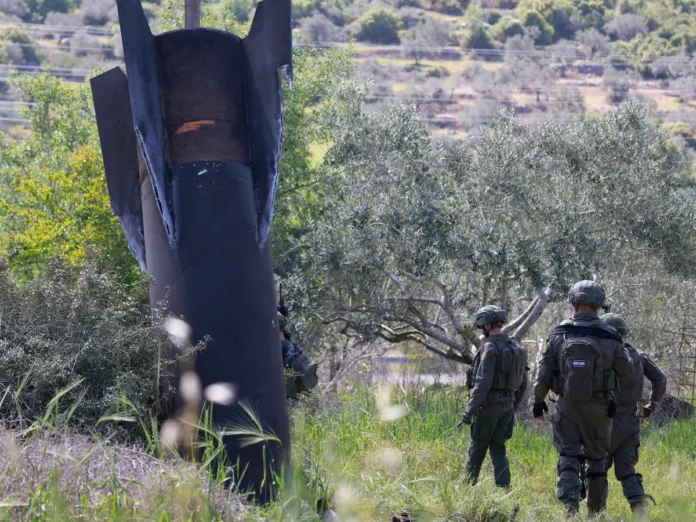
President Trump has ordered another round of American military strikes against Iranian targets after an Iranian attack on Jordan left two U.S. service members dead and a third missing in action. The escalation comes as the ceasefire framework Trump brokered in June continues to unravel, with Iranian forces striking U.S. allies across the Gulf and American forces hitting back inside Iranian territory. The renewed violence raises fresh questions about how long the conflict will last and what it will cost the United States militarily, economically, and diplomatically.
Story Highlights
- U.S. Central Command launched new strikes on Iranian targets after an attack on American forces in Jordan killed two service members and left one missing
- Iranian forces have struck U.S. allies including Kuwait, where officials reported a second consecutive day of attacks on a power and desalination plant
- The ceasefire tied to the June memorandum of understanding between Washington and Tehran has effectively collapsed since Trump declared it over on July 8
What Happened
The Pentagon confirmed Sunday that U.S. forces carried out a new round of airstrikes against Iranian military positions, the latest escalation in a conflict that has stretched on for months longer than the White House initially signaled. The strikes were ordered directly by President Donald Trump after an Iranian attack on American personnel stationed in Jordan killed two U.S. service members and left a third unaccounted for. Officials described the strikes as retaliatory, intended to “swiftly punish” Tehran for the attack and to further degrade Iranian military capacity.
The violence marks a serious deterioration from the ceasefire framework Trump and Iranian officials signed in mid-June, a memorandum of understanding meant to end hostilities across the region, including in Lebanon. That arrangement began breaking down within weeks. Trump formally declared the ceasefire over on July 8, and the pace of strikes has intensified sharply since, with U.S. forces conducting at least six consecutive nights of attacks on Iranian targets in the past two weeks alone, including strikes on the port city of Chabahar.
Iran has responded with its own campaign against American interests and allied nations in the region. Kuwaiti officials reported that a power and desalination plant was struck for a second straight day, while Jordan’s army said three Iranian missiles landed in multiple locations over the weekend. Bahrain has also reported incoming fire. Iranian state media claimed the Islamic Revolutionary Guard Corps intercepted four ships in the Strait of Hormuz, a waterway that has become the central flashpoint of the broader conflict since Iran began targeting commercial shipping there.
Retired Admiral James Stavridis, speaking to CNN, characterized the president’s position starkly, saying Trump “has three options, and none of them are good,” reflecting the difficulty of finding an offramp now that both sides have resumed sustained military exchanges. Iranian officials have claimed that recent American strikes have injured more than 260 people, according to a spokesperson for Iran’s health ministry, though the government has not released a consistent casualty count.
Secretary of State Marco Rubio and other officials have maintained diplomatic contact with regional partners even as the fighting continues, with U.S. officials stressing on recent calls the importance of preventing further escalation. But with American troops now among the dead and Gulf allies absorbing direct hits, the administration faces mounting pressure to define what victory or resolution actually looks like.
Why It Matters
The deaths of American service members fundamentally changes the political stakes of this conflict for the Trump administration. What began as a campaign framed around striking Iranian nuclear infrastructure has evolved into an open-ended regional war with U.S. casualties, a development that will test public patience heading into a midterm election year already clouded by economic anxiety and immigration controversy. Trump himself has acknowledged the comparison is uncomfortable, noting that the U.S. was in Vietnam for nineteen years while the current conflict has lasted only months, an argument critics say understates how quickly the human and financial costs can compound.
For Gulf allies, the stakes are immediate and existential. Kuwait, Jordan, and Bahrain are absorbing direct strikes despite having no formal role in the underlying U.S.-Iran dispute, raising questions about the durability of American security guarantees in the region and whether Washington can protect partners who are increasingly caught in the crossfire. Continued attacks on infrastructure like Kuwait’s desalination plant also carry humanitarian implications, threatening basic services for civilian populations.
Congress will face renewed pressure to assert its role in authorizing continued military action, particularly as American casualties mount. Senate Democrats have already used procedural tools to block a defense funding bill over concerns tied to the Iran war and its entanglement with Israel’s operations, signaling that war authorization and funding fights are likely to intensify as the conflict drags on without a clear endpoint.
The credibility of American diplomacy is also on the line. The June memorandum of understanding was billed as a genuine breakthrough, and its collapse within weeks raises doubts about whether future negotiated arrangements with Tehran, or any adversary, can be trusted to hold. That has ripple effects for how other nations view American commitments generally.
Economic and Global Context
The Strait of Hormuz remains the single most consequential flashpoint in the conflict from an economic standpoint. Roughly a fifth of global oil supply transits the strait, and Iran’s continued attacks on tankers, alongside Trump’s proposal to charge a 20 percent toll for safe passage through the waterway, have injected volatility into global energy markets. Sustained disruption to shipping through Hormuz carries the potential to push fuel prices higher across the United States and allied economies, compounding inflation concerns that are already weighing on consumer sentiment.
Regional allies are absorbing direct economic costs as well. Attacks on infrastructure in Kuwait, including the power and desalination facility hit for two consecutive days, threaten to strain public services and utility capacity in a nation whose economy is closely tied to stable energy exports. Continued instability also complicates broader Gulf investment flows, at a time when several Gulf states have pursued major economic diversification initiatives tied to partnerships with the United States.
Globally, the conflict is reverberating beyond the immediate region. China, a major buyer of Iranian oil, has been described by regional analysts as using Iran as a tool to maintain controlled tension that keeps American resources and attention tied down in the Middle East. That dynamic complicates U.S. strategic posture toward the Indo-Pacific at a moment when Washington has sought to prioritize competition with Beijing.
Defense spending associated with sustained operations, including munitions resupply and extended deployments, adds further strain to a federal budget already stretched by tax policy changes and other spending priorities. Analysts note that prolonged conflicts of this nature historically carry costs that significantly exceed initial estimates, a pattern that could reemerge if the current exchange of strikes continues without resolution.
Implications
In the near term, expect continued nightly strikes from both sides unless a genuine diplomatic circuit breaker emerges. The administration has shown no indication it intends to pull back, and Iranian leadership has given no signal it is prepared to fully stand down, particularly given the political costs any concession would carry domestically after the death of its supreme leader earlier this year.
For American troops and their families, the conflict now carries direct personal stakes that were previously more abstract. Continued casualties will likely intensify congressional scrutiny, including additional efforts to force votes on war powers and funding restrictions, even if such measures are unlikely to pass a Republican-controlled Congress in the near term.
Gulf allies will likely press Washington for clearer security assurances and potentially for a more defined endpoint to the conflict, given that their own infrastructure and civilian populations are absorbing collateral damage. Their patience, and their willingness to continue hosting American forces and provide basing access, may become a growing point of leverage in future negotiations.
For voters, the war will increasingly compete with domestic priorities like inflation and immigration for political attention heading into the midterms, and how the administration manages the human and financial costs of the conflict could shape Republican prospects in ways that were not apparent when the campaign against Iran first began.
Sources
