

Story Highlights
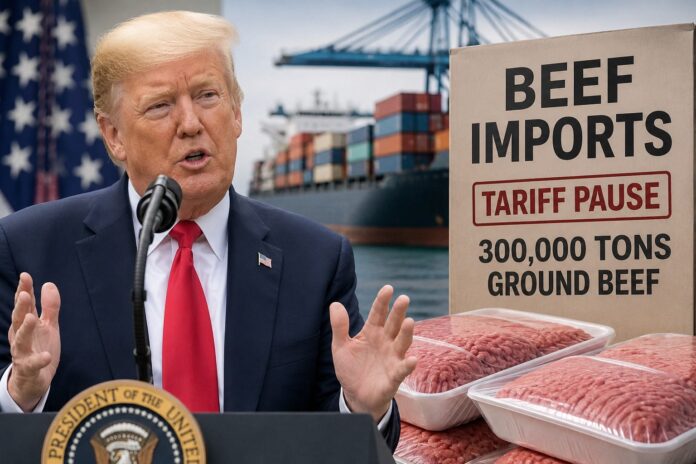
- President Trump proposes a temporary suspension of tariffs on beef imports to lower consumer prices.
- Some GOP lawmakers express concerns about the potential negative impact on the domestic beef market.
- The plan aims to address soaring beef prices, which have reached an average of $6.89 per pound.
- Critics argue that the move could destabilize the market and harm American ranchers.
What Happened
President Trump’s recent announcement regarding beef imports has sparked a wave of criticism from within his own party. The president’s plan to pause tariffs on beef imports, specifically exempting 300,000 tons of ground beef from out-of-quota tariffs, is intended to alleviate the financial burden on American consumers facing high food prices. However, this initiative has drawn ire from several Republican lawmakers who fear it could disrupt the domestic beef market and undermine American ranchers.
In an interview on NewsNation, Rep. Troy Downing (R-Mont.) voiced his concerns, stating that the damage from the decision has already been done. He emphasized the need for serious discussions with the administration before implementing such significant changes. Downing acknowledged the president’s good intentions but urged caution, highlighting the importance of consulting stakeholders to avoid unintended consequences.
The president defended his decision in an August post on Truth Social, asserting that the beef would be sold at 25 percent below current market prices, which he believes will benefit consumers while allowing the American beef industry to recover. However, he did not specify the source of the beef, raising further questions about the plan’s viability.
- President Trump announced a 90-day suspension of tariffs on beef imports.
- Rep. Troy Downing criticized the plan, stating that it has already affected the market.
- Sen. Thom Tillis labeled the exemptions a mistake, arguing they would not lead to systemic price reductions.
- Beef prices have surged, with ground beef averaging $6.89 per pound in the U.S.
Why It Matters
The implications of Trump’s beef import plan extend beyond immediate consumer relief. While the intention is to lower prices for American families, the potential fallout for domestic ranchers cannot be overlooked. The concerns raised by lawmakers like Downing and Tillis reflect a broader anxiety within the agricultural community about market stability.
The U.S. beef industry has been grappling with challenges such as droughts, rising operational costs, and a historic low in herd size. These factors have already strained ranchers, and the introduction of cheaper imports could exacerbate their struggles. The president’s plan, while well-meaning, risks flooding the market with low-cost beef, which could lead to a decrease in demand for domestically produced products.
The consequences of this plan could be far-reaching, affecting not only ranchers but also consumers in the long run. If domestic producers are unable to compete with subsidized imports, it could lead to a decline in the quality of beef available in the market, as ranchers may be forced to cut costs to stay afloat.
- Domestic ranchers may face increased competition from imported beef, impacting their livelihoods.
- Consumers could initially benefit from lower prices, but long-term quality may suffer.
- The plan could lead to a decrease in the number of American ranchers, threatening the industry.
- Market instability may result in fluctuating prices for consumers in the future.
Political and Public Context
Understanding the context surrounding Trump’s beef import plan is crucial to grasping its potential impact. The U.S. beef industry has been under pressure for several years, with factors such as climate change, rising feed costs, and supply chain disruptions contributing to a challenging environment for ranchers.
The decision to exempt beef imports comes at a time when the average price of ground beef has reached alarming levels, prompting the administration to take action. However, the timing of this decision raises questions about its effectiveness and the potential for unintended consequences.
Additionally, the political landscape plays a significant role in this debate. With midterm elections approaching, the administration’s focus on consumer prices may be seen as an attempt to appeal to voters concerned about inflation and food costs. However, this strategy could alienate key constituents in agricultural states who feel their interests are being overlooked.
- The U.S. beef industry has faced challenges due to climate change and rising operational costs.
- Ground beef prices have surged, prompting the administration to take action.
- Political pressures may influence the administration’s decisions regarding agricultural policies.
- Midterm elections could impact the administration’s approach to consumer pricing and agricultural support.
Why would he do this to us? Republicans warn Trump’s move to flood markets with foreign ground beef could hit his base hard. Ranchers and voters in beef states worry about prices, herd rebuilding, and timing ahead of the midterms. https://t.co/Pcv99M5b6R pic.twitter.com/wjntssgaiA
— Drew Grimaldi (@Grimillionaire) September 3, 2026
What Happens Next
As the situation unfolds, several key questions remain regarding the future of Trump’s beef import plan and its implications for the agricultural sector. The administration will need to navigate the delicate balance between providing relief to consumers and ensuring the stability of the domestic beef market.
Moving forward, it will be essential for the White House to engage in meaningful dialogue with stakeholders in the agricultural community to address their concerns. This could involve revisiting the plan or implementing additional measures to support American ranchers.
Furthermore, the administration must monitor the impact of the tariff suspension closely, as any negative consequences could lead to a backlash from both consumers and producers. The potential for market instability raises questions about the long-term viability of this approach.
- The administration may need to engage with agricultural stakeholders to address concerns.
- Monitoring the impact of the tariff suspension will be crucial for future decisions.
- Potential adjustments to the plan could be necessary based on market reactions.
- Long-term strategies for supporting American ranchers may need to be developed.
