

Story Highlights
- The United States and Saudi Arabia signed a civil nuclear cooperation framework designed to support a long-term energy partnership.
- President Donald Trump said the agreement is contingent on Saudi Arabia joining the Abraham Accords and normalising relations with Israel.
- The condition connects access to American nuclear technology with the administration’s broader effort to expand Middle East peace agreements.
- Congress will receive 90 days to review the agreement under the Atomic Energy Act.
What Happened
The United States and Saudi Arabia signed what is commonly known as a “123 agreement,” establishing the legal framework necessary for peaceful nuclear cooperation between the two countries.
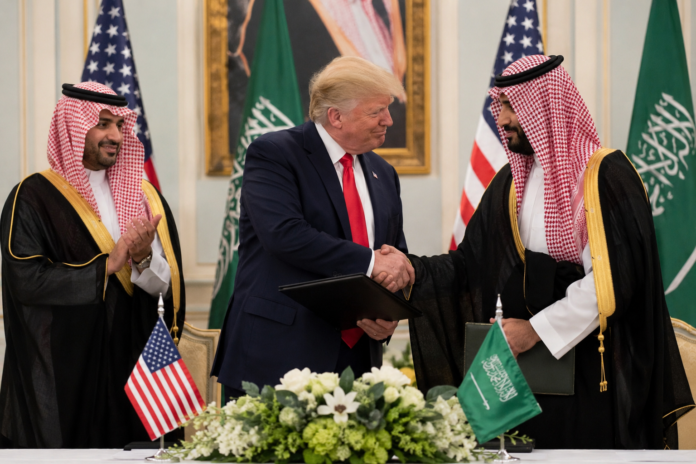
Energy Secretary Chris Wright and Saudi Energy Minister Prince Abdulaziz bin Salman signed the agreement alongside additional safeguards intended to govern the transfer and use of American nuclear technology. The administration described the partnership as a potentially decades-long undertaking that could create substantial opportunities for U.S. energy and engineering companies.
One day after the signing, President Donald Trump announced that the agreement would be “totally subject to Saudi Arabia joining” the Abraham Accords. The condition was not included in the agreement originally announced by the Energy Department.
The White House later confirmed that the president considers Saudi normalisation with Israel a requirement for the nuclear partnership to proceed.
The decision transforms the energy agreement into a potential diplomatic bargaining tool. Rather than granting Riyadh access to a major strategic partnership without additional concessions, the administration is attempting to use the deal to advance a wider regional peace initiative.
Saudi Arabia has previously said it would not formally recognise Israel without a credible pathway toward Palestinian statehood. That position could complicate negotiations, but the prospect of American nuclear cooperation gives Washington considerable leverage.
Why It Matters
Saudi Arabia is seeking to diversify its electricity system and reduce its reliance on oil and natural gas. Developing civil nuclear power could help the kingdom meet rising domestic energy demand while preserving more petroleum for export.
The agreement could also generate billions of dollars in contracts for American reactor developers, technology providers and infrastructure companies. Without a U.S. partnership, Saudi Arabia could potentially pursue cooperation with countries such as China or Russia.
By linking the agreement to the Abraham Accords, the president is attempting to secure both an economic victory and a major diplomatic breakthrough.
- American companies could become preferred partners in Saudi Arabia’s nuclear-energy expansion.
- Saudi recognition of Israel would represent the most significant expansion of the Abraham Accords.
- The condition gives Washington additional leverage over nuclear safeguards and regional diplomacy.
Questions remain over whether Saudi Arabia might eventually be permitted to enrich uranium domestically. Administration officials have offered differing interpretations, while the president has disputed suggestions that the agreement authorises enrichment.
Congressional lawmakers are expected to examine the safeguards closely during the formal review period.
Economic and Global Context
The nuclear framework is part of a wider expansion in relations between Washington and Riyadh that includes defence, artificial intelligence, technology and infrastructure investments.
Saudi Arabia has promoted hundreds of billions of dollars in planned U.S. investments as part of its Vision 2030 economic transformation programme. The civil nuclear agreement could deepen that relationship while directing a substantial portion of the kingdom’s future energy spending toward American businesses.
The administration’s approach also reflects concern that China and Russia could fill the gap should Washington refuse to cooperate. Both countries have sought greater political and commercial influence across the Middle East.
Securing Saudi participation in the Abraham Accords would further strengthen the U.S.-led regional alignment while limiting the influence of rival powers.
However, nuclear cooperation requires extensive safeguards because technology and fuel-cycle capabilities used for peaceful energy production can raise proliferation concerns. Any provision allowing domestic uranium enrichment is therefore likely to receive significant attention from lawmakers and security analysts.
What Happens Next
The agreement must be submitted to Congress, beginning a 90-day review period. Lawmakers may hold hearings, request additional information or introduce a resolution opposing the pact.
Blocking the agreement would be difficult because Congress would likely need enough votes to overcome a presidential veto.
Attention will now turn to Saudi Crown Prince Mohammed bin Salman and whether Riyadh is willing to reconsider its conditions for recognising Israel.
The administration could use the nuclear partnership, defence cooperation and access to American technology as part of a broader negotiating package. If successful, the strategy could produce a landmark Saudi-Israel agreement while preserving strong U.S. oversight of the kingdom’s civil nuclear programme.
Sources
Trump Says Nuclear Energy Deal Is Contingent on Saudis Signing Abraham Accords
