

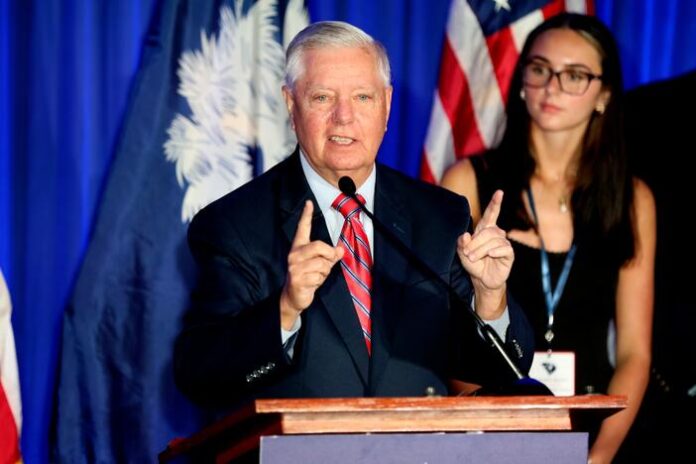
Story Highlights
- Sen. Lindsey Graham of South Carolina died at age 71 following a sudden medical emergency.
- President Donald Trump praised Graham as a patriot, trusted ally, and one of the most influential senators of his generation.
- Graham evolved from a fierce Trump critic in 2016 into one of the president’s most dependable defenders and advisers.
- His death creates an immediate gap in Republican strategy on Iran, Ukraine, judicial nominations, and election legislation.
What Happened
Sen. Lindsey Graham, one of President Donald Trump’s closest allies in the Senate and a leading Republican voice on national security, died after a brief and sudden illness.
Preliminary medical findings attributed his death to an aortic dissection connected to underlying cardiovascular disease.
Graham had returned from an overseas visit to Ukraine shortly before his death and remained engaged in legislative and foreign-policy discussions during his final hours.
Trump said he spoke with Graham by telephone on Saturday evening, describing what may have been one of the senator’s final conversations.
- Graham had recently returned from an official trip to Ukraine.
- He remained active in Senate negotiations until shortly before his death.
- Trump said Graham sounded tired but continued discussing important legislation.
- Flags at federal buildings were lowered to honor the late senator.
Trump responded with a deeply personal tribute, describing Graham as a tireless worker and a true American patriot.
The president’s reaction reflected the close relationship the two men developed after years of political conflict.
Graham had become a frequent adviser, golfing partner, legislative advocate, and television surrogate for Trump, particularly during moments when the administration faced criticism from Democrats or establishment Republicans.
Why It Matters
Graham’s death removes one of Trump’s most effective Senate allies at a critical point in the president’s second term.
Unlike many lawmakers who supported Trump primarily through prepared statements or party-line votes, Graham often communicated directly with the president and worked to translate White House priorities into Senate action.
He defended Trump during investigations, supported his judicial nominees, promoted stronger election rules, and regularly argued for a tough response to threats from Iran and other adversaries.
- Graham could speak directly to Trump when disagreements emerged.
- He helped connect the White House with traditional national-security Republicans.
- He used committee positions to support administration nominees and policies.
- He regularly defended Trump’s decisions during high-profile media appearances.
Their alliance was especially notable because it began with intense hostility.
During the 2016 Republican primary, Graham denounced Trump in unusually harsh terms, while Trump publicly mocked Graham and released his telephone number during a campaign event.
After Trump won the presidency, Graham chose cooperation over permanent opposition.
Supporters saw that evolution as political maturity: Graham recognized that Republican voters had chosen Trump and worked with him to advance conservative priorities.
Political and Public Context
Graham served in the Senate for more than two decades after representing South Carolina in the House.
He built much of his national reputation around foreign policy, military strength, judicial nominations, and congressional oversight.
As chairman and later a senior member of the Senate Judiciary Committee, Graham played an important role in advancing Trump’s judicial agenda and defending the administration during partisan investigations.
- He supported Trump’s transformation of the federal judiciary.
- He advocated aggressive pressure against Iran’s government.
- He backed American support for Israel and stronger Middle East security arrangements.
- He promoted sanctions intended to weaken Russia’s ability to finance its war in Ukraine.
Graham did not agree with Trump on every issue.
He remained more supportive of overseas military involvement and continued aid to Ukraine than many members of Trump’s America First coalition.
Those differences sometimes produced public disagreements, but they did not end the broader alliance.
Graham often served as a bridge between Trump and Republicans who supported a more traditional interventionist foreign policy.
That role became increasingly valuable as the administration confronted Iran, Russia, China, and instability across the Middle East.
What Happens Next
South Carolina Gov. Henry McMaster appointed Graham’s sister, Darline Graham Nordone, to serve temporarily in the Senate following a recommendation from Trump.
The appointment honors Graham’s family while avoiding the selection of a professional politician who could enter the special election with the advantages of incumbency.
Nordone is expected to serve through the conclusion of Graham’s current term while South Carolina voters choose a permanent successor.
- Republicans must reassign Graham’s important committee responsibilities.
- Another senator will need to lead his pending foreign-policy initiatives.
- South Carolina will hold an accelerated election for the full Senate term.
- Trump’s endorsement could strongly influence the Republican contest.
The most immediate challenge for Senate Republicans will be replacing Graham’s combination of experience, access to Trump, and willingness to defend difficult administration positions publicly.
His death could affect negotiations involving Iran, Russia sanctions, defense spending, judicial nominations, and the SAVE America Act.
For Trump, the loss is both political and personal.
Graham’s path from bitter rival to trusted ally demonstrated Trump’s ability to build working relationships with former opponents who accepted the direction chosen by Republican voters.
His replacement can occupy the Senate seat, but reproducing that relationship with the president will be far more difficult.
