

Story Highlights
- Iran began weeklong funeral ceremonies for Ayatollah Ali Khamenei as tensions with the U.S. and Israel remain high.
- Iranian officials warned of retaliation if either country attacks during the funeral period.
- The Trump administration is trying to preserve a fragile ceasefire framework while keeping pressure on Tehran over Hormuz and nuclear commitments.
What Happened
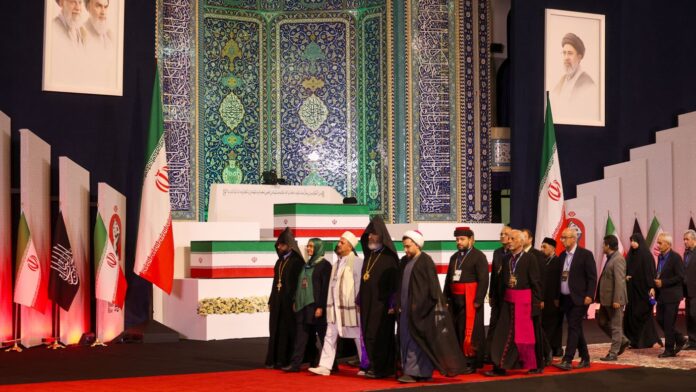
Iran began a defiant week of funeral ceremonies for former Supreme Leader Ayatollah Ali Khamenei, turning a period of mourning into a major political display of resistance against the United States and Israel.
Large crowds gathered in Tehran as Iranian officials staged the first major public events tied to Khamenei’s funeral. His burial is expected to take place later in the week in Mashhad.
The ceremonies come months after Khamenei was killed during the opening phase of the U.S.-Israeli conflict with Iran, a strike that also reshaped Tehran’s leadership structure.
- Funeral ceremonies began in Tehran and are expected to continue for several days.
- Iranian leaders used the events to project unity and defiance.
- U.S.-Iran talks have paused while the funeral period continues.
Iranian military officials warned the United States and Israel against any new attack during the mourning period, saying Tehran would respond harshly to any miscalculation.
The Trump administration, meanwhile, is keeping pressure on Iran to honor the ceasefire framework, reopen the Strait of Hormuz fully, and continue negotiations over nuclear limits and sanctions relief.
Why It Matters
The funeral matters because it comes at one of the most sensitive moments since the U.S.-Iran ceasefire took hold.
For Trump, the challenge is to keep Iran contained without allowing the funeral period to become a trigger for renewed war.
The administration’s approach depends on a careful balance: maintaining military pressure, protecting shipping through the Strait of Hormuz, and keeping enough diplomatic space open for talks to resume after Khamenei’s burial.
- The funeral could strengthen hardline pressure inside Iran.
- Any strike or retaliation could damage the ceasefire framework.
- The Strait of Hormuz remains the central economic and security concern.
Iran’s leadership is also trying to project strength at home while managing public pressure, economic strain, and uncertainty over succession.
For Washington, the coming days will test whether Trump’s pressure-based diplomacy can hold through a highly emotional and symbolic moment in Iranian politics.
Political and Public Context
Trump has framed the Iran framework as proof that military pressure and diplomacy can work together.
His administration argues that Iran came to the table because the U.S. showed strength, defended shipping lanes, and refused to tolerate attacks on regional stability.
Iran’s funeral messaging is very different. Tehran is presenting Khamenei as a symbol of resistance and using the ceremonies to warn Washington and Jerusalem against further escalation.
- Trump wants Iran to keep the ceasefire and return to negotiations.
- Iran wants to show it has not been weakened by Khamenei’s death.
- Israel remains a complicating factor because new threats could push Tehran away from the deal.
The absence of Iran’s new supreme leader from public ceremonies has added another layer of uncertainty.
If Tehran’s new leadership consolidates power without further escalation, talks may restart. If the funeral becomes a platform for renewed revenge politics, the ceasefire could face its hardest test yet.
What Happens Next
The immediate question is whether the funeral period passes without a new military confrontation.
If both sides avoid escalation, U.S.-Iran talks could resume after Khamenei’s burial, with negotiators returning to questions involving Hormuz, sanctions relief, and nuclear restrictions.
If Iran launches retaliation or Israel signals further targeting of Iranian leadership, the framework could weaken quickly.
The Trump administration is likely to keep warning Tehran that its patience is limited while also leaving room for negotiations to continue.
For American consumers, the stakes remain practical. Any renewed disruption in Hormuz could affect oil markets and fuel prices, while a durable ceasefire could help stabilize energy costs.
Sources
- Tehran warns of ‘harsh retaliation’ against US before Khamenei funeral as Waltz blasts late leader
- President Trump declares Iran is ‘dying to settle’ amid peace talks
- Three sons of Iran’s slain leader Khamenei appear at funeral, not his successor
- Khamenei’s other sons appear at his funeral in Iran as new supreme leader remains in hiding
- Iran seeks to tighten control over strait of Hormuz alongside Khamenei funeral
