

Story Highlights
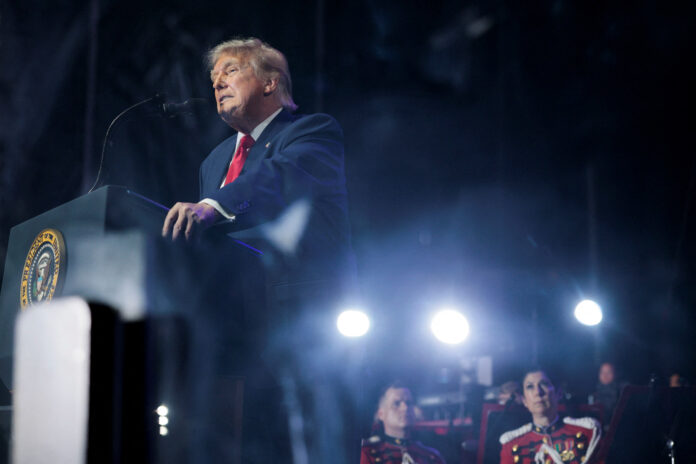
- President Donald Trump declared “America is back” as he opened the Great American State Fair on the National Mall.
- The 16-day event is part of the buildup to America’s 250th anniversary celebration.
- Several performers withdrew from the event, while Trump’s Reflecting Pool claims added another political flashpoint.
What Happened
President Donald Trump opened the Great American State Fair on the National Mall with a patriotic message built around national renewal.
Standing at the start of America’s 250th anniversary season, Trump told the crowd that the country had regained strength, confidence and respect.
He declared that “America is back,” framing the fair as both a national celebration and a symbol of his second-term governing message.
- The fair is scheduled to run for 16 days on the National Mall.
- It is part of the broader Freedom 250 anniversary programming.
- The event includes state displays, patriotic programming, family activities and public celebrations.
The kickoff also carried political controversy.
NBC News reported several musical acts, including Young MC and Martina McBride, pulled out before the event, citing concerns over the political character of the celebration.
Other outlets reported additional performers and some state participants withdrew or scaled back involvement after the event became closely associated with the Trump White House.
Trump’s remarks also touched on cultural issues that have been central to his political message, including gender policy and women’s sports.
That blend of patriotic celebration and campaign-style messaging is likely to define the anniversary fight in the months ahead.
Why It Matters
The event matters because America’s 250th anniversary is supposed to be a unifying national milestone.
Trump is trying to use it as a statement of national comeback, arguing that the country is stronger, safer and more respected under his leadership.
That message is powerful for supporters who see the fair as a celebration of patriotism, tradition and American strength.
- Trump wants the anniversary to reinforce his “national restoration” theme.
- Critics argue the White House is making a civic milestone too political.
- The musician withdrawals show how polarized even patriotic events have become.
For Republicans, the fair gives Trump a major platform to connect patriotism with his broader political agenda.
For Democrats and critics, the event raises questions about whether a national celebration is being used as a partisan showcase.
The tension is not only about music or programming.
It is about who gets to define America’s 250th birthday — as a shared civic commemoration or as a referendum on Trump’s vision of the country.
Political and Public Context
The Great American State Fair has already become a culture-war symbol.
Fox News framed the performer withdrawals as backlash from liberal cultural figures against a patriotic event, noting that Young MC, The Commodores and Martina McBride were among the acts that pulled out.
Rolling Stone reported Martina McBride publicly said she would not perform at the fair, adding to the string of withdrawals that shaped coverage before the opening.
- Supporters see the withdrawals as evidence of anti-Trump politics in entertainment.
- Critics say artists were avoiding an event they viewed as political.
- The result is another collision between pop culture, patriotism and presidential politics.
The Reflecting Pool issue added another layer.
Trump has said vandals damaged the newly restored Lincoln Memorial Reflecting Pool, while FactCheck.org reported the exact cause of the peeling liner remains unclear and that Trump had not publicly provided definitive evidence tying all visible damage to vandalism.
The Guardian reported the National Park Service said parts of the liner were cut with a sharp knife or razor and that fence-post tops were thrown into the pool, while also noting algae growth and peeling problems after the renovation.
That leaves the administration with two connected but separate issues: possible vandalism and questions about the restoration’s durability.
What Happens Next
The fair will continue through its scheduled run, with more anniversary programming expected around July 4 and throughout the broader Freedom 250 celebration.
The White House will likely use the event to keep pushing Trump’s national comeback message.
Organizers will also face pressure to show that the fair can draw crowds and maintain a nonpartisan civic identity.
- Watch whether more performers or state groups withdraw from anniversary events.
- Monitor turnout on July 4 and during the fair’s final days.
- Follow whether the Reflecting Pool repair issue produces more official findings.
- Track whether Trump continues blending anniversary messaging with campaign-style themes.
For Trump, the event is an opportunity to project optimism and patriotism at a time when the country is preparing for a historic milestone.
For critics, it is another example of a civic occasion becoming politically branded.
For voters, the question is whether the anniversary feels like a shared national celebration or another front in the partisan fight.
America’s 250th birthday is still a yearlong civic moment.
But the opening of the Great American State Fair shows that even the celebration of the nation’s founding is now being shaped by the politics of 2026.
Sources
- NBC News: Trump Kicks Off the Great American State Fair After Musical Acts Pulled Out
- Fox News: Liberal Elites Seethe Over America’s State Fair
- Rolling Stone: Martina McBride Drops Out of Freedom 250 Concert
- FactCheck.org: Trump’s Unsupported Claims About Reflecting Pool Vandalism
- The Guardian: National Park Service Says Reflecting Pool Was Cut With Sharp Knife or Razor
